Alexander Dugin

The Metaphysical Factor in Paganism

Author: Alexander Dugin

Translator: Jafe Arnold 


Appendix to Ways of the Absolute (2nd ed., Moscow: Arktogeia, 1999). Text originally written in 1990. 


Those traditions which it is customary to call “pagan” are characterized not so much by an actual polytheism as by an immanentism which permeates all of their aspects. In the opinion of the monotheistic religions, the theological sinfulness of “paganism” is obvious: it ignores (whether consciously or inertially) the one transcendent and apophatic (i.e., formulated in negative terms) principle, the recognition and unconditional worship of which constitutes the sine qua non of monotheism. Among the three monotheistic religions, Judaism and Islam hold to this line altogether consistently, whereas Christianity alone takes significant steps in the other direction by asserting the central figure of its cult and dogma to be the immanent hypostasis of the Divine, God the Son. At the same time, Christians have also inherited the Abrahamic argumentation of the other branches of monotheism against “pagans.”

Yet, in our opinion, it would be wrong to reduce all of the differences between monotheism and non-monotheism to the recognition of the supremacy of the transcendent principle, since within the monotheistic traditions themselves there have unceasingly appeared currents which, while unconditionally recognizing the justness of transcendentalism, confer a special metaphysical value to immanent realities, thus being de facto in solidarity with the “pagan” position. We have in mind first and foremost the esoteric dimensions of the Abrahamic religions (Sufism and extreme Shi’ism in Islam, Kabbalah in Judaism, and Hesychasm in Christianity), where the accent invariably falls on the immanence of the Divine Presence. Thus, without ignoring the transcendence of the transcendent, the immanent can be metaphysically accented.

What are the deep reasons which condition this?

An answer to this crucial question would not only rehabilitate paganism, but would also illuminate the most mysterious and secret sides of the “non-pagan” traditions. In one of his public lectures, Geydar Dzhemal precisely defined this problem when he noted that there is a profound opposition, one which has determined the dialectics of sacred history over the last millennia, between the Abrahamic concept of faith as a super-ethical volitional act turned “from here to there”, and the “pagan” concept of the Empire as an expression of the immanent divine force running “from there to here.” The monotheistic inspiration undermines the immanent grounds of the Empire, while the “pagan” force of immanent sacrality in turn deprives monotheism of its uniqueness and uncompromising nature. If the metaphysical truth of transcendentalism is obvious, then where do pagans find justification for their doctrines? What is the secret of the immanent Empire?

Without claiming to offer a complete (much less exhaustive) exposition of this most complex problem, we shall express a few considerations which might help somewhat clarify the essence of the matter. The sphere of the immanent is always de facto a sphere of multiplicity regardless of whether the question at hand concerns the real multiplicity of the manifest or merely the primordial duality of being and non-being inherent to the highest region of ontology, where pure being confronts the transcendent and the non-being encompassing it. This whole sphere is subject to the law of “metaphysical entropy”, according to which every logically ensuing metaphysical modality must obviously be lower in quality than the previous, that is to say inferior on the level of “metaphysical energy.” Monotheism begins with this statement and affirms the principle of transcendent unity, which confronts the whole volume of immanent multiplicity. This principle is organically connected to non-being, since transcendentalism inversely correlates to the sphere of the immanent, which means on the higher plane pure being that encompasses and synthesizes everything immanent. This apophatic, negative unity of non-being is the most logical, metaphysical response to the fact of “entropy.” Remaining within the framework of this picture of metaphysics, asserting anything else as a higher reality is simply absurd, since such would be tantamount to denying the finiteness of being and denying death which, in reality, exists as a quality dominating all metaphysical levels with the exception of non-being itself, which corresponds to the deepest essence of death itself. The most vulnerable point of transcendentalism is the very foundational picture of metaphysics and its basic postulate, the fact of entropy.

Many “pagan” traditions, especially the most metaphysically developed of them – Hinduism – are perfectly aware of the impeccable logic of monotheistic metaphysics, yet still carefully avoid the use of the term “monotheism” with regards to themselves. But by abandoning the upper pole of monotheism, they also renounce its lower immanent component, namely, the understanding of being as multiplicity, as a sphere of entropy. Both poles are thus denied with the same persistence. On the doctrinal level, this can be seen most easily of all in the relationship of both doctrines to the emergence of being. Monotheism in all of its variants is inevitably associated with “creationism”, i.e., the conceptualization of creation as alienation. Paganism in turn invariably insists on “manifestationism”, i.e., on the concept of manifestation and the self-discovery of the principle in being. The essence of the difference between these two traditions lies in the determination of the relationship between being and its hidden source in non-being. Creationism argues that being (and in rarer cases, the cosmos or even the visible universe) arose as a result of the separation of “part” of non-being, a part doomed from the first moment of creation to relate to its source as towards something different from itself. Creationism thus postulates a fundamental and “naturally irremovable”, radical Otherness of creation from its transcendent creator.

Manifestationism, on the other hand, denies this radical Otherness, instead asserting the oneness and substantiveness of the manifest and its unmanifest source. Being here is understood not as part of metaphysically preceding non-being, but as its being-other, as its means of “existing” (naturally, the word existing here is used here as a not too appropriate metaphor).

Thus, if in the first case the very unknowable essence of the Creator is the absolute answer and absolute completion of metaphysics, then in the second case the supremacy of the source of manifestation over itself is relativized, and the problem of being as a fact is not annulled, but rather remains a constantly open question (as in Parmenides’ thesis “Being cannot not be”). In this pagan perspective, there is no horizon of death, since death decides nothing, but only postpones or transfers the same question to a new level. Pagan traditions emphasize the consequence of this inner logic to be an aspect of the transmigration of beings that is conditioned by the fatal inevitability of the problem of being, which is not annulled by returning to the source.

This non-monotheistic approach does not place the manifest above the un-manifest, but merely radicalizes the question of the aim of manifestation, its mission, and the message it contains. It takes this question to its final limits. The finiteness of being is not assigned any decisive importance here, since the non-absoluteness of this finiteness is fixed and does not give any satisfactory answer to the reason and meaning of its emergence. In this perspective, being itself ceases to be the reign of descent and entropy and becomes the expression of some kind of special, metaphysically un-obvious truth. It is precisely for this reason that the principle of oneness thus loses all of its significance and, from a redeeming transcendent horizon, turns into some kind of self-evident statement, a statement of the obvious, the true, but the insufficient. On the other hand, multiplicity itself acquires a purely qualitative character: it is no longer a diluted and “entroping” unity, but the fabric of the gnostic message, in which every detail and every symbol is important and irreplaceable. Thus arise the “gods”, “angels”, and “messengers”, the spokesmen of the special gospel, the sender and addressee of which remain metaphysically unknown within both being and non-being. Thus arises as the crown of pagan metaphysics the notion of “Atman”, the subject, the living, immanent “god”, the qualitative which cannot be exhausted by the determining of being or non-being, that which participates in both but is not identical to one or the other. The subject is the special figure of the non-monotheistic tradition; it is the center of the imperial worldview, the concentration of its essence.

Thus, the subject is the summative, synthesized term of paganism without which the pagan perspective simply loses its raison d’etre. This subject coincides in essence with the two other emphatically immanent modalities of Tradition defined by the terms “spirit” and “light.” It is no coincidence that where traditional doctrines emphasize the terms “light”, “spirit,” and “I”, we are dealing with what monotheism frequently defines as “pagan heresy” or the “heresy of paganism.” This can be seen in the names of various gnostic groups, such as the Brotherhood of the Free Spirit, the Children of Light, etc. In addition, the very Sanskrit term Atman means both “spirit”, “I”, and “self.” It is also curious that, beyond Abrahamic, creationist monotheism’s cursing of “pagans and gnostics”, even the Zoroastrians found their “light gnosis” of Mani to be “heretical.”

However, the “light of the subject” is not an analogue or even a synonym of the “light of being.” It is a completely different light of an absolutely different quality. It is the “light of the problem” born out of the fact of the co-existence of being and non-being regardless of whether this existence is real (i.e., when being de facto is) or potential (i.e., when being is de facto “already not” or “not yet”). Hinduism specifies that alongside the Atman (the subject in being) there is the Paramatman (the subject in non-being). Thus, gnostic-“pagan” immanentism is an immanentism of an altogether different nature, one which is irreducible to any one of the modalities allocated by monotheism.

But does this immanentism remain really immanent? After all, in contrast to the strictly monotheistic optic, this immanentism cannot be satisfied by the transcendent member of the monotheistic dyad (the creator) as the metaphysical final and supreme. However, it does not follow that creation is not a final and exhaustive answer for immanentism. The immanentism of the “problem of light” can be explained by the need to merely fix the very fact of being, thereby not allowing it to disappear in the inexorable logic of monotheistic “ethics.” Here being serves as none other than “proof” of the non-absoluteness of being, and both being and non-being are no longer divorced (as in monotheism), but are fused together, thus becoming one and the same pole of the problem facing a complete Other, without which and outside of which this great problem would not exist. If this is so, then immanentism becomes in fact an expression of the highest and most convincing metaphysical transcendentalism, in which the transcendent quality is borne not out of the monotheistic Creator (who is metaphysically identical to non-being), but something beyond him himself, something so distant and great that it assigns to cause and effect equal metaphysical rights, thereby by making both into but a lower pole of the problem that is turned into the absolute and unattainable top.

In this perspective, the whole “pagan” (or more precisely, immanentist) complex acquires an altogether special meaning. Manifestation and its structure, which are accentuated and thoroughly deciphered by “paganism”, cease to be a not so important consequence of the Creator, who is valuable only relatively and with certain reservations. Rather, these questions become the text of the problem that is of equal significance to both creation and the Creator himself. Hence logically arises the goal of manifestation which, by the very fact of its presence (or the possibility of its presence), testifies (with the means of qualitatively lower principles compared to the principle of non-being) to something that is incomparable and eternal and which is superior to this non-being.

It is precisely in this sense that the “pagan” universe is theomorphic or, even more precisely, “angelomorphic.” Its elements are essentially revelations of the “world of light” beyond non-being, beyond the Creator. If we attentively examine the quality of this angelomorphic, “pagan” universe, we see that there is no opposition between the gnostic “anti-demiurgic” pathos and the immanentist accents of “paganism.” The “anti-demiurgism” of the gnostics can be explained by the rejection of the understanding of the actuality of the Creator as a single answer to the question of the purpose of creation. Such “anti-demiurgism” is polemical and takes aim first and foremost at monotheistic metaphysics, at the very founding logic of this metaphysics. From this perspective, the gnostics were essentially extreme transcendentalists. But the negative nature of the demiurge – or, more precisely, his complete dissatisfaction with the quality of the universal answer – does not diminish anything in the mission of manifestation, which in and of itself is the gnostic attack against its creator, its author. The sign that is encrypted in the cosmos and worshipped in “paganism” is immanent and visualized only as immanent. But this “pagan” immanentism is actually equivalent in its conclusions and in its very logic and source of impulse to gnostic transcendentalism. After all, there can be no suggestion that non-being is insufficient within its own pure self-identity. Such an argument could be drawn up only out of the deep deciphering of its antithesis (being), which reveals its dissatisfaction on the one hand (as the Creator of something imperfect) and on the other reveals certain transcendent potentials which remain problematic and hidden under the metaphysical status quo, but which could also awaken in the form of the light dimension of the universe, as the resurrecting immortal spirit, the eternal “I” of the Savior.

The gods of “paganism” are the subjective parameters of manifestation. They are not so much self-sufficient and self-satisfying principles in the likes of the God of monotheism as much as they are angels in the etymological sense, i.e., “messengers”, “spirits.” In accordance with this logic, John the Theologian, in his most esoteric gospel, utters a phrase which is completely alien to orthodox creationist monotheism: “God is spirit.” Within the framework of pure monotheism, such a downgrading of the principle, the source of all things spiritual and material, to merely one modality, to the spirit, sounds akin to blasphemy. In the pagan perspective, on the other hand, it is difficult to say anything more true and more just. It is no coincidence that it was John the Theologian who became the patron of European Christian esotericism.

In the Christian perspective, the Holy Spirit is the Consoler, the Paraclete, the main deputy in being of other hypostases which are absent in a given moment. For example, before the coming of the Son Christ, he “speaks through prophets”. After Christ’s Ascension, he “consoles and instructs” the once again orphaned world. Only thanks to him are the mysteries of the Church realized. The Holy Spirit of Christianity is the most immanent hypostasis of the Divine, and it is the identification of this hypostasis with the essence of the Divine that is beckoned by John the Theologian’s formula.

Finally, there is one final metaphysical aspect of paganism which ought to be emphasized. Every paganism is necessarily eschatological. This statement may surprise some, given that it outwardly contradicts the above. After all, the “pagan” approach to metaphysics is not obliged to especially accentuate the problem of the end of the world, the end of being, insofar as the absorption of manifestation by the principle not only says nothing to “metaphysical paganism”, but only “annoyingly” postpones the resolution of the great problem without adding anything substantive to it.

However, there is one fundamental consideration which makes eschatologism a necessary and extremely important component of immanentist tradition as a whole, which indeed has a place in the majority of historical “pagan” traditions, especially Aryan paganism. The eschatologism of immanentist doctrines is radically different from the monotheistic positive appraisal of the end of being to be the end of illusion and, as follows, an element of the absolute, unbroken fullness in the bosom of the principle of non-being.

Paganism envisions for the end times not a return to a unity lost in manifestation, but a return to primordial duality. It is no accident that Zoroastrian cyclology calls the final stage of sacred history vicharishn, literally “separation.” Only at the moment of contact between being and non-being is the pagan revealed the whole depth of his doctrine, with all the paradoxical implications. This border realized at the final point of manifestation is the point of departure for the questioning of the subject, who here can only view both metaphysical realities (both exhaustive being and incumbent non-being) as something that does not principally satisfy him, hence his turn to the source which might be beyond both being and non-being.

On the pragmatic level, eschatologism is an essential feature of metaphysically fully-fledged paganism, since the true immanentism of authentic tradition cannot and should not be a doctrine of absoluteness and the non-transcendence of “this world”, which would render it an anti-tradition and anti-nomist materialism. For the subject of pagan immanentism, being is not the final sought-after shore or “paradise.” Rather, it is a symbol of the fact that non-being itself is not this “paradise.”

Thus, pagan tradition has no illusions as to the finiteness of being. On the contrary, this finiteness and non-absoluteness, taken and recognized as such, is attractive to this tradition in being. Hence, eschatology naturally becomes the center of the pagan worldview, guarding pagan metaphysics from fetishism and the inertial worship of being.

The true “pagan” Empire, as well as the true ‘pagan’ subject, are necessarily eschatological. The power which emanates “from there”, on which every true Empire rests, is not a banal affirmation of the identity of being with itself. The “pagan” component in metaphysics is charged with a paradoxical and truly transcendent “energy” which leads much further than the impeccable and unique, yet limited power of faith. This is made especially clear in the critical moments of the unfolding of being, in radical eschatological moments – only then can pagan metaphysics fully demonstrate its deepest foundations.


The Star of the Invisible Empire: Jean Parvulesco

Author: Alexander Dugin

Source: Open Revolt

Article first published in 1994 in the newspaper Zavtra, re-published in Alexander Dugin, Knights Templar of the Proletariat (Moscow: Arktogeia, 1997). 


Profession: Visionary

Jean Parvulesco is a living mystery of European literature. A mystic, poet, novelist, literary critic, expert in political intrigues, revolutionary, and friend and confidant of many European luminaries of the second half of the 20th century – from Ezra Pound and Julius Evola to Raymond Abellio and Arnaud Breker.

Parvulesco’s true identity remains a mystery. A Romanian who fled to the West in the 1940’s, he became one of the most prominent French stylists of modern prose and poetry. But whatever his works might have been, from tantric dances to complex occult novels to biographies of his great friends (especially The Red Sun of Raymond Abellio), Parvulesco’s real vocation is that of a “visionary”, a direct and inspired contemplator of the spiritual spheres which reveal themselves to the chosen behind the gloomy and flat visibility of the modern profane world.

At the same time, Parvulesco has nothing in common with the vulgar representatives of the modern neo-mysticism that is so widespread today as a kind of instrumental compensation for the techno-information routines of everyday life. Parvulesco’s vision is dark and tragic; he has no illusions as to the hellish, infernal nature of the modern world. In this sense, he is akin to a Traditionalist. The infantile optimism of the Theosophists, occultists, and pseudo-mystical “conserves” of New Age are extremely foreign to Parvulesco. But unlike many Traditionalists of an “academic” temperament, he does not restrict himself to skeptical lamentations of the “crisis of the modern world” and bare, marginal condemnations of the material civilization of the end of the Kali Yuga. Jean Parvulesco’s texts are full of the Sacred, which speaks directly through them, on the dreamlike, almost prophetic level of a strange revelation, a “visit” which makes its way from the higher spheres through the magical blockade of dark energies which fill today’s world and the collective and cosmic psyche.

Parvulesco is an authentic visionary. He is sufficiently profound and doctrinally honed, enough so as to not lead one to mistake the first phantoms of subtle reality for “messengers of light.” At the same time, he strains his intuition to the extreme in a dangerous and risky “journey inward” towards the “center of the Black Lake” of the modern spirit, so as to go without fear beyond the limits of fixed rational and dogmatic norms (hence the multi-leveled paradoxes which saturate Parvulesco’s books).

Parvulesco’s message can be defined in the following manner:

The Sacred has disappeared from the daily reality of the modern world, and it is completely obvious that we live in the End Times. This Sacred has not disappeared (since, being eternal, it cannot disappear), but it has passed into the nocturnal, invisible matrix and is now ready to descend upon the human, physical cosmos in a terrifying apocalyptic moment – the apogee of history, the point at which the world, having forgotten its spiritual nature and disowned it, will be forced to confront it in the harsh flash of Revelation.

This has not happened yet. Humanity is fast asleep in its dark, material illusions, while only the chosen, the visionaries, the members of the secret brotherhood, the Apocalyptic Order, are watching awake, secretly preparing the path for the coming of the Final Hour, the Kingdom of Heaven, the Great Empire of the End.

Parvulesco considers himself to be not a writer, but a herald of this Invisible Empire (thus is titled his final book – The Star of the Invisible Empire), a speaker of the Occult Parliament of the planetary elite of the “awakened.” His personality doubles, triples, and quadruples in the characters of his novels, where the author himself is at work alongside his counterparts, his occult doubles, real historical figures, otherworldly shadows, the shells of the “outer twilight”, and the secret agencies of occult intelligence services.

Parvulesco unveils not merely a scenography of individual phantasies or memories, but a whole parallel world. The populations of his texts are genuinely frightening; their strange (quite often dark) humor sometimes reaches the sacred relics of religion, dogma, and canons, thereby awakening and freeing their their inner, secret essence from the stupid fetishistic veneration which kills the spirit. Following the prescriptions of Tantra, Parvulesco makes language come alive, he makes it rapid and “operational.” This is why his texts are more than literature. They are magical spells and scandalous revelations. They are provocations of events and predictions of their meaning. They are immersion into the Ocean of Interiorness, into the underground tunnels of the Hidden, into the frightening empire of that which dwells inside each of us. This is why Parvulesco can at times be just as frightening as any true genius. He attentively and scientifically studies us from within, and his experiments at times overstep well-established boundaries. Parvulesco is a visionary anatomist.

In the Beginning was Conspiracy

Parvulesco answers clearly and paradoxically at once that reality is dual in nature. Secret agents of Being and Oblivion are present in all key spheres of governance in the modern world, directing all processes of civilization. The fabric of actual, concrete history is derived from the superimposition of these energetic vectors of two occult networks upon one another. Generals and terrorists, spies and poets, presidents and occultists, Church fathers and heresiarchs, mafiosi and ascetics, Freemasons and naturalists, prostitutes and blessed saints, salon artists and workers movement activists, archaeologists and forgers are all merely obedient actors in a saturated conspirological drama. Who knows what social identity hides a higher initiate. A robber or beggar often turn outs to be the curator of the President or the Pope, and a military commander or banker can be puppets of a salon poet, behind the grotesque and imaginative personality of whom lurks a cold master and architect of harsh political history.

Against Demons and Democracy

The Star of the Invisible Empire is Parvulesco’s final and key novel. It ties together all the threads of his previous books. It describes the nearing of the final denouement of the transcendent meta-history of which our author has been a chronicler. Here is his résumé:

All across the planet, especially in France and Portugal (as well as Peru and Mexico), and in the magical “acupuncture points” of the occult West, the agents of Oblivion have erected black pyramids – physical and supra-physical installations designed to facilitate the direct invasion of the world by demonic energies, the hordes of the Gogs and Magogs. This apocalyptic project bears the secret name “Project Aquarius.” Corresponding to the relevant astrological symbolism, the “Age of Aquarius” dawns and carries with it not joy and harmony (as the agents of Oblivion try to reassure humanity), but decomposition, decay, chaos, death, and “dissolution in the lower waters.” The hero of Star of the Invisible Empire, Tony d’Antremont, describes his prophetic vision of the onset of the “Aquarian epoch” thusly:

I see, together with Lovecraft, the swarming of gigantic, repulsive masses, moving in endless waves, advancing on the last, residual crystal structures of the resistance of the spiritual elite; I behold in the ecstatic powerlessness of my hallucinatory awakening a flickering black foam, a foam of black dissolution, the terror of the democratic stench, and the terrible apparatuses of these convulsing corpses which – in the make-up of dirty whores with deceitful smiles, with the Californian beach smile of European anti-fascists, with the smile of mannequin whores from glittering showcases (I would define them as such) – are preparing our final defeat, are leading us whither not even they know or, rather, know all too well, all along the way sucking the bone marrow out of us; these are the hallucinatory leaden cloaks of Human Rights, the fecal-vomit emissions of Hell – although by saying such I am insulting Hell.

The servants of Aquarius, by opening the way to the human world for the black “shells” of the outer twilight, are striving to present their counter-natural advent as a blessing, as salvation, as the peak of evolution, while hiding their essence, the Vomito Negro (“Black Vomit”) under the political and Spiritualist slogan of the New Age or New World Order.

Against the conspiracy of Aquarius, in which the whole terrifying “meta-galactic” network of the agents of Oblivion seeking their final embodiment in the “New World Order” is concentrated, are fighting those who represent the Western order of Atlantis Magna. The Woman, known under the mystical name Licorne Mordore, or the “red-brown Unicorn”, plays a special role in the rituals of this order. In physical reality, she bears the name Jane Darlington. However, the true nature of this woman fundamentally transcends the limits of individuality. Rather, she represents some kind of sacred function distributed among all women of the order, whose personal and everyday relationships reflect the ontological hierarchy of being itself (one of them corresponds to the spirit, another to the soul, and another to the body). The men of the order, including the main hero Tony d’Antremont, are also hardly individuals in a strict sense: the descriptions of death and adultery which fill Parvulesco’s novel illustrate the purely functional essence of the main characters. The ritual death of one merely activates the conspirological activities of another, and when their women are unfaithful to them, they find that they remain true to one and the same essence. Thus, Atlantis Magna weaves its continental network of struggle against the conspiracy of Aquarius. On the higher, transcendental level, this means the ritual tantric realization of the eschatological Phenomenon corresponding to the coming of the Consoler and the Wife. Only on this level can those who are building the “black pyramids” be defeated.

The preparation and organization of the most mysterious ritual of the “red circle” constitutes the main trope of the novel. On their way to accomplishing this procedure, the members of Atlantis Magna embark on symbolic journeys, analyze mystical texts, seek the true causes behind political transformations, explore the oddities of the history of various ancient European ancestral lines, they decipher esoteric ideas (appearing like information leaks in ordinary tabloid literature), experience love-filled and erotic relationships, are subjected to assassination attempts, and become victims of kidnapping and torture. But all of this concrete flesh of the fascinating, detective-like novel is a continuous reading and clarification of the interconnected visionary reality of the Final Event of history, the manifestation of the Great Eurasian Empire of the End, the Regnum Sacrumor Imperium Sacrum, whose reflections are discernible in all aspects of the modern world.

On the level of political conspiracy, the novel’s heroes operate actively and decisively. The spiritual resistance to New Age and neo-Spiritualism, for whose representatives (from Alice Bailey to Teilhard de Chardin and Sai Baba) Tony d’Antremont proposes to arrange an “occult super-Auschwitz, a super-Majdanek”, is projected onto political opposition to the New World Order, Americanism, and Liberalism, a confrontation which forces the “agents of Being” to weave a network of global conspiracy with all those political forces opposed to globalism. Palestinian terrorists, underground European neo-Nazi groups, social revolutionaries and Red Brigades, the descendants of aristocratic families who hate “democracy” and secretly wish to end the liberal epoch, members of the Italian mafia, Gaullists and Francoists, Third World revolutionaries, shamans from America and Asia, communist leaders, and German bankers all become participants in a geopolitical project aimed at the establishment of a final Eurasian Empire. Diplomatic receptions, foreign trips, confidential talks, and intelligence gathering make up the political aspect of the conspiracy of the “agents of Being” and a special storyline of the novel, superimposed over occult conversations and the long esoteric monologues of the story’s heroes.

Parvulesco’s novel is not structured along the traditional logic of a complete narrative. It is altogether characteristic that the novel comes to an abrupt end mid-word on page 533. All the preceding contents have brought the reader close to the eschatological denouement of the occult war, but here the literary world ends, and actual reality begins. The majority of the novel’s characters are historical figures, some of whom have died, while others are still alive. The books and texts cited in the tale really exist. While many of the book’s episodes and retold legends are fictional, many are not. One characteristic detail is that the majority of the names mentioned are provided in parentheses with dates of birth and death.

After reading Star of the Invisible Empire, a natural question arises: What exactly have we just read? A novel? Fiction? Fantasy? Surreal literature? Or, perhaps, an esoteric tract?

Or is it a real revelation of the true background to modern history, seen from the standpoint of metaphysical fullness in all its volume, beyond hallucinations which are in essence all banal, everyday views explaining nothing and extremely far from the truth?

In the dedication that adorns the copy presented to me, Jean Parvulesco himself called his novel a “most secret and most dangerous initiatic novel in which Absolute Love presents its final weapon of Absolute Power and lays the occult foundations for the future great Eurasian Empire of the End, which will be akin to the Kingdom of Heaven, Regnum Sanctum.”

Nothing more nor less.

The Red-Brown Shiva

During one of our discussions, when I was telling Parvulesco about the meaning of the term “ours” in Russian political terminology, Parvulesco became very animated and showed me a place in one of his early novels (from the mid 1970’s) in which he providentially employed the very same term in a strikingly similar sense. For him, “ours” are the members of the conspiracy of Being, a secret network of agents of influence who are united by a common occult goal beyond political differences, and who stand against the cosmopolitan and profane civilization that has been established on the planet.

Moreover, my Italian friends once sent me the copy of an article of Parvulesco’s from the late 1960’s in which he spoke of “Eurasianism”, the geopolitical project of a Continental Bloc, the need for a Russo-German alliance (a renewed Ribbentrop-Molotov pact), and even the need to merge red and brown into a single revolutionary, anti-globalist front! It is altogether strange how the texts of this amazing man – which remain popular only as literary works while provoking the condescending smile of “academic” Traditionalists – pre-emptively described many years ago with an almost prophetic clairvoyance precisely that which has become a political fact only in recent years – in Russia, far from Europe.

All of this leads to quite disturbing thoughts as to the true nature of this genius writer. Who are you, in the end, Mr. Parvulesco? The commander of Altavilla? Whoever he is, Parvulesco is undoubtedly “red-brown”, not least because his sympathies are with the mysterious female figure whom certain really existing initiatic societies call the “Red-Brown Unicorn.”, Licorne Mordore. It should be noted that the French word mordoré means, more precisely, “red-brown with gold or a golden tint.” Besides this squeamish and derogatory term “red-brown” which has long since branded the most interesting political forces in Russia, there is also the royal, regal shade of this color – the final, eschatological coronation, with Alchemical Gold, of the great, continental Eurasian Revolution. This Revolution is being prepared and carried out today by “ours” – the secret and overt agents of Being. Yet another personage of sacred tradition is bestowed this color: the Hindu god Shiva, who is liturgically called the “red-brown” and “the terrible.” This god’s character is close to the element of our Red-Browns. Yes, this element is terrible and destructive in its outer manifestation. But the terrible red-brown Shiva is the keeper of the secret of Eternity, that which is revealed in all its entirety in the End Times, when it denies with its “terrible” being the beginning of the Age of Aquarius. Red-brown Shiva is the patron of the tradition of sacred Love, Tantra – the very same Tantra to which one of Jean Parvulesco’s first books, La Miséricordieuse Couronne du Tantra (The Merciful Crown of Tantra), was dedicated.

The agents of the Inner Continent are awake. In the night sky of our repulsive civilization appears the magic Star heralding the imminent transformation of the Inner into Outer. This is the Star of the Invisible Empire, the Empire of Jean Parvulesco.

0

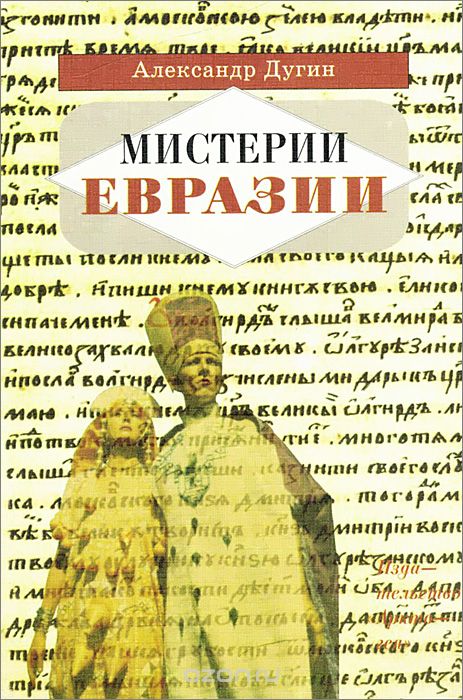
Alexander Dugin – Mysteries of Eurasia

Alexander Dugin, Mysteries of Eurasia (Moscow: Arktogeia, 1991)

1011834476

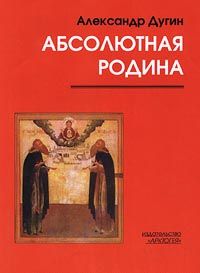
Alexander Dugin, Mysteries of Eurasia, in Absolute Homeland (Moscow: Arktogeia, 1999). 

1004898897

Table of Contents: 

Foreword to Mysteries of Eurasia (1991)

Continent Russia

The Unconscious of Eurasia

The Russian Heart of the East

Russia and Virgo Solar

Siberia: The Empire of Paradise

America the “Green Country”

The Crusade against Us

The Racial Archetypes of Eurasia in the Oera Linda Chronicle

On the Question of Russian Runes

Russian Orthodoxy and Initiation

The Dormition of the Mother of God

The Cosmic Savior (Two Great Symbols)

The Mystery of the Letter Ж (“Zhivite”)

The Cherubim Letter

From Sacred Geography to Geopolitics

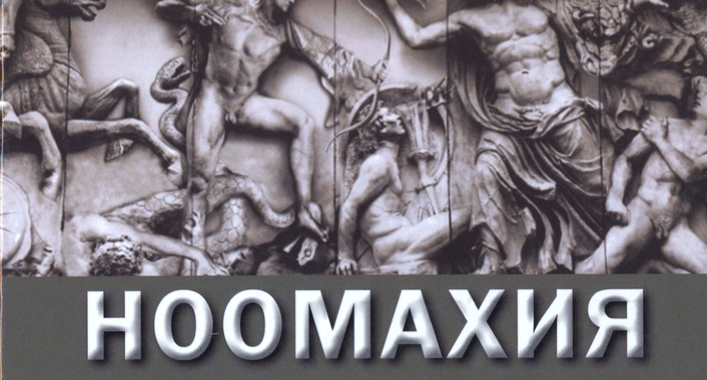
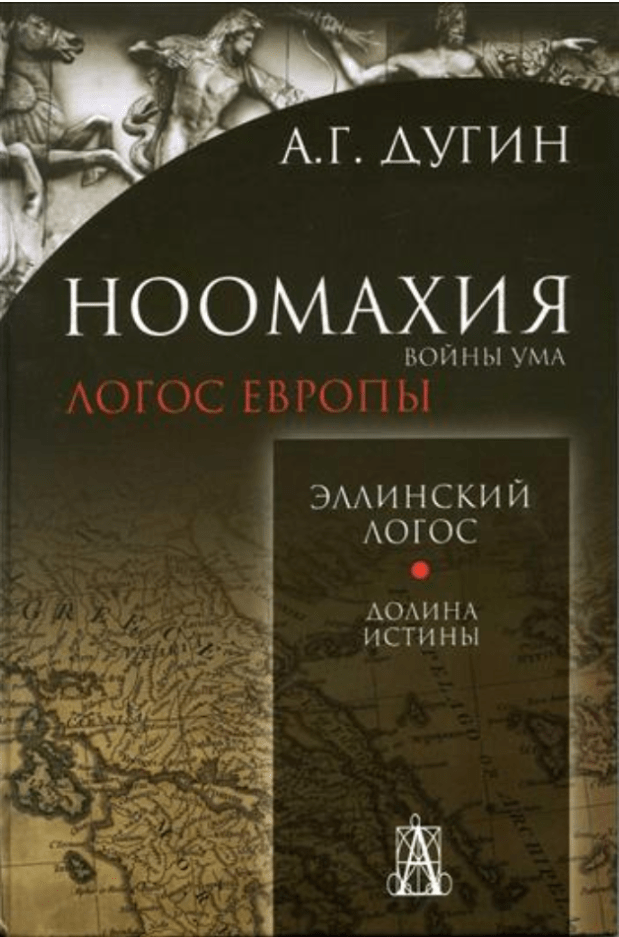
Noomakhia: The Hellenic Logos – The Valley of Truth 

Alexander Dugin, Noomakhia: The Hellenic Logos – The Valley of Truth 
(Moscow: Academic Project, 2016)

Screen Shot 2019-04-22 at 5.04.03 PM

Table of Contents: 

Preface: The Semantics of Greece 

Part I: The Titanomakhia of the Hellenes: Gods and History

Chapter 1: The Ethno-Titanomakhia of the Mediterranean

Chapter 2: The Great Battles of the Eternal Beginning

Chapter 3: Cosmo-Hellenism: Gods and Meanings

Chapter 4: The Heroes: Destiny or Fate?   

Chapter 5: The Alphabet of the Gods

Chapter 6: Greece’s Periods

Part II: The Withdrawal of the Gods and the Epiphany of Man

Chapter 7: The Poetic Anthropology of Ancient Greece

Chapter 8: The Archaic Era: The Polis

Chapter 9: The Split Logos of Orphism: Proto-Philosophy

Chapter 10: The Ionian School: The Invasion of Substance

Chapter 11: The Philosophy of Greater Greece: The Paths of the Sky

Chapter 12: The Light of Poetry: The Tragiographs and Lyrics of Archaic Hellas

Chapter 13: The Peloponnesian War: The Beginning of the Classical Era

Chapter 14: Platonism: The Philosophy of Divinity

Chapter 15: The Mission of the Abderites: Relativity and Atoms

Chapter 16: The Echo of the Steps of Dionysus: The Tragedy and Comedy of the Classical Era

Chapter 17: Aristotle: The Classical Philosophical Culmination 

Chapter 18: The End of Hellas and the Eternal Hellenes 

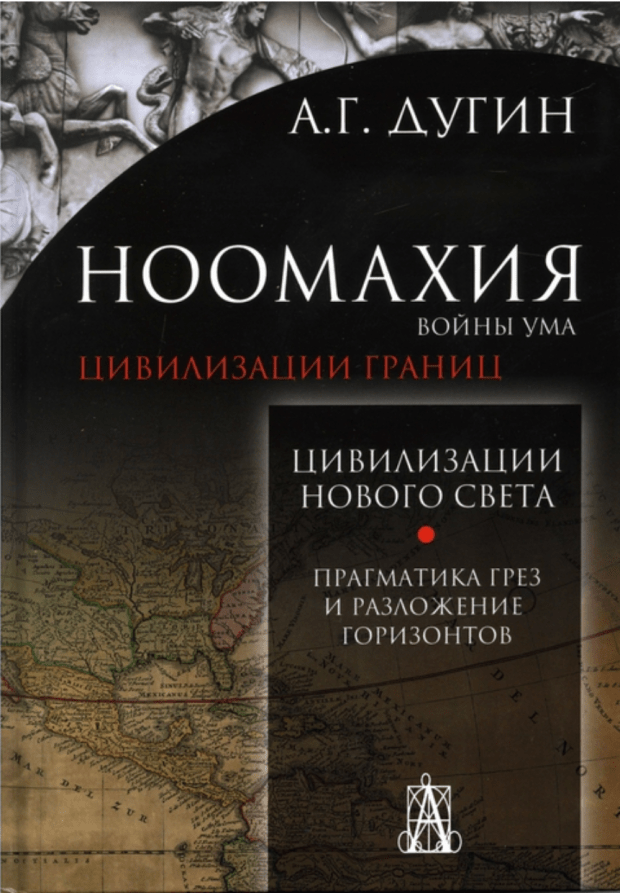
Noomakhia: The Civilizations of the New World – Pragmatic Dreams and Split Horizons

Alexander Dugin, Noomakhia: The Civilizations of the New World – Pragmatic Dreams and Split Horizons
(Moscow: Academic Project, 2017)


Table of Contents: 


Part I: North American Civilization: The New Atlantis

Chapter 1: America in the Structure of the World

Chapter 2: Native American Horizons: Spirits and Animals

Chapter 3: The Sources of Anglo-Saxon America

Chapter 4: North American Civilization and its Foundations

Chapter 5: The Eschatological Perspectives of American Sects

Chapter 6: American Philosophy: Pragmatism

Chapter 7: The Literary Classics of the US: The Sea and Flesh of Homo Americanus

Chapter 8: The Poetry of Alternative Horizons

Chapter 9: American Liberalism

Chapter 10: Analytical Philosophy

Chapter 11: Cultural Anthropology

Chapter 12: 20th Century American Literature

Chapter 13: American Counter-Culture

Chapter 14: American Geopolitics: Globalization, Atlanticism, and Hegemony

Chapter 15: Critical Theories of Globalization: Deconstructing ‘Empire’

Chapter 16: The USA: The Civilization of Post-Modernity

Chapter 17: The Horizons of New France

Chapter 18: Russian America and Types of Colonization

Part II: The Logos of Ariel: Horizons of Latin America

Chapter 19: The Structure of the Latin American Space

Chapter 20: The Civilizations of Central America

Chapter 21: The Civilizations of South America

Chapter 22: Colonial Empires

Chapter 23: Decolonization

Chapter 24: Great Brazil

Chapter 25: Latin American Philosophy of Identity

Chapter 26: The Identity of Creole Dreams

Conclusion

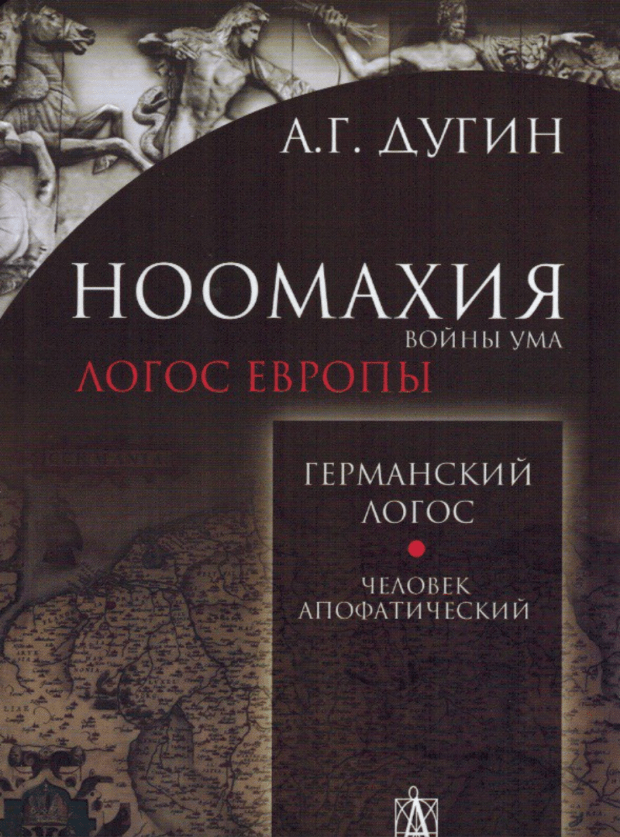
Noomakhia: The Germanic Logos – Apophatic Man

Alexander Dugin, Noomakhia: The Germanic Logos – Apophatic Man 
(Moscow: Academic Project, 2015)

Screen Shot 2019-04-22 at 5.03.33 PM

Table of Contents:

Preface

Part I: The Logos of Germania 

Chapter 1:  The Ancient Germanic Peoples and their Myths 

Chapter 2: A Brief History of the Germanic States

Chapter 3: German Literature in the Middle Ages

Chapter 4: Medieval German Thought: The Mystics of the Rhine

Chapter 5: The Germanic Renaissance 

Chapter 6: The Reformation in German History

Chapter 7: German Romanticism 

Chapter 8: Germany’s Classical Age: The Triumph of Philosophy

Chapter 9: The Philosophy of Twilight 

Chapter 10: The Conservative Revolution

Chapter 11: Germanic Expression: The Twilight of Man

Chapter 12: Martin Heidegger: Great Germany and the Fate of Europe

Chapter 13: The Three Logoi in the Europe of the ‘End Times’

Chapter 14: After the ‘End of History’

Part II: The Space of the Germanic World

Chapter 15: Austria: The Mission of the Habsburg Guardians

Chapter 16: Sweden, Norway, and Denmark: Scandinavia and its Spirits

Chapter 17: The Netherlands: The North, the Mother, and the Sea

Chapter 18: Switzerland: The European Equilibrium 

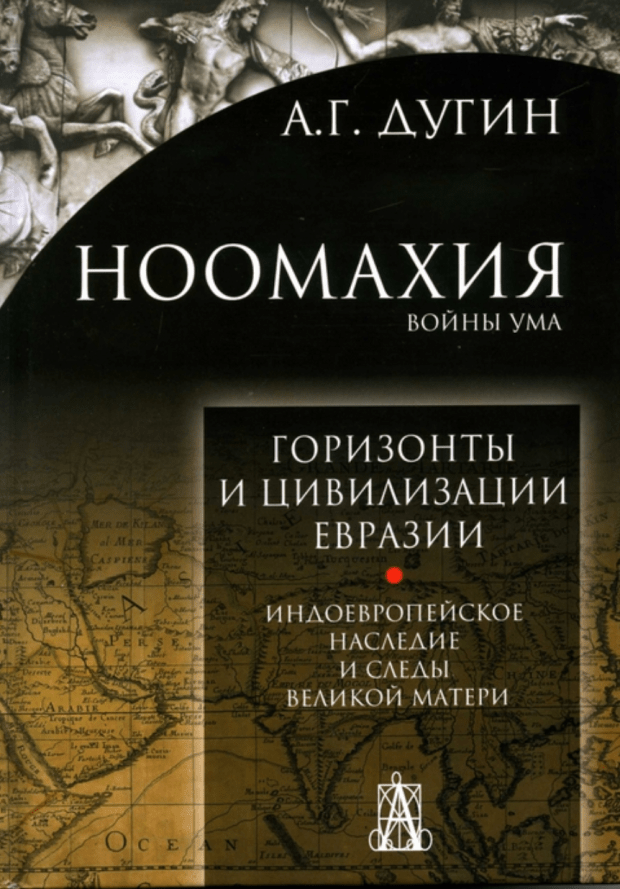
Noomakhia: The Horizons and Civilizations of Eurasia – The Indo-European Legacy and the Traces of the Great Mother

Alexander Dugin, Noomakhia: The Horizons and Civilizations of Eurasia – The Indo-European Legacy and the Traces of the Great Mother
(Moscow: Academic Project, 2017)

Screen Shot 2019-04-22 at 5.05.12 PM

Table of Contents: 

Part I: The Transmission of the Turanian Covenant: The Altaic Invasion 

Chapter 1:  The Altaic Pole

Chapter 2: The Huns: The Pivot of the Turanian Historial

Chapter 3: The Heirs to the Huns: The Bulgars, Sabirs, Avars, and Hungarians

Part II: The Turks in the Elements of Turan

Chapter 4: Sources

Chapter 5: The History of the Turkic Empire

Chapter 6: The End of the “Blue Turks” and the New Peoples

Chapter 7: The Second Empire

Chapter 8: The Religion of the Ancient Turks and Shamanism

Chapter 9: The Turks and Islam: The Sufi Logos

Chapter 10: Turkish Sufism: The Paths of Al-Hallaj

– Excerpt: Imadeddin Nasimi: Man as an Inscription

Chapter 11: The Ottoman Empire of the Source: The Ottoman Formula of Integration

Chapter 12: The Turano-Mediterranean Empire

Chapter 13: The Ottoman Empire and Europe (The Christian and post-Christian World) 

Chapter 14: Modern Turkey

Part III: The Mongols

Chapter 15: The Ancient Mongols

Chapter 16: Genghis Khan: The World Emperor and Son of the Sky

Chapter 17: Mongol Religion

Chapter 18: The Great Powers of the Mongol-Sphere

Chapter 19: The Mongols after Empire

Chapter 20: The Mongol Logos and Buddhism

Part IV: Tibet

Chapter 21: Ancient Tibet

Chapter 22: The Era of Theocracy

Chapter 23: Bon: Ahura-Mazda in Tibet

Part V: The Manchus

Chapter 24: From the Mohe to the Jurchens

Chapter 25: Manchuria and the Qing Dynasty

Chapter 26: The People and Spirits of the Evenki Universe

Chapter 27: Tungusic-Manchurian Shamanism and its Noological Classification

Part VI: The Paleo-Asiatics

Chapter 28: The Paleo-Asiatic Peoples of Eurasia

Chapter 29: Paleo-Asiatic Religion: The Structures of the Northern Spirits

Part VII: The Great Mother and Her Raven

Chapter 31: The Uralic Group

Chapter 32: The Urals in Sacred Geography

Part VIII: The Horizons of the Caucasus 

Chapter 33: The Cartography of the Caucasus 

Chapter 34: The Georgians: Sakartvelo, the Light Country

Chapter 35: The Adyghe

Chapter 36: The Vainakh

Chapter 37: The Historials of the Peoples of Dagestan

Chapter 38: The Religion and Myths of the Eastern Caucasus 

Chapter 39: The Noology of the Caucasus 

Conclusion. The Turning Point of Noomakhia

Introduction to NOOMAKHIA – Video Lecture Series by Alexander Dugin

Lecture series read by Alexander Dugin in Belgrade, Serbia (Spring 2018). 

Lecture 1: Introduction

Lecture 2: Geosophy

Lecture 3: The Logos of Indo-European Civilization

Lecture 4: The Logos of Cybele

Lecture 5: The Logos of Dionysus

Lecture 6: European Civilization

Lecture 7: The Christian Logos

Lecture 8: A Noological Analysis of Modernity

Lecture 9: The Serbian Logos

Lecture 10Noomakhia in the 21st Century

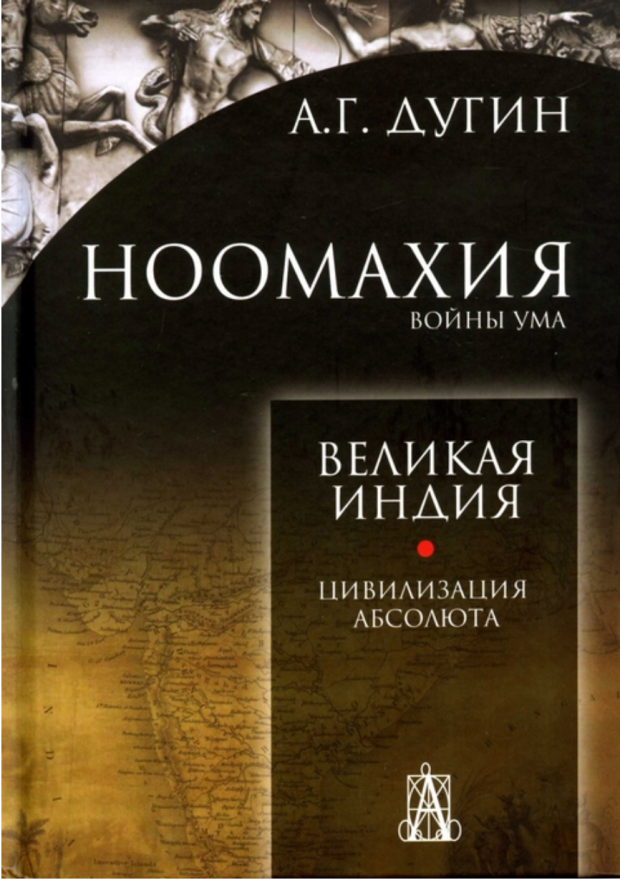
Noomakhia: Great India – Civilization of the Absolute

Alexander Dugin, Noomakhia – Wars of the Mind: Great India – Civilization of the Absolute
(Moscow: Academic Project, 2017)

Screen Shot 2019-04-22 at 5.04.51 PM

Table of Contents:

Introduction: The Indo-Europeans of the Eastern Limits

Part I: Vedic Civilization

Chapter 1: Approaches to Understanding India

Chapter 2: India’s Pre-History

Chapter 3: The Indo-European Ecumene

Chapter 4: Indian Titanomachy

Chapter 5: Varna: Castes of the Great Subject

Chapter 6: Vedic Religion

Chapter 7: The Structure of the Sruti

Chapter 8: The Logos of the Upanishads

Chapter 9: The Religion of Dasa

Chapter 10: The Indian Structure

PART II: The Indian Historial

Chapter 11: Vertical history

Chapter 12: The Conventional History of India

Chapter 13: The Logos of the Sramana: Jainism and Buddhism

Chapter 14: The Mahajamapadas, the Maurya Empire, and Nastika

Chapter 15: The Bhagavad Gita and the Metaphysics of Vishnuism

Chapter 16: Sankhya: The Philosophy of Parkriti and the Awakening of the Snake

Chapter 17: Adi Shakti: Woman vs. Mother

Chapter 18: Brahmasutra: Counter-Strike of the Vedanta

PART III: India in the Middle Ages

Chapter 19: The Structures of the Medieval Historial

Chapter 20: Tantra

Chapter 21: The Three Crowned Kings

Chapter 22: Gondwana: Central and South India in the Middle Ages

Chapter 23:  Advaita Vedanta

Chapter 24: Anti-Advaita

PART IV: Buddhism: Mahayana – The Indian Philosophy of the New Beginning

Chapter 25: The Transformation of Buddhist Metaphysics

Chapter 26: Madhyamaka: How to Philosophize by Emptiness

Chapter 27: Yogachara

Chapter 28: Tathagatagarbha: Non-Duality on the Counter-Attack

Chapter 29: Vajrayana: Sin Transformed

PART V: The Post-Middle-Ages: Islam and India

Chapter 30: After the Middle Ages

Chapter 31: From the Ghaznavids to the Delhi Sultanate

Chapter 32: The Great Moghuls and the Transcendental Unity of the Traditions of Akbar

Chapter 33: The States of North-West India

PART VI: Towards Modernity: From Colonization to Independence

Chapter 34: The European Colonization of India

Chapter 35: Reformed Hinduism

Chapter 36: Fundamentalists and the Politics of Swaraj

Chapter 37: Sanatana Dharma: True Hinduism

Chapter 38: Modern India: Post-Colonial Legitimacy and Deep De-Colonization

Conclusion

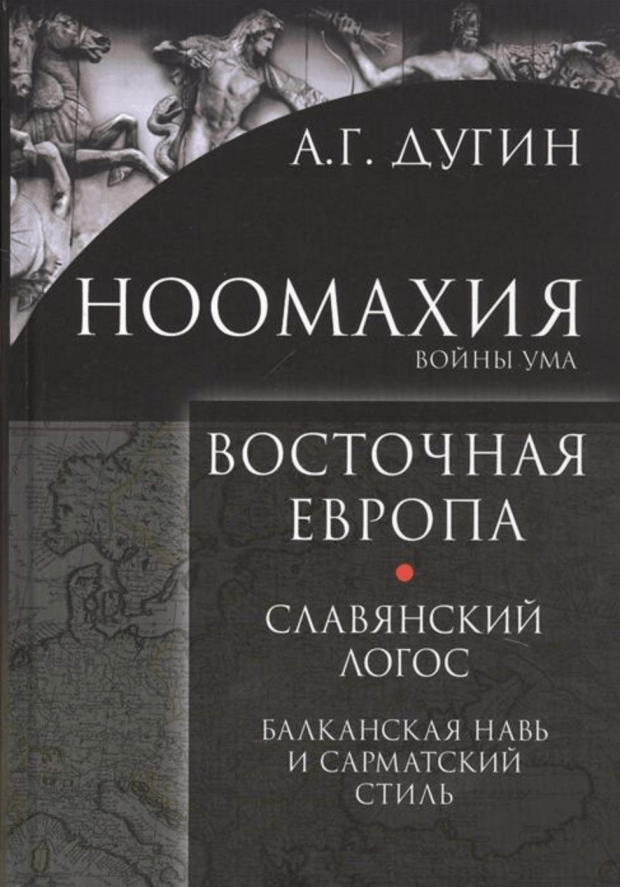
Noomakhia: Eastern Europe: The Slavic Logos

Alexander Dugin, Noomakhia – Eastern Europe: The Slavic Logos – Balkan Nav and Sarmatian Style
(Moscow: Academic Project, 2018)

Screen Shot 2019-04-22 at 4.59.28 PM

Table of Contents:

PART I: The Civilization of the Goddess and the Peasant Ecumene of Europe

Chapter 1: Eastern Europe as a Geosophical Concept

Chapter 2: The Matriarchal Pole of Eastern Europe

Chapter 3: The Turanian Invasion

PART II: The Eastern European Nav

Chapter 4: The Worlds of Nav and the Gestalt of the Vampire 

Chapter 5: The Witch, the Idiot, and the Languages of the Nocturne 

Chapter 6: The Indo-European Element: The Homeland of Dionysus

PART III: The Proto-Slavs

Chapter 7: The Structures of Slavic Identity: The Paleo-European Mother and the Indo-European Father

Chapter 8: At the Dawn of Slavic History

PART IV: The South Slavs: Bulgarian Katechon and the Mission of the Bogomils

Chapter 9: The Bulgarian Historial

Chapter 10: The Parallel Historial of Bulgarian Identity

Chapter 11: Macedonia: Gospel of the Vampire 

Chapter 12: The Structure of the Bulgarian Logos

PART V: Illyrian Civilization: Fiery Serbia and other South Slavs

Chapter 13: The Serbian Historial

Chapter 14: Bosnia: Bogomils and Islamization 

Chapter 15: The Serbian Wail 

Chapter 16: In Search of the Serbian Logos

Chapter 17: The Historial of the Croats 

Chapter 18: The Croatian Logos: Pan-Slavism and/or Nationalism

Chapter 19: Slovenia

Chapter 20: Slovenian Style: Euro-Integration and Nihilism

PART VI: The West Slavs: The Moravo-Bohemian Logos

Chapter 21: The West Slavs in the Slavic World

Chapter 22: Sources and Flight of the Czech State 

Chapter 23: The Czech Logos of the Hussites 

Chapter 24: The Czechs and Modernity

Chapter 25: The Philosophy of the Czech Renaissance

PART VII: The Polish Horizon: Sarmatian Spirit and European Mission

Chapter 26: The North-West Slavs in Antiquity 

Chapter 27: The Polish Historial

Chapter 28: Old Polish Religion

Chapter 29: Union, Partitions, Modernization, Freedom

Chapter 30: Polish Pride and the Polish Logos: The “Christ of Europe”

Chapter 31: Polish Terror

Chapter 32: The Polish Structure

Conclusion: On the Path Towards the Slavic Ereignis

“Noomakhia is the war in the sphere of the mind. The author of Noomakhia examines human history and the present as a ceaseless war between diverse civilizational projects founded on three noological paradigms (the Three Logoi of Apollo, Dionysus, and Cybele). The panorama of humanity presents in all its fullness and diversity the many dialogues, combinations, juxtapositions, appropriations, and annihilations of the Logoi which yield numerous types of rationality, mythologies, philosophies, religions, metaphysics, and constitute the plurality of civilizational constructs.

The space of Eastern Europe is a frontier between two civilizations – Western European and Russian. Precisely here ran the border between the nomadic, Indo-European, patriarchal civilizations of Turan and the matriarchal civilizations of Old Europe (which emerged in Anatolia and spread to the Balkans and Southern Europe), between the Catholic (Latin) Celto-Germanic West and the Russian-Orthodox East. The mosaic of this pivot region’s peoples and religions has never in history been geopolitically united, but this does not mean that the peoples of Eastern Europe cannot develop civilizational unity in the future and retrieve a cultural identity founded on the common Eastern European Dasein.

Since the fifth-sixth centuries A.D., the Slavic peoples have played a decisive role in the space of Eastern Europe. This volume of Noomakhia examines the Slavic horizon of Eastern Europe, which the author calls “Great Slaviania.” In question is not a concrete polity, but the inner unity of the Slavic Dasein, language, and ethno-sociological structure, constituted by the predominance of the settled agricultural population and the allogenic superstructure of a ruling warrior elite, the latter being an indirect trace of Sarmatian, Turanian, or Germanic influence. Alexander Dugin believes that, despite the powerful impact exerted on Slavic horizon of Eastern Europe by a number of non-Slavic peoples and powerful civilizational poles – such as Byzantium, Rome, Germany, France, England, Russia, and the Ottoman Empire – the mosaic of the West and South Slavic peoples, being the foci of mixed, self-sufficient cultures, can in the future form a multi-faceted and fully-fledged civilizational unity.