Alexander Dugin

The Battle for History – Part IV

Author: Vladimir Karpets

Translator: Yulian Orlov


Zavtra no. 23 (916), 8 June 2011


The most important place in the “Battle for History” is occupied by the explanation of the circumstances surrounding the fall of the Russian Autocracy as well as the fate of not just the Martyr Tsar, but also those who were close to him and his family. Not the least among them was a peasant; some called him a Man of God, while others called him a messenger of doom: Grigori Yefimovich Rasputin-Novy (or Novykh, 1869-1916).

In Soviet times, propaganda entirely “unleashed” the image of Rasputin as a symbol of the “rotten essence of Tsarism”… At times, this was a kind of cipher of a neo-Marxist (as in the Elem Klimov film “Agony” [1]) or pseudo-patriotic (as in Valentin Pikul’s novel “At the Limit” [2]) union of the intelligentsia against the “government in general.” However, this whole Soviet or (crypto-anti-Soviet) “Rasputiniad” had, in any case, a most direct link to the myth about Nicholas II as a “weak despot.” On the other hand, it was a key component of Western-cultivated Russophobia, in this case with a slightly “sweetened” taste as in the famous song by the pop group Boney M (the group’s soloist, Bobby Farrell, died in Saint-Petersburg on the night of 30 December 2010: the anniversary of Rasputin’s murder).

With the beginning of Perestroika, on the one hand, the beginning of the veneration of the Royal Family and the rebirth of Russian monarchism led to a special veneration of “starets Grigory”, while on the other, it also led to the resurrection of the cultivation of the most disgusting rumours, then clothed in the books of one of the “nightingales of Perestroika”, E. Radzinsky [3], then in the repulsive fantasies that were generated along with the “acquisition of the Empress’s letters” by the musical conductor Rostropovich between 1991 and 1993 [4]. Sadly, the Russian Orthodox Church’s episcopate (with the exception of individual hierarchs) has always leaned towards the second position; the “Rasputin subject” has long been used as an impediment against the veneration of the Royal Family, and later, like in the February days, all monarchists came to be called “admirers of Rasputin” (of course, with a negative tint). On the other hand, many Orthodox faithful (and not just political monarchists) truly, honestly venerate Grigori Rasputin, being as they are convinced of his absolute purity, and they attribute all dirty rumours to the slander of the anti-Russian press, liberals, and revolutionaries, who were for all intents and purposes aided by the police as well. Among the Orthodox people there exists a strong opinion about his sanctity. This opinion is shared by many parish priests and claustral monks.

After Richard Cullen’s television movie “Who Killed Rasputin (2004)” [5] and Stanislav Libin’s broadcast “The Conspiracy” (2007), in which the main role in the killing of the Siberian peasant is accorded to the British intelligence services (the “Windsors against the last of the Romanovs” line [6]), there was a clear, definite shift in broader public opinion: many have begun to understand the geopolitical context of not just the murder itself, but of the global scale and slander surrounding this event and those that followed. This was a definite shift. 

The next (entirely natural) shift is taking place before our very eyes. We are speaking of A. N. Bokhanov’s book “The Truth about Rasputin” [7] and the attached pamphlet of the same name, which were published by the Russian Publishing Centre. It is important that the author is not a journalist, but an academic scholar, a professor of history, and an author of university textbooks. Professor Bokhanov points out that “a vast portion of the “Rasputiniad” is based on material that is apocryphal or, in other words, entirely false – police documents, letters by individual persons, and diaries were all fabricated <…> These [pieces of “evidence”] are interesting because of two factors: the exquisiteness of the technology used in their production as well as the character of the social ideas that successfully absorbed the faked material.” The “tradition” that was founded by the liberal press of the 1910’s and which was continued with the fabrication of the “Vyrubova Diaries” by the “red count” A. N. Tolstoy [8] is still alive and well in our days. We are speaking in particular about Rasputin’s daughter Matryona’s memoirs, which, as Bokhanov shows and proves, she physically could not have written. What is more, the memoirs of people who were close to Rasputin like Maria Evgenyevna (Munya) Golovina, Yulia (Lily) Den and several others, are consciously being ignored. The Russian Publishing Centre intends to continue to introduce these materials to a wider audience.

The author gives a detailed account of the development of the “Rasputin legends” – such as his extraordinary influence on the Royal Family, his degeneracy, his “work for the Germans”, his membership of the “Khlysty” [9] etc. The higher aristocracy (including members of the House of Romanov), the Duma liberals, the “hierocratically” minded episcopate, the revolutionaries, and, finally, the intelligentsia of the Silver Age – all of these groups turned out to be strikingly unified against the Tsar, Tsaritsa, and the peasant…

As far as Grigory Yefimovich himself is concerned, Bokhanov presents a very interesting fact. When answering a question posed by the investigator N. K. Muravyov on how Rasputin saw himself, Anna Vyrubova answered thus: “He always said that he was one of the spiritual wanderers.” “This formulation,” Bokhanov explains, “meant nothing to the ‘lawyer’ and ‘socialist’ Muravyov.” It carries no meaning for our blinded contemporaries as well, be they liberal or socialist.

One more very important thing receives special attention in the book. “Rasputin” (to be more precise, “Rosputin” [10]) and “Novykh” are Grigori Yefimovich’s surnames from different lines. But it is the Tsar that commanded him to write his surname as “Novy.” This is the Name that was granted by the Tsar.


Translator’s notes:

[1]: Agony (Агония, 1974) more specifically deals with the conspiracy against and the preparation for the murder of Rasputin. It initially depicted Grigori Yefimovich and the royal family in a more sympathetic light, but with the US release of Nicholas and Alexandra (1971) the Soviet government pushed for a more hard-line, anti-Tsarist script. Rasputin is thus depicted as a degenerate hooligan, the Royal Family as superstitious and incompetent, and Rasputin’s killers as heroes. The final scene is a somewhat clumsy shot of Rasputin’s coffin being lowered into a hole filled with stagnant water.

[2]: In Extremis (До последней черты (1979, originally written and published as Нечистая сила (Forces of Darkness)) is a historical novel by Russian popular historian and writer Valentin Pikul’ (1928 – 1990). The title bears a resemblance to a quote from Lenin, which reads: “… [the first revolution] pushed it [the monarchy] to its extreme limit [cursive mine-transl.] and exposed all the decay and cynicism… with the monstrous Rasputin at its head…” Incidentally, this same quote appears at the very beginning of Klimov’s Agony.

[3]: Edvard Stanislavovich Radzinsky (1936 – ) is a Russian playwright, novelist, and prolific popular historian. He has written several books on Rasputin’s life and death.

[4]: Mstislav Leopoldovich Rostropovich (1927 – 2007) was a Soviet and Russian pianist, cellist, and composer who, among many other prizes, can lay claim to five Grammy Awards and two Russian State Prizes. What Karpets is referring to here is the transfer of Rostropovich’s archive to the Russian Ministry of Culture, where it was found to contain (among others) several letters by Empress Alexandra Fyodorovna.

[5]: The documentary can be viewed here.

[6]: Karpest would go on to write another series of blog posts developing this idea called “The British Crown against Rus’” (Британская корона против Руси)

[7]: Боханов, А. Н. Правда о Григории Распутине [The Truth about Grigori Rasputin]. Moscow, 2011. 

[7]: Anna Aleksandrova Vyrubova (1884 – 1964) was a Russian lady-in-waiting and the closest confidante of Empress Alexandra Fyodorovna. After Rasputin’s murder, she was one of his fiercest defenders. Count Aleksey Nikolayevich Tolstoy (1883 – 1945), nicknamed the “Red Count” for his Soviet sympathies, was a scion of the famous Tolstoy family and also a noted science fiction author.

[8]: The Khlysty (Хлысты) were a Russian peasant sect formed in the late 17th century. Their central ideology revolved around asceticism with bouts of ecstatic communal worship. Rasputin was (without any significant proof) and still is frequently accused of having belonged to the sect.

[9]: A reference to the older spelling of his name, which would be “Роспутинъ”. The current spelling implies a connection to the word “распутница”, which refers to a time of year when Russian roads turn into slurry; this was extended by analogy to be indicative of Rasputin’s alleged destructive or chaotic influence in government.

Introduction: The Aims and Tasks of Noomakhia

Author: Alexander Dugin

Translator: Jafe Arnold 

Introduction to Alexander Dugin, Noomakhia – Wars of the Mind – The Three Logoi: Apollo, Dionysus, and Cybele (Moscow: Academic Project, 2014). 

***

The Open Triadic Method

The Noomakhia series consists of five books written methodically and following an initial plan. This first book, The Three Logoi: Apollo, Dionysus, and Cybele, represents the philosophical part which establishes and describes the methodology that lies at the heart of all of Noomakhia. A number of preliminary remarks should be expressed regarding this first book.

First of all, we consider Noomakhia, especially this first book, The Three Logoi: Apollo, Dionysus, and Cybele, to be the continuation of another book: In Search of the Dark Logos [1]. We believe that this search was initiated, but has been left unfinished, and, who knows, perhaps it can never be finished. But it is important that we recognize the persistent need to continue it. As follows, the topics, plots, and trajectories designated in In Search of the Dark Logos will be further developed here in different directions, and perhaps with unexpected consequences. We propose to let the fundamental intuition which lies at the heart of this book unfold of its own will and freely, and we take upon ourselves the conscious risk of such leading to horizons and topoi which justifiably evoke fear and even horror. In this sense is this exposition conceived as open, as reflecting the landscapes grasped by the intellect over the course of active and free contemplation. We are moving forward in the “search for the dark logos.” And this is the goal. 

Secondly, we are presented with the vitally important question of retrieving Plato, Platonism, and Neoplatonism. We see in Plato not only a philosopher or founder of an individual school, i.e., a phenomenon to be considered alongside other philosophers and other schools, but rather we are convinced that Plato represents the focus of philosophy as such. He yields the very paradigm of philosophy which all other philosophers are left with comprehending or interpreting. But in order to fully recognize this approach, it is necessary to consciously embrace the standpoint of Platonism or some other philosophico-religious doctrine based on the ontology of eternity. The philosophy of New Time (Modernity) dismantled eternity as a “dubious hypothesis”, as a “myth”, as a remnant of the “not-yet-scientific”, as an “archaic” style of thinking. It was replaced with the ontology of time – history, process, development, evolution, etc. In this case, Plato and Platonism came to be associated with a temporal point or moment, and all of Platonism’s theses were interpreted on the basis of the knowledge attained later over the course of the further shaping of philosophy. Therein, with the onset of New Time, Plato came to be treated like the discourse of children or teenagers – albeit genius, limited. But everything is completely different if we treat Plato like his contemporaries or he himself did. If he spoke of eternity, god, and ideas, then we should live through and experience these ourselves – as eternity, gods, and ideas – without the smallest tint of conditionality or comedy. Is this possible? We will learn if this is possible only once we try to perceive Plato and Platonism directly, and if we become Platonists in the fullest sense of the word. Whether we will succeed in importing the dimension of eternity into the epochs of Modernity and Post-Modernity, which are explicitly and implicitly founded on the rejection of such, is an open question. In order to undertake such an attempt, it is necessary to accomplish a fundamental revolution in consciousness – a Platonist revolution. We can only approach Platonism, even purely theoretically, if we perceive such as absolute truth demanding our adaptation to it, and not its adaptation to our understanding. This is what we began in In Search of the Dark Logos, in the section “Open Platonism”, and we will continue this in the present work.

Thirdly, studying Platonism (by means of deep philosophical empathy, immersion into Platonism itself, and the assimilation of its elements) implores us to describe the structures of the light logos, the intellectual worlds of Apollo. This is necessary in order to more clearly understand the structures of the “dark logos” and their differences with those of the light logos. Along with this, as shown in our book In Search of the Dark Logos, we will encounter a number of philosophical plots, topics, and methods which allow us to advance the hypothesis that there exists an even more hidden “black logos”, the Logos of the Great Mother (Cybele), or “black philosophy.” The dark logos of Dionysus thus contrasts not only with the light logos of Apollo, but also with the black logos of Cybele. Thus, our goal is to further study this black logos, this “third logos” which least of all resembles the Logos itself, but rather “matter”, “space”, “autonomous corporeality”, the “insurgent void”, or even “madness.” Here we arrive at a very disturbing zone of ontology and gnosiology which, nonetheless, is up for decisive mastery and conceptualization within the framework of our overall philosophical program. This is the question of Dionysus and Cybele, their correspondences, differences, contrasts, and relations.

In the following four books of Noomakhia (The Logos of Europe: Mediterranean Civilization in Time and SpaceBorder CivilizationsBeyond the West: Part I – The Indo-European Civilizations of Iran and India, and Beyond the West: Part II – China, Japan, Africa, and Oceania) we will shift the focus of our study to transition to the subject of the horizontal multiplicity of Logoi (whereas in this first part we focus on studying their vertical multiplicity). Over the course of our study, the following tasks will be accomplished. We must decipher the correlation between the existential category of Dasein (a la Heidegger) and the multiplicity of cultures and their Logoi. This requires constructing an existential structure for each concrete Dasein, clarifying the identity of each society we examine and the correspondences between this deep identity and the layers presented by each civilization’s Logos – their ontological, or even better (if there is such), “fundamental-ontological” levels [2].

We will illustrate several examples of how existential structures are shaped into the cultural complexes of philosophy, myths, metaphysics, rites, etc., whether in the context of large spaces with developed or, conversely, implicit self-reflection (on the basis of the large-scale reconstructions of ancient cultures accomplished in the works of Leo Frobenius, Oswald Spengler, George Dumézil, Mircea Eliade, Károly Kerényi, René Guénon, Julius Evola, and other theoreticians of the civilizational approach who offer broad, generalizing models), or in the context of more narrow (spatial and historical) borders [3]. The aim is to demonstrate how the concrete historical Logoi of this or that culture are built on the foundations of different existential structures and reflect distinct, original combinations of the elements of the three vertical Logoi. At the same time, we will not restrict our aims to necessarily reducing the Logoi of different civilizations to our hitherto proposed triadic system of Apollo, Dionysus, and Cybele. We are ready to, upon meeting different cultures, religions, and peoples, encounter the most unexpected combinations and variations which might confirm or deny our initial model of three Logoi, correct it, or even, perhaps, refute it. We least of all wish to project a dry, deductive model onto the living and dynamic wealth of diverse cultures. We are ready to reconsider our method if it turns out inapplicable in one or another situation. And in such a case, we shall agree to restricting our reconstruction of this or that society, ethnos, or community’s civilizational (horizontal) Logos, and present it such as is (tel quel) without distorting our starting points. In this consists the openness of Noomakhia as a project. Setting off with our triadic approach, based in Platonism (albeit freely interpreted and substantially re-conceptualized, especially with regards the problem of χώρα, “matter” and the feminine element in metaphysics, ontology and cosmology), we will attempt to construct a noological model for all the civilizations we examine. If this is successful, we will consolidate our original position; if this method requires revision and refinement, then we are ready to carry out such; if it turns out to be altogether inapplicable, then we are even ready to desist and proceed to search for a new one on the basis of contemplating the nature and structure of the difficulties and obstacles which we might encounter.

On the “Father of All”

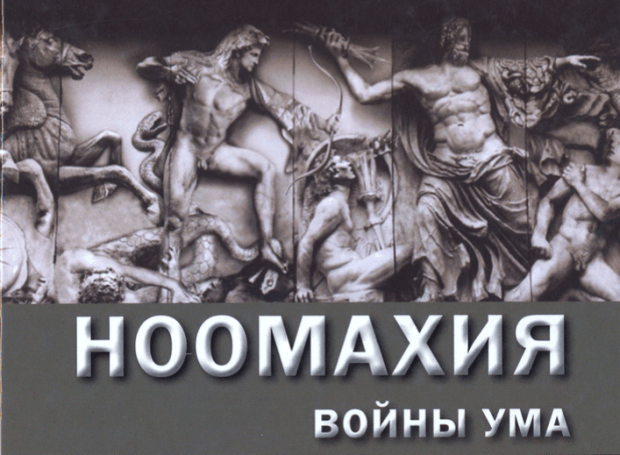
The title of Noomakhia, which literally means “War of the Mind” or “War of the Intellect” (“Noomachy”, “War of the Nous) [4] – and which can also be conceived as “war within the mind”, “war of the minds”, or even “war against the mind” – is intended to emphasize the conflictual nature of Logological structures as well as the multiplicity of noetic fields, in each of which surprises, conflicts, aporias, struggles, contradictions, and oppositions lie in wait for us. The field of thinking is a field of warfare [5]: thoughts wage ceaseless wars not only against phenomenality, matter, and their own reorganization into elements (whether existing or not is an open question), natural law, dispersion, non-structurality escaping the “control” of multiplicity, etc., but also against other types of thoughts, other thoughts, and the complex diversity of vertical and horizontal, noetic and noeric chains which permeate the reality of the world on different planes and along different geometries. Wars between people, including even the most cruel and bloody, are but pale comparisons to the wars of the gods, the titans, giants, elements, demons, and angels. And these, in turn, are but figures illustrating even more formidable and profound wars unfolding in the Mind, in the sphere of the Nous and its limits in which the Mind itself borders the zone of Madness. Thus, everything is Noomakhia, even that which is greater and came first of all – ϋπερπαντα. War, according to Heraclitus, is the father of all (πολεμος πατηρ παντων). Indeed, it is about this, the “father of all”, that Noomakhia is written.

***

Footnotes:

[1] A.G. Dugin, In Search of the Dark Logos: Philosophico-Theological Outlines (Academic Project/Department of the Sociology of International Relations, Faculty of Sociology, Moscow State University: 2013).

[2] The meaning of the Heideggerian term “fundamental-ontology” and its differences with the classical ontologies of Western European philosophy are described in our first book on Heidegger. See Dugin, Martin Heidegger: Filosofia Drugovo Nachala (Moscow: Akademicheskii Proekt, 2010), translated into English as Martin Heidegger: The Philosophy of Another Beginning (Arlington: Radix/Washington Summit, 2014).

[3] Particularly applied to Russian culture, we already began such work in our second book on Heidegger, Martin Heidegger: Vozmozhnost’ russkoi filosofii (Moscow: Akademicheskii Proekt, 2011). This will be continued here in the third book, Border Civilizations, which is partly devoted to the Russian logos and particularly the sophiology and culture of the Silver Age.

[4] From the Greek words νοῦς (mind, spirit, intellect, cognition, thinking) and μαχία (war, battle, fight, struggle).

[5] The French poet Arthur Rimbaud justifiably wrote about this in his work Une Saison en Enfer  (“A Season in Hell”): Le combat spirituel est aussi brutal que la bataille d’hommes [“Spiritual combat is just as brutal as the battle of men”].


Screen Shot 2018-04-03 at 14.58.26
NOOMAKHIA: Wars of the Mind

On the Third Rome

Author: Alexander Dugin

Translator: Yulian Orlov

Chapter 46 of Metafizika Blagoi Vesti (The Metaphysics of the Gospel) in Absoliutnaia Rodina (Absolute Homeland) (Moscow: Arktogeia, 1999). 


The Russian Orthodox Church was originally a component part of the Orthodox world and, in a certain spiritual sense, a province [232] of the Byzantine Empire. The Russians received Christianity from the Greeks (either directly or via the Bulgarians, who had been Christianized earlier) and entered the bosom of the Eastern Church as a full-fledged component. The entire history of the Russians is the history of Orthodoxy, from which the history of the people and state are an indelible part. Along with Orthodox metaphysics, dogma, and ritual, Rus also received Orthodox eschatology, which is related to the hierarchy of “castes” [233]. Consequently, Constantinople, Tsargrad, was the highest symbol and exemplar for Russian Orthodoxy in both the dogmatic and spiritual senses. The Russian Tsars and metropolitans precisely reproduced the Christian symphony of powers in their local context up to the fall of Constantinople, dividing up the spheres of “spiritual dominion” and “temporal power” in accordance with the precisely specified teachings of providentially restored, chiliastic harmony. As a component part of the Orthodox world, Rus was under the protection of “katechon” and fully belonged to the Holy Kingdom.

In this aspect, the Russian Church immediately inherited a true understanding of the social problem in its mystical dimension, and therefore from the very beginning of Russian history, contacts with the West had a univocally negative character (for Rus and its tradition). No matter how the influence of the Latin world on Rus might have manifested itself, it always latently entailed deviation from the harmonious symphony of powers of either a “pagan” or “Judaic” character. In any case, the providential proportion of the Orthodox Kingdom of the end times was disrupted. Catholic theology, on the other hand, was a threat to the metaphysical fulness of Orthodox dogma, and the activities of the “agents of papism” had, over the entire span of Russian history, extraordinarily destructive consequences in the spiritual and social areas of life. 

But it was not just Western influence that harbored a threat to the Russian Orthodox Empire. Tendencies towards the setting the Kingdom [of Heaven] and the Empire against each other also existed among Russians themselves. This disturbing theme first manifested itself in the debates and clashes between the non-possessors (the successors of saint Nil Sorsky and tbe convinced hesychoasts) and the Josephites (the supporters of Saint Joseph of Volokolamsk). The non-possessors were a kind of radical contemplators who were immersed in the transcendent reality of the Heavenly Kingdom. The Josephites, on the other hand, saw the Church as almost a social institution, as an achievement of civil service. The Josephites were also called the “adherents.” It is clear that in such an especially harsh conflict between the successors of two saints (not between the saints themselves) a loss of clear proportions of the Orthodox Kingdom’s mystical structures manifested itself. As seen from the position of fully-fledged Orthodox doctrine, two complementary qualities (contemplation and action – the priesthood and warriors, who are here taken more narrowly in the field of ecclesiastical-monasterial house-building) are in this case juxtaposed one against the other, and consequently, both variants play host to a kind of incorrect broadening of the functions of one of the “caste” positions. The Josephites clearly manifested a tendency towards excessive socialization of the Church, to an overtly tight rapprochement with the state. The non-possessors, on the other hand, had a drive towards full abstraction of the actions of the Kingdom, which harbored the threat of the appearance of a special “clean” caste and a movement towards theocracy.

The fall of Constantinople was a turning point in the history of the Russian Church. This event had great meaning for the Russian Orthodox mind. The Turkish conquest of the New Rome could not have failed to impart a deep shock to the foundations of the eschatological worldview of the entire Orthodox world. This was practically the “removal of the withholder from the center”, the departure of “katechon.” Consequently, the matter of the coming of the antichrist became more relevant than ever before in the Orthodox community.

The Russian Church found itself in a difficult situation. On the one hand, Constantinople had fallen and, consequently, the “thousand-year kingdom” had ended. On the other hand, the Russian State continued to exist in a strong and powerful form, remained loyal to the Orthodox symphony of powers, and fully based itself on the teachings of the Church and the Orthodox tradition. This is how the theory of Moscow as the Third Rome emerged.

Initially, this concept was meant to lend a theological and deeply eschatological interpretation of the de-facto continuation of the symphonic Orthodox Kingdom after the fall of its traditional center of Tsargrad. In this perspective, Moscow was seen as a kind of temporary and pre-apocalyptic fortress of Orthodoxy fated to deter the coming of the “son of perdition” for some time. What is more, the theory of Moscow the Third Rome was first described in darkly apocalyptic tones as confirmation of a state of affairs that might last for a very short time, seeing as how the fall of the New Rome did not leave a large amount of temporal clearance for a second, additional cycle of Christian civilization. This logically follows from the identification of the Byzantine Empire with the “thousand-year kingdom.” When this “kingdom” reaches its end, the devil will once again be allowed to persecute humanity, this time up until the Second Coming itself [234]. This is the so-called “little time” (Revelations), i.e. the “short term” which separates the end of the “thousand-year kingdom” from the moment of the Last Judgement. In this interval, Moscow the Third Rome and all of Holy Rus were seen by the Russians as a providentially chosen “island of salvation”, as a special land that had been marked by the Holy Spirit and for which an exception was made among all-encompassing apostasy and which, for that reason, continued to safeguard the symphonic composition of the true and unique Orthodox Kingdom.

This is why the Third Rome was associated with the third person of the Trinity, the total house-building revelation of which, according to Orthodox theology, should be fully discovered only at the very end of history. From this point of view, Holy Rus was identified with the Kingdom of the Holy Spirit, with an apocalyptic state that had been granted a paradoxical status and been marked by Divine election. However, the concept of the Third Rome itself did not carry any triumphant assurance with it (235). Moscow was seen as a kind of favored exception, as a chosen singularity in a total sea of apostasy, as a small pause. Although in a certain sense the mission of “katechon”, the “withholder” was transferred to Holy Rus and the Russian Tsar, no kind of stability or permanence was assumed. What is more, the signs of the coming manifestation of the “son of perdition” were clearly felt by the Orthodox in Rus itself.

The Russians directly linked the fall of Constantinople to the Union of Florence, which had been signed by the Greeks in their attempt to save themselves from the Turkish conquerors. But this did not help, and the capital of Byzantium fell in 1454. The Russians conceptualized this series of catastrophes into a single logical chain. The Greeks had turned their backs on the symphony and purity of Orthodoxy by entering into a union with the Catholics who embodied discordant social structure and heretical tendencies in faith. For this reason, they were subjected to Divine punishment at the hands of the Turks. The fortress of Orthodoxy, the Second Rome, had physically fallen as a result of its spiritual fall. This was seen as the end of the thousand-year kingdom.

Numerical symbolism played an enormous role in the eschatological question. Rome’s falling away from Orthodoxy happened at the turning point of the second millennium A.D. The fall of Constantinople took place roughly five hundred years later, and the year 1500 (to be more exact, 1498) marked the end of the sixth millennium from the Creation of the world and was thus treated as a highly likely date for the End of the World. The last boundary that separated the fallen world from this great event was, from the second half of the 16th century, the Tsardom of Muscovy.

But the Muscovite eschatological pause dragged on. On the edge of the seventh millennium since the Creation of the world, events took place that were of a far smaller scale than the End of the World, but these were also interpreted in an eschatological manner. Several Orthodox circles in Malorossia (Little Russia – trans.) started to move towards the Latin heresy the same way as Constantinople had done. In this period, the Uniate Church entered its prime in Western Rus. Those Christians who remained loyal to the Orthodox Church interpreted these changes as an offensive by the antichrist against Rus itself and as a repeat of the same scenario that had ruined the Greeks not long before. Thus appeared a wide range of Russo-Orthodox eschatological literature, in which Uniate tendencies were seen in an apocalyptic light (the famous “Book on the Faith” of Zacharius Kopystensky, the apocryphal “Orel” writing that is attributed to Ezra, “Cyril’s Book” among others).   

In the 16th century, the doctrine of Moscow the Third Rome was further developed and became more assertive. The Moscow synod of 1551 known as the Stoglav definitively confirmed the teaching of the superiority of Orthodox Rus and its ecclesiastical-social structure over other countries, directly linking the political independence of the Russian State with the observance of all norms of Orthodoxy. The true historical realization of  what Metropolitan Hilarion had conjectured in the 11th century was now taking place. “The last became the first.” Muscovite Rus became the Third Kingdom, the New Israel, the last empire in which the fulness of the faith was safeguarded.

In the same period, the Patriarchate was established in Rus, which marks the completion and self-sufficiency of the sacred Tsardom. Although there were other Patriarchs in the Eastern Church (the Patriarchs of Constantinople, Alexandria, Jerusalem, and Antioch), nowhere else were there Orthodox Tsars; that is to say, the prerequisites for a true and complete symphony of powers, for the existence of “katechon”, the “withholder” were absent. Rus became the one and last “withholder.” Because of this, from this point onward it is called holy in the fullest sense of the word. Holy Rus.

The recensions of Patriarch Nikon were a catastrophe for the Third Rome. Nikon himself drifted towards a circle of God-pleasers together with his future opponent, Protopope Avvakum, and like all God-pleasers, he fully supported the eschatological theory about the universal mission of the Russian Church and Russian Tsardom [1]. However, upon becoming Patriarch, Nikon preferred to translate this difficult historiosophical doctrine into a worldly optimistic variant, thereby totally dropping the alarming apocalyptic subtext that it contained; after all, “katechon” Rus was but a temporary barrier to the arrival of the “son of perdition.” Driven by entirely patriotic motives, the Patriarch conceived the idea of uniting all Orthodox lands and peoples that were repressed either by the Muslims or the “papists” around the Third Rome and the Russian Tsar, in order to spread the salvational light of Russian Orthodoxy everywhere and turn Rus into a sotereological Empire. This eschatological project also envisaged the creation of a New Jerusalem near Moscow, a characteristic sign of all eschatological and apocalyptic movements in Christianity from Montanus [2] to the Anabaptists. But Nikon did not choose a means by which to realize his project, and in order to wittingly easy friction between the other Orthodox Churches, in order to integrate them under the aegis of the Moscow Patriarchate and Russian Tsar, he began to adjust the ritual-symbolic aspects of Russian Orthodox liturgical practice to New Greek standards, which had generally been entirely accepted by the majority of Orthodox Churches outside Rus. In so doing, he neglected a most important point: the very fact of the power and the independence of the Tsardom of Muscovy was linked by the Russian people precisely to loyalty to uncorrupted faith, and stubborn resistance against all innovations from the West, which had caused Constantinople to fall (with the Union of Florence). In other words, Nikon decided to pay for the universalization of the Third Rome by sacrificing what formed one of its religious and liturgical traits. This became the point of departure for his book corrections. And Nikon’s explanations of an apparent deviation from Ancient Greek liturgical norms by the Orthodox Church and the “corruption of books” and “liturgical rites” seem totally sloppy. Actually, after Constantinople fell, Rus weakened contacts with it and froze the liturgical situation in the condition in which it had been in in Greece itself. At that moment, Byzantium was the scene of a gradual shift from Studite rule to Jerusalem rule [236]. This switch had not been completed in Rus, although both rules were considered fully Orthodox and had been in use since antiquity. But during the two centuries of Rus’ relative isolation and the incompleteness of the liturgical shift, several differences compared to the Greek example had appeared. It is these which Nikon rashly began to fix without taking good stock of the matter and hurrying to realize his own version of the Third Rome.

His opponents (who formed the core of the Old Believers) saw in his book corrections only the confirmation of the apocalyptic worries that had been forced onto Rus since the beginning of the 15th century. From their point of view, the divine election of the Third Rome was based on none other than strong loyalty to the existing Church tradition and the literal execution of all norms of this tradition on both a small and large scale. The price that Nikon was prepared to pay for the universalization of the Third Rome seemed to them to be exorbitant and contradict the essence of the whole undertaking. The supporters of Avvakum reasoned that the correction was a disruptive, anti-christic initiative analogous to those which had earlier ruined Constantinople and drawn the Orthodox of Little Russia into the Uniate Church. In the view of the Moscow traditionalists, the modern, post-Byzantine Greeks could not be seen as a criterium for the purity of the faith, as the loss of their political identity was linked to their apostasy in the direction of the Latins. Therefore, if it was necessary to correct the Orthodox rite and liturgical books, then it was the other Orthodox peoples who had to do so on the basis of the Russian model, and not the other way around. If Rus was “katechon”, the Old Believers thought, then the Orthodox faith had been safeguarded within her best of all, as an example to all other peoples. But seeing as Nikon began his reforms and book corrections bluntly and highhandedly, difference in method developed into a very deep, ideological and spiritual conflict. After some time, the reforms began to be interpreted by the traditionalists exclusively in a negative, anti-christic sense.

The harder that Patriarch Nikon insisted on the rightness of his position, the more radical the opposition against him became.

Along with the dubious (although idealistically justified) “correction”, Nikon disturbed another important condition for the stability of the salvational Kingdom, “katechon”: the symphony of powers and the providential and unique combination of worldly rule and spiritual domination. He started to move increasingly in the direction of a theocratic, almost caesar-papist direction, mistaking himself for the autocrat of Rus and the entire future Orthodox Empire, which was furiously being established by the (then) loyal Tsar Aleksei Mikhailovich. But seeing as the disruption of the symphony by one side is always fraught with reciprocal action from the other, the usurpation of worldly functions by a representative of the priestly class wasted no time in summoning a “revolution of the Kshatriya.” Eventually, the Tsar rose against the Patriarch, after which Nikon was removed from Moscow and later deposed.

As a result of these fluctuations, a true spiritual catastrophe began in Rus. The Third Rome was undermined structurally, ideologically, and mystically. It is precisely in the year which was predicted by the “Book on the Faith” as the year of “apostasy” (1666) that Moscow became the scene of an unprecedentedly ruinous Synod that lasted until 1667 in which Nikon himself was deposed, his innovations approved, the power of the Tsar made absolute, the New Greek liturgy accepted as an infallible model (including the introduction of the three-fingered sign of the cross, the four-point Latin cross, baptism by aspersion and affusion, withershins processions, the dropping the word “True” from the Creed, writing the name of Jesus with two “и’s” etc.), and the entire history of Muscovite Rus, the Stoglav Synod, and the theological concept of Moscow the Third Rome were condemned and anathematized. The main judges in this process were representatives of the foreign Eastern Patriarchs, who had long been under the secular power of heterodox rulers. The Tsar himself practically acted as the main authority, worried as he was about strengthening the throne and trusting theological questions to the foreign bishops. It is possible that he was also moved by the desire to realize Nikon’s external imperial plans, but in a worldly variant.

This was the true ending of “katechon”, Holy Rus, and the Third Rome. From this moment on, the Russian State cannot be said to have been fully Orthodox and traditional. The raskol affected all sides of its religious and social existence.

The Old Believers definitively turned away from the “Nikonians” and insisted on the literal observation of the Old Faith, for which they were made anathema and subject to terrible persecution by the government. Many were tortured, executed, or burnt alive. All of these catastrophic events were interpreted by them as the beginning of the end times and the last fortress of salvation’s (Moscow’s) falling away from its soteriological mission. The spirit of apostasy that had first ruined the West, followed by Byzantium itself and those Little Russians who had entered into the Union, had finally reached the Holiest of Holies. According to the Old Believers, the sanctity of the official Church was destroyed, grace had abandoned it, and it had turned into the abomination of desolation.

From this point onward, the Third Rome itself went on the run, and Holy Rus was broken up into secular Russia. However good the initial intentions of Nikon may have been, the result of his reforms was catastrophic and apocalyptic in every way.

As a full confirmation of the tragic rightness of the Old Believers, the rule of Peter the Great began. The Tsar began to realize the final secularization of Russia on an unprecedented scale. The Catholic-Protestant West was now openly seen as an example and model to be imitated, the Patriarchy was abolished, and the official Church was placed under the harsh control of the secular government in the same way that the English monarchy had done. What is more, it is highly symbolic that Peter the Great moved the Russian capital to the West away from Moscow [237], thereby putting a symbolic end to the Third Rome, which was now taken off the agenda. Its place was taken by the New Babylon.


Footnotes:

[232] We must add that already at the dawn of Russian Orthodoxy, we encounter an intuition of the special mission that has been entrusted to Rus and the Russian people along with their conversion to Orthodoxy. The first ethnically Russian Metropolitan of Kiev, Hilarion (11th c.), in his “Sermon on the Law and Grace” applied the evangelical utterance “the last shall be the first” to the Russian people, which had been the last to accept Christianity (in comparison to the Greeks, Latins, and Bulgars), but was to become the first in the apocalyptic future when it came to the question of ancient piety and the true Faith of Christ. This epiphany of Russian national messianism later formed the basis of the official government doctrine of the universal, world-wide importance of Muscovite Rus.

[233] When speaking about “castes”, we mean not the institution of castes that is somewhat analogous to Hinduism and which never existed in Orthodoxy, but the fundamental relationship between the clergy and military, or the Dominion and Power which we have written about above.

[234] “And I saw an angel come down from heaven, having the key of the bottomless pit and a great chain in his hand. And he laid hold on the dragon, that old serpent, which is the Devil, and Satan, and bound him a thousand years, And cast him into the bottomless pit, and shut him up, and set a seal upon him, that he should deceive the nations no more, till the thousand years should be fulfilled: and after that he must be loosed a little season” – Revelations 20: 1-3 [KJV – transl.]. Further, we find: “And when the thousand years are expired, Satan shall be loosed out of his prison, And shall go out to deceive the nations which are in the four quarters of the earth, Gog, and Magog, to gather them together to battle: the number of whom is as the sand of the sea.” – Revelations 20: 7-8.   

[235] This has been understood very well by all serious historians of Russian Orthodoxy who have pointed out the dark and apocalyptic-catastrophic character of starets Filofei’s teachings; only a significant amount of time later did this tone disappear amidst the optimistic tones of the sovereign affirmation of Russia’s political independence. What is more, along with the change in tone from dark to light, the theological meaning of the “thousand-year kingdom” in Orthodox dogma disappeared and the Orthodox symphony of powers was destroyed. See Florovsky G., Puti Russkogo Bogoslovia, Vilnius 1991 [translated in English as Ways of Russian Theology, Nordland pub. 1979 – transl.].

[236] See S. Zenkovsky, Russkoe Staroobryadchestvo, Moscow, 1995.

[237] The name of the new capital itself hinted that Peter was a “saint” which, along with the geographical location of the city and its cultural-political raison d’etre, testifies to a Western orientation.

Translator’s notes:

[1]: The God-pleasers (боголюбцы) were a group of young Orthodox clergy of the early 17th century. They distinguished themselves by their good conduct and made attempts to better the Church hierarchy and laymen through liturgical reform and a return to strict observance of the Orthodox faith. Apart from Nikon and Avvakum, the other most famous God-pleaser was Gregorius (Neronov), archimandrite and later an Old Believer; all three men used to gather together in Moscow to discuss their ideas for renewal of the Church. 

[2]: Montanus was a second century pagan convert to Christianity. He claimed to be inspired by the Holy Spirit and called upon his fellow Christians to join him and construct a New Jerusalem in Phrygia. The mainstream Church’s opinion was somewhat ambiguous, but the movement was later condemned and, as a result, lost the vast majority of its support and dwindled to a few scattered groups.

The Battle for History – Part III

Author: Vladimir Karpets

Translator: Yulian Orlov

Zavtra no. 22 (915), 1 June 2011


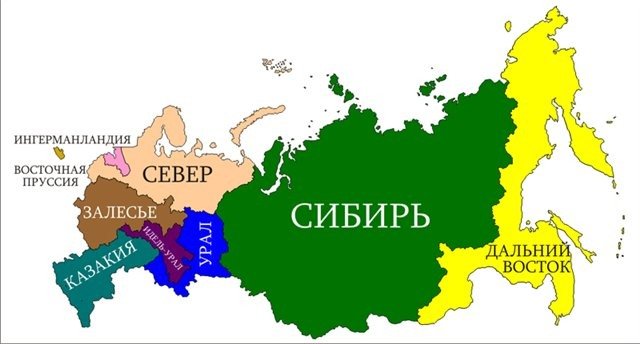
Very recently, on May 23rd of this year [2011], the famous journalist and poet Aleksei Shiropaev made an appearance at a round table in the State Duma called “The Russian Question on the Eve of Elections” on behalf of the so-called National-Democratic Alliance. His speech can be considered a breakthrough; that is, for official structures like the State Duma. National-democratic (or national-liberal) is what that part of the Russian nationalists calls itself which most radically rejects historical Russia and openly propagates her breakup into independent “Russian republics” oriented towards “Western civilization” and market-liberal reforms. “We national-democrats are of the opinion that a correct solution to the Russian question is directly related to rejecting the imperial character of Russian statehood,”  Shiropaev said, “Through constitutional procedures, Russia should be transformed into a symmetrical federation consisting of equal subjects: national republics, which includes Russian republics formed on the basis of Russian-populated regions and provinces that are not part of any already existing national-governmental formations. (my italics — V. K.). We see seven Russian republics in the Russian Federation. They are distributed as follows: the Far East, Siberia, the Urals, the Volga, Central Russia, Southern Russia, and the Russian North.”

The italicized words leave no doubt as to what is really meant here. There have long been discussions between the national-democrats themselves and on their websites about independence for Siberia, “Kazakia”, “Zalesye”, “Ingermanland” [1]. 

“Russia cannot be remade. She can only be done away with (of course, bloodlessly and in a civilized fashion)”, says the very same Shiropaev. “Who has run roughshod over man, his freedom, spirit, and thoughts more than Russia? And the Russians are victims and hostages of that Evil. And those who share our fate as well, voluntarily or involuntarily… Russia is a historical anomaly that was birthed by the Horde’s violence against the Russian character” – this is from Shiropaev’s famous article “The Murky Motherland.”

The national-democrats openly acknowledge that they do not need Russia. “Finally, we see that nationalism will lessen the borders of the concept of Russia to even less than those of the Princedom of Muscovy in 1547”, — they themselves acknowledge while still seeing themselves as the only “Russian nationalists.”

But why Shiropaev in particular?

I remember him well at the end of the ’80’s. He was an Orthodox monarchist. But Aleksei is, above all else, a poet. And as a poet, he could not reconcile himself with those moral and aesthetic limits that Christianity carries within it – and those which Russia (which was born from Orthodoxy) carries. Count A. K. Tolstoy [2], who was actually a predecessor of Shiropaev and also rejected Moscow and loved Novgorod, agonized over the very same questions. Shiropaev has an additional strong feeling about Orthodoxy being the product of import and “foreign.” All of this together overwhelmed him and is the cause of his radical turn. His book “Prison of the People” (2001) is a cry. Aleksei Shiropaev could not withstand the extreme pressure of what A. Blok called the “antinomies of Russian history.” His political position (not his poetry) is a gnoseological fracture.

I dream about the appearance of the concept of the Russian burgher, a concept that entails the idea of freedom from the psychopathic drive towards the ‘liminal and transgressive’, from ‘existencelesness’ and ‘God-bearing’ [3]… As follows, cultural, social, and above all psychological bourgeoisness are fundamental to national-democracy.” 

But the problem is that this “burgher” himself has no need at all for the poet Shiropaev. He will be cast out like a used object (in the best case).

We will add one more thing. in his apologetics of democratic freedoms and “bourgeois values”, the “neopagan” Shiropaev, who has rejected Russian Orthodoxy, appears to be a pure “Christian personalist”, not even of a Catholic or Protestant kind, but of a purely Western type… 

In itself, the realization of national-democracy’s goals (which would apparently save the Russian people from the “state of priests and coppers” and the “violence of the blacks”) would mean the end of the Russian people. Whatever the fate of the “Russian sub-ethnoi” may be, they would, in any case, be another people entirely. They would become part of other empires: whether European, American, Chinese, or the Islamic Caliphate. They would have reservation rights. Today, large empires are being created and recreated, and he who does not work on his own is working on someone else’s.

And now for the most important part. The Medvedev administration itself has unleashed national-democracy “from the lamp.” It has been conceived not in the least through “de-Stalinization.” Aleksei Shiropaev writes: “Real, deep de-Stalinization will inevitably become a criticism of historical Russia as such… True de-Stalinization presupposes a consequent historiosophical and culturological revision up to and including the era of Ivan the Terrible and even further: all the way back to the destruction of Novgorodian democracy by Muscovy.”

Why has this process been started – all the more so on the eve of elections? Because of the interests of those “in the greedy crowd standing by the throne” [4] at the Old Square for a new conversion of power into property by way of separatism. But also for those who, in turn, stand behind the first group on both sides of the border, those “without faces and spines”, agents of the “nothing that nothings” [5].


Translator’s notes:

[1]: “Kazakia” is one of the republics that Shiropaev proposes. It would roughly cover the Don area. “Zalesye” is a historical name for the area to the northwest and northeast of Moscow. Finally, “Ingermanland” refers to the area directly south of and including Saint-Petersburg.

[2]: Count Aleksey Konstantinovich Tolstoy (1817 – 1875) was a poet and dramatist. He is now mainly famous for his historical plays and the novel Prince Serebrenni (Князь Серебряный, 1862), which deals with a prince torn between his disgust of Tsar Ivan the Terrible and his desire to serve his homeland. Tolstoy would eventually commit suicide at his manor house.

[3]: “God-bearing” (богоносный) is a Russian term used to describe either the Russian people or the Russian state. It refers to Russian Orthodoxy and the country’s universal mission.

[4]: A line from Mikhail Lermontov’s Death of the Poet (Смерть поэта, 1837) written shortly after Aleksandr Pushkin’s death in a duel. The poem can be read in English here.

[5]: A reference to the book “The Prince of This World” (Князь мира сего, 1970) by author Grigori Petrovich Klimov (1918 – 2007). Klimov’s works primarily dealt with the health and decay of states and ethnoi. 

The Battle for History – Part II

Author: Vladimir Karpets

Translator: Yulian Orlov

Zavtra no. 21 (914), 25 May 2011


“Relinquish your blood and accept the Spirit”, the ancient Church Fathers said (Saint Peter of Damascus, blessed father Longinus, and others). They themselves did not invent this utterance. We are dealing with a deep metaphysical unity, and not just in the ascetic and moral sense, which are, of course, also present.

Blood has a dual nature. It consists of two fundamental elements: red cells and white cells. In Orthodox liturgy, the red vestments of Passion Week are exchanged for white robes on Great Saturday and again exchanged for red ones during the night of the Holy Resurrection. The symbolism of white and red accompanies the entire history of the human race. In medieval natural philosophy, the images of red and white wine were used. The ancient Aryans considered white to be the color of the priestly varna, and red the sign of the ruling and military class. Later, white was linked to purity and red to holy fury and holy war.

The “whites” and “reds” have fought since ancient times (priests against warriors, the Priesthood against the Ruler), but they could not do without each other, as in itself this battle has always had a sacred meaning. Later, the pure delineations of the ancient varnas were erased: thus, the wars of the Scarlet and White Rose looked like a confrontation within a single royal line, while during the French Revolution the “white” united the clergy and aristocracy, while the “red” was captured by the bourgeoisie and common people. But the reason for this is not just in the mixing of the varnas. The fact is that the Sacred Emperors, in a certain sense, united within themselves the sacred and the militant. Without this, we also cannot understand the meaning of our own “civil war.”

I am consciously writing this term in quotes. A “civil war” is only possible in a place where there are citizens: an autonomous, urban, bourgeois estate (“bourgeois” actually means “citizen”). The Russian Empire was the home of the subjects of the Tsar, and “citizens” appeared only during the Empire’s decay, and even then, they formed a minuscule minority. The subjects moved against the Tsar, after which they started on each other. This is not a “civil war”, it is a classic time of troubles [1]. This is why it continues to this very day.

The symbolism of the ancient Assyrian-Babylonian kings (and the Russian Tsars were successors of the Roman Empire, which, according to the Book of Daniel, succeeded the Babylonian empire – Russian scribes developed this inheritance in the “Tale of the Kingdom of Babylon” and the “Tale of Borma Yaryzhka” [2]) included a red bull and a white falcon (or white deer). The Russian Tsar was a White Tsar, that is to say autonomous, not dependent on anyone (in the social sphere, the “white kingdom” is related to the “white towns” and “white clergy” [3]) and a Red Tsar, the anointed commander of the host. The February conspiracy was led by generals and the episcopate [4]. This last point must be acknowledged, as it does not contradict the Soviet (and its mirror opposite, the anti-Soviet) version of the “monarchist clergy.” Investigations by the historian, Dr. Mikhail Babkin, have laid this problem bare. They also explained extremely well why the idea of an Orthodox monarchy is unpopular in contemporary Church circles.

The beginning of the Russian troubles of the 20th century was the destruction of Imperial power as the center of united blood and spirit, the white and the red. The whites and reds marched against each other. This is identical to the red and white cells in fanatical (gay?) medical practice. A famous song of that time (set to the tune of a Hassidic melody) sings: “The White Army and the Black Baron [5] / are preparing the Tsar’s throne for us again / but from the taiga to the British sea, / The Red Army is the strongest of them all” – this is a complete alchemical formula.

The Red Army was not Lenin and Trotsky’s creation. It was a creation of the Imperial High Command. The military aristocracy stood at its origins. The Russian officer class was split into two. The author of this article has already had the occasion to write on this subject in the article “The Lenin-Potapov Precedent” (Zavtra, 2010, no.16). However paradoxical it may seem, the “social factor” is secondary. 

Both the Whites and the Reds were right. The Whites had aesthetics and ethics (by the way, what ethics could be spoken of after the rule of the Tsar?). The Reds primarily had the rejection of the buying and selling of land (“The land belongs to God and the Tsar, and thus belongs to nobody”), precisely because land is Blood and Spirit (“on Whit Monday, it is the Land’s name day” [6]). The paradox lies in that the Whites, who acted in the interests of a “one and undivided Russia”, found themselves to be the hostages of foreign interventionists (mainly the English) who tried to divide Russia; the Reds, in turn, once again united the Russian land from the Carpathians to the Pacific, all the while holding speeches on the “Internationale” and the “right of nations to self-determination.”

But the revolution itself was the “black” component of the formula. Neither the Whites nor the Reds were equal to the “black blacker than the black masses” – the anarchists, however, were. Anarchy is the mother (in the literal sense) of order. It is that what comes before, the Damp Mother Earth [8]. Having hidden the Tsar within herself, she is bound to resurrect him. Neither the Whites, nor the Reds, nor the anarchists understood this. V. V. Rozanov wrote [9] that if the banners of the revolution did not carry the words “Workers of the world, unite!” but “The fashion of this world passeth away [10]”, everything would have been different. Thus, the Whites failed in the “white task”, and the Reds in the “red.” That is to say in the long run, and if we look at the entire history of the twentieth century.

Therefore, uniting these two streams of Rus (these dews or veins) is our final raison d’etre and goal. In the political-historical sense, we can (or cannot) call this “social-monarchism.”

“And a bright red rowan

On a chalk-white bluff”
(Anatoly Zhigulin [11]). 


Translator’s notes:

[1]: The Russian term смута cannot be translated directly to English. It is related to a root meaning “sorrow”, and signifies a time of great, dreadful catastrophe. It is most often used to refer to the Time of Troubles of the early 17th century, which nearly proved to be the Muscovite state’s undoing.

[2]: These are both old Russian folktales that were borrowed from the Byzantines and given a Russian coloration. Both tales state that the Byzantine/Russian emperor sent a diplomatic mission to Babylon, after which the diplomats return with an emperor’s crown and a document that confirms the emperor in question as the rightful successor to Babylon.

[3]: “White towns” (белые слободы) were tax-exempt settlements in Muscovite Russia. The “white clergy” (белое духовенство) refers to those members of the clergy that are allowed to marry. The “black clergy” is forbidden from marrying and consists of monks and bishops.

[4]: A reference to the February Revolution, in which representatives of the Russian Supreme Command, high clergy, and political elite gently forced Nicholas II to abdicate the Russian throne.

[5]: The “Black Baron” referenced here is baron Pyotr Nikolaevich Wrangel (1878 – 1928), a cavalry officer and White general who was feared by the Reds for his loyalty to the Tsar and skill on the battlefield. 

[6]: This difficult to translate Russian proverb (в Духов день Земля — именинница) has two important elements: first, Whit Monday is often called the “Day of the Holy Spirit” in Eastern Orthodoxy; second, Whit Monday is (according to the proverb), the Earth’s name day. “Name days” are an ancient Slavic custom that resemble the Western practice of birthdays, with the change that a person is honoured on the same day that the saint that person shares a first name with is venerated.

[7]: Another sentence that is difficult to translate into English (черному чернее чёрной черни), this is a reference to the peasant class in Russian society, which has been historically called “black” (чернь). A more expressive translation would be “blacker than the blackest black”, but I felt it necessary to forego sacrificing a precise translation of чернь.

[8]: The Damp Mother Earth (Мать Сыра Земля) is a personification of the earth in Slavic mythology. It later became a folk-Christian appellation for the Holy Virgin. 

[9]: Vasily Vasielevich Rozanov (1856 – 1919) was a Russian journalist, literature critic, theologian, and philosopher who exerted a small, but significant influence on Russian Silver Age poetry and philosophy. He is most famous for his attempts to reconcile sexual activity and Christianity.

[10]: 1 Corinthians 7:31 (KJV).

[11]: Anatoly Vladimirovich Zhigulin (1930 – 2000) was a Russian poet and prose writer who is now best known for his “Black Stones” (Черные камни, 1989-1990), a series of autobiographical poems and stories. The lines cited here are from the poem Belogorye (translation mine).

The Battle for History: Part I

Author: Vladimir Karpets

Translator: Yulian Orlov

 Zavtra no. 20 (913), 18 May, 2011. 


“The battle for history.” What does this mean? What battle could we be speaking of, if history is the past and, as we are told, we cannot return any further?

Actually, the simplest inferences convince us that time is, at best, a very grand convention. The past has passed, and it’s not anymore. The future can only be yet to be, and it is also not. The present is a unit that tends to zero. But we know that zero is identical to infinity. From the point of view of infinity, there is neither a past nor a future. To be more precise, all is one. Everything always is and is in everything. History is a myth. According to A. F. Losev, the myth is an “open magical name”; he also held that “myth is miracle” without a human origin.

The popular myth (also known as true history) is an absolutely living and fundamentally unchangeable reality. It is born along with its people in a miraculous fashion out of the depths of Divine Wisdom. It is reflected in “positive history” but cannot be reduced to it. In defining ourselves in our relation to history, we define ourselves in relation to our myth, to our blood and to our spirit, which are all one. History is blood and spirit.

Not only peoples (that is to say, living creatures who inhabit their land, which is always blood, the keeper of the popular myth), but also essentially international associations (religious, political, economic societies ripped from the earth, but at times possessed of a clearly ethnic tint) militantly affirm their myths and history.

The world is the battleground of a permanent “Heraclitean” war, a war of all against all without which becoming and redemption are impossible. In this war, each seeks the total and unconditional confirmation of his myth, and, consequently, the downfall of his opponent’s myth: this is the meaning of any war.

But everything is more complex as far as the Russian myth is concerned. In unconditionally confirming itself, it destroys something else. It is open. The great, unique trait of Russian history and the Russian land is the capacity to absorb and deeply integrate myths that are either autochthonous or separated from the earth. This is related, among other things, to our “vastness.” This happened with Christianity, as well as Socialism (partially). Today, Russian Orthodoxy and Russian socialism (the latter is meant in a broad sense as entirely irreducible to “Marxism-Leninism”) are being rebelled against by “all blasphemous minds, all wicked people” (F. Tyutchev [1]). This is not by chance.

“For a true Russian, Europe and the fate of the entire great Aryan tribe are just as dear as Russia itself, as the fate of his native country. This is so because our destiny is universality, and it is not by the sword of acquisition but by the strength of brotherhood and our brotherly drive towards the unification of mankind that we will win it” – as F. M. Dostoevsky said in his “Pushkin Speech” [2]. We have all reason to assume that we need only to “dig down” to the Russian myth itself and its oral expression. This is partly the subject of professor A. G. Dugin’s latest books, “Sociology of Russian Society” and “Martin Heidegger and the Possibility of Russian Philosophy” [3]. However, it is possible that our myth remains inexpressible and ineffable.

Emperor Alexander III wrote to his son (the future martyr Tsar): “They are afraid of our vastness.” Today, the battle for history is above all else a battle for our “vastness.” Without such, we will cease to be Russian; we will lose our Russian name that is “magically developing” into a “myth.”  The greatest danger today (and the last hope of Russia’s enemies) is the “dethroning” of the Russian myth into a bourgeois nationalism of the “Baltic type.”  All of these “Zalesyes” and “Ingermanlands”, “Kazakias” and “independent Siberias” are the last wager of Russia’s enemies [4]. Vlasov against Stalin, prince Andrei Kurbsky against Tsar Ivan, Novgorod against Moscow…

Alas, Stolypin against the obshchina as well… [5]

Why were all these “alternative variants” of our history, which are so praised nowadays, broken up? They did not “grow together” with the pre- and ex-temporal Russian myth, guarded as it is by our beautiful and damp earth. The ore rid itself of the dross. The ability to accept life as it is – that is the most important trait of he who claims to think. I have in mind Pushkin’s utterance in his famous letter to Chaadaev: “I honestly swear, that I would not for the world change my fatherland or take on a different history but the history of our forefathers, the one that was given to us by God…” 

Any attempts to “break the thousand-year Russian paradigm” (the sinister words of Politburo member Yakovlev) ultimately turn the Russian myth and Russian history to the “dark”, “terrible” side that each and every myth has: the liquidation of the farmers’ obshchina ended in the Holodomor (which was by no means limited to Ukraine); the slogans of an “Orthodox republic” and “a free Church in a free state” without the Tsar ended at the Butovo Firing Range [6]; the fight against “nomenclature privileges” ended in a government of the ultra-rich…     

Why is this so?

All of these questions, as well as those in the likes of “why is ‘de-Stalinization’ failing?”, “who is scared of Ivan the Terrible and Grigori Rasputin?”, “what is the reality behind the “New Chronology”?”, “what is the revision of Christianity (from “Qumranomania” [7] to Dan Brown) fraught with?” and many others are among those questions which we will attempt to pose and, as far as we are able, answer in our new column: “The Battle for History.” 


Translator’s notes:

[1]: Fyodor Tyutchev (1803 – 1873) is one of the greatest Russian Romantic poets after Pushkin. The poem cited here is “You’re Not in the Mood for Verses” (Теперь тебе не до стихов…), which can be found in English translation here under header 213.

[2]: The full speech in English translation can be found here.

[3]: Neither of these books have been translated into English.

[4]: Various regions of Russia. See “The Battle for Russia – Part III” for a more in-depth discussion of this issue.

[5]: A reference to the conflict between reformist prime minister Pyotr Stolypin (1862 – 1911) and peasant communities. Stolypin introduced a land reform that made the total buying and selling of land available. In order to quell dissent, he then had to introduce Draconian martial law throughout large sections of Russia. He eventually fell from the Tsar’s favour and died at the hand of an assassin in Kiev.

[6]: The Butovo Firing Range is a former private estate that was turned into an NKVD hub after the October Revolution. Roughly 20.000 political prisoners were executed by gunshot in a span of 15 years. Many Orthodox clergy who had earlier supported the Bolsheviks were among those who were murdered.

[7]: A reference to the Qumran archaeological site in Israel, which was the resting place of the Dead Sea Scrolls until they were discovered in the period between 1946 and 1956.

We are the Church of the End Times

Author: Alexander Dugin

Translators: Yulian Orlov and Jafe Arnold

The final appendix of Metafizika Blagoi Vesti (The Metaphysics of the Gospel) in Absoliutnaia Rodina (Absolute Homeland) (Moscow: Arktogeia, 1999) 

In the process of translating this text, footnoting inconsistencies were discovered in the original edition and later online versions. These mismatches probably arose during Dugin’s reworking of the original for its significantly rewritten second edition from 1999, which is presented here. We have worked to the best of our ability to realign Dugin’s footnotes and provide some qualifying translator’s notes. – JA 


Preparing for the final event

Nobody knows the day, not even the heavenly angels, much less we. But the signs are spread everywhere all too clearly. It seems that waiting any longer is useless, and that that terrible moment will come suddenly, that the last secret iniquity will reveal itself and that everything will be finished. And then the long-awaited, so tediously expected moment of Divine Glory… Remember the triumphant words of the Psalm: “That the King of Glory may come in. Who is this King of Glory?”  [296] 

But the Creator sees more clearly when his design will precisely take place; not as an example, but completely and irrevocably.

One thing is clear: all of this will happen very soon. Very, very soon. And we cannot vegetate in suffering while we are on the threshold of such an important event. What is more, this is the moment par excellence to ask many questions all over again that had earlier worried our ancestors as well. Humanity has waited for two thousand years for the prophesied second when time will collide with eternity and the created world will face its uncreated origin, its ‘hidden part’. This is called “the last act of the Holy Spirit”, the discovery of its constructive mystery in history.

From all sides and in all directions, we are battered by the winds of the End of Times; they scare us and force us to the ground, while at the same time also implanting a miraculous joy in us. Finally, all will be solved, everything will be explained, all will be weighed, counted, and added up in the final judgement of the One who cannot be mistaken and cannot deviate from the Truth, as he is its totality.

The expectation of and preparation for such an event should not be purely passive. Where did we get the idea that in the end times there will be no room left for action and witnessing, for questions directed to the heavens and for answers to be sent down towards earth? The event is incomprehensible and terrifying, the forces of the lord of this world are gigantic, and our ranks are weakened and few in number as never before. But this is still not sufficient grounds for warranting doing nothing. Our forefathers encountered terrible situations in hard times. And how much did the first Orthodox martyrs and saints have to endure! They endured, but they did not retreat, they did not break, they did not surrender to the crushing will of ‘common sense’. 

What about us?

The relevance of “ecclesiology”

Vladimir Lossky [297] was entirely correct when he noted that every era of Christian history has at the centre of its theological interests an individual aspect of Christian teachings that is explicated and made more precise in Church discussions, all fed by the Holy Spirit [1]. And he is no less correct when he said that in the current stage of history, it is “ecclesiology” or teachings about the secret spiritual content of the Church of Christ’s earthly paths that should take center stage. It has also become possible to add that questions of Christian eschatology, questions of the Orthodox view of the contents of the “Book of Revelation” and on the meaning of the End of the World should take center stage. But in a strictly theological context, such an addition would be exorbitant, seeing as all Orthodox teaching is an expanded form of eschatology: both the First and Second Coming of our Lord Jesus Christ practically adjoin the End of Times, although the First Coming is somewhat of an anticipation of the Second. For the non-Orthodox mind, two thousand years are not a small amount of time at all, but the Christian takes a different stock: it is another measure of time for him. This is even more evident in the supernal worlds, where a human century is equal to an angelic day. Ecclesiology, that is the teachings about the church, is, like everything else in Christianity, a part of eschatology. In this case such is linked to the Orthodox interpretation of history and its most important, most essential aspects.

Orthodox ecclesiology takes account of several key moments and the periods linking them. These moments are possessed of revolving spiritual meaning. In order to correctly outline our perspective of understanding ecclesiology, it is necessary to name these fundamental points.

The first historical period of the New Testament Church (from Pentecost to Constantine)

The Church began with Pentecost, with the moment of the Holy Spirit’s meeting with the apostles in the form of tongues of fire 50 days after the Resurrection of Christ and 10 days after his Ascension. This was, as the Saviour had promised, the sending down of the Comforter, the Paraclete, the Holy Spirit, the “completing reason” by which the Holiest of Holies of ecclesiastical Orthodox mystery was sent down to the people. This is the birth of the New Testament Church of Christ: One, Holy, Catholic, and Apostolic. From the moment of this gracious descent of the Paraclete, we see the beginning of the development of New Testament ecclesiology, of the house-building of the Holy Spirit in history in its final stage. This is the 33rd year from the Birth of Christ [2]. 

The first period directly after the Pentecost lasts from apostolic times until Emperor Constantine and the appearance of the Cross in the heavens (“Hoc vinces”) until the christening of the Roman Empire, when Rome became an Orthodox Empire. Here, the key date is the year 313: the year the Edict of Milan was issued. For the sake of fairness, we must note that the first Christians also took an especially reverent stance towards the Empire and prophetically predicted its coming christening. This is the concern of the early Christian teachings about the mission of the descendants of Japhet. These people were fated to lay the foundations for a Universal Kingdom in which the Saviour would manifest and which, in due course, would become the receptacle of His Church. Such is often called the “teaching about the four kingdoms”. The first was the Babylonian Empire, the second the Medo-Persian, the third the Greek (especially the kingdom of Alexander the Great), and the fourth and last was the Roman Empire. This is where the special importance of Rome in Christian eschatology comes from. It is also true that there exists another version of analogical teaching that speaks of seven “righteous” kingdoms. After the last of these falls, the “eighth” unrighteous kingdom takes shape – the kingdom of the antichrist. The last righteous kingdom (the seventh) began with Constantine the Great.

From this early Christian idea of the “final kingdom” appears all of the immense meaning that is accorded in the Gospels to “tribes” and “Hellenes” and its eschatological, house-building meaning [298]. However, during these first centuries in which the Church existed in contact with a world that had not yet accepted the Gospel and remained under the yoke of other powers, Christians lived in deep contradiction with the very essence of their surroundings, both in a societal (governmental) and natural sense. The Church of the first centuries was only a Church, a ship of salvation on the dark waves of a reality still enslaved by the “prince of this world”. This first ecclesiological stage distinguished itself by its special characteristics, a special ethics of contact with the world, and, what is more, by a special ontology, a special approach to two sharply divergent realities: on the one hand, the reality of the Christian Church itself, and on the other hand, that of pagan Empire. The Church was the dwelling place of the uncreated Presence of the Holy Spirit, and the eucharist was the home of the Son of God, Jesus Christ himself. The reality of the Church was qualitatively linked to the uncreated world, drawn away from the yoke of the law that had separated the created and uncreated before Christ and separated His Church from the world around it after His ascension. Christians themselves were essentially different (“new”) people in communion with a unique ecclesiological anthropology (in contrast to the once-born pagans or Jews, they had were twice-born; their second birth was “higher” through the gracious mystery of the Holy Crucifixion). It is necessary to especially emphasise the mystical meaning of the term “new” in Orthodox teaching. This is very important for understanding such realities as the “new man” (applicable to Christianity), the “New Testament” (applicable to the Gospel),  and “new hope” (applicable to Christians). The concept of the “new” in an ecclesiastical sense had no relation at all to chronological sequences or changes in systems or religious forms. The “new” in Christianity is a deeply ontological one. It characterises a special intra-ecclesiastical mode of being which, in contrast to the tragic and unbridgeable gap between Creator and created in the Old Testament in the same way that Divinity is humiliatingly close to creation in paganism, was based on the gracious path of the voluntary deification of creation that the Son of God revealed through his sacrifice. The “new” man is he who has been graciously granted a seed of divine communion. The “new life” built on the “New Testament” is understood to be the gradual realisation of “deification” [3].

Outside the Church of Christ is the domain of other laws and possibilities that are taken together said to be the “old”. “Old” norms are kept there, the “old man” and “old world” live there. What is more, compared to the blessedness of the “new life” in the Church, this inertial “oldness”, stubbornness, and loyalty to un-blessed reality acquire an especially sinister meaning. If before Christ, “oldness” was the sad fate of everyone, then after Christ it is a voluntary decision that must be evaluated in a totally different ethical and ontological system of coordinates. It is on this that Orthodox teaching about the antichrist is based, about the figure that all threads of global “oldness” are pulled towards. In this sense, it is precisely the antichrist who is the chief enemy of the “new” in its Orthodox, salvational, ecclesiastical sense.

There was no intermediary point of any kind between these two realities (the Church and non-Church, the “new” and the “old” in which the old represents paganism – especially in its political, imperial aspect – and Judaism in the religious aspect) on the first ecclesiological stage. They were juxtaposed, yet coexisted without intermingling. However, it is possible that it was precisely teachings about the future christening of the Kingdom (in relation to the first Christians) and about the Thousand-Year Kingdom during which Satan will be constrained and limited in his actions that made the confrontation between the most young Church and the Roman Empire not as sharp as such could have been. This is also where the otherwise unexplainable loyalty of the first Christians towards imperial law and the Roman state itself came from. Christians rejected only the religious side of pagan Rome, an act that they knew no compromise on. It is not by chance that it was the Christians who distinguished themselves by special courage in the Roman legions: for them, death was far from the end, and the martyr’s crown was seen as a priceless gift. The God of the Christians had conquered death. The gates were open to all believers.

The second period (“katechon” and the Orthodox Empire)

The second ecclesiological stage began with Constantine the Great. His Edict of Milan and all that followed (up to and including the founding of the New Rome, Byzantium) was a confirmation of the eschatological predictions of “katechon”, the “withholder”, whom even the first Christians already saw as the Roman Empire and the Emperor, Caesar, himself [299]. From this moment onwards, a specific bridging of reality developed between the Church and the world in the form of the Orthodox Empire, which is founded on the symphony of powers, where political power is harmoniously fused with the fundamental aspiration of ecclesial house-building.

Here, we arrive at the key concept of ecclesiology: the concept of the “ontology and anthropology of empire” and the eschatological meaning of these two branches. In the Orthodox Kingdom, a fundamentally new reality appeared that was radically different from the one that had existed in the three preceding centuries. Now there appeared a new, intermediary area between the ship of the Church (which was directly bound to the uncreated, timeless Godhead) and the domain of the “prince of this world”, the “devil”, in which the old laws that continued to sharpen the mechanism of sin over the centuries continued to be active. This area had been granted (both in its natural and societal dimensions) a kind of special, providential freedom, a fundamental defense against the hegemony of the devil, independence from his rule. It was precisely this intermediary reality that was “katechon”, “the withholder”, that mysterious barrier that prevented the son of perdition, the antichrist, from establishing total dominion over the whole world.

In his Second Epistle to the Thessalonians, the holy apostle Paul wrote about the “katechon”: “For the mystery of lawlessness is already at work, but only until the one who now restrains it is removed. And then the lawless one will be revealed…” [300] [4]. “The one who now restrains” is the translation of the Greek “katechon” and was interpreted by the Christian tradition as the Orthodox Emperor and Orthodox Empire. The nature of the reality that was sealed by the borders of the Orthodox Empire was fundamentally different from the one outside its boundaries. This applied to physics as well as sociology, to the aspect of human unity as well as natural phenomena [301]. Socially, it was expressed in the grace of the symphonic composition of the state. On the mystical level, it manifested itself as the possibility of cataphatic theology, i.e. in the possibility of approaching the Creator Himself through the examination of His Divine creation (in the framework of the Empire)! “Katechon” was the promised “thousand-year kingdom”, during which and inside the limits of which the power of Satan was temporarily cut off [302], if only temporarily (as is made clear by the Book of Revelations) [303].

The thousand years of this imperial, “withholding” period of ecclesiology coincides precisely with Byzantium. The New Rome was founded as the departure point of the “thousand-year kingdom”, and the entire imperial Byzantine cycle lasted roughly a thousand years. It is important to note here that during this thousand-year period, the ecclesiological emphasis fell precisely on the safeguarding of this special socio-political system, the nature of which was by itself a house-building, eschatological mystery directly related to preventing the “coming of the antichrist”. The “antichrist” was supposed to follow the “thousand-year kingdom”, although in a certain sense, the devil’s power was significantly broader before Constantine. His final (or nearly final, as we will see later) arrival after the “thousand-year kingdom” was supposed to be, in a certain way, a “return”. This comment removes the apparent contradiction between the identification of the antichrist with Nero or Caligula by the first Christians and the expectation of his arrival in the future.

The ontology and anthropology of empire are a forward-thinking expansion of the “new life’s” parameters to a maximal cosmo-social dimension. Alongside the christening of the empire and with the inclusion of “katechon”, the “new” becomes the enormous mass that far outdid its predecessors before Constantine. The possibility of deification and salvation was revealed all over the Empire to all rational and irrational beings that populated it. All of existence, every action, and every – even the most insignificant – event became liturgy, the “common good”. What is more, in contrast to the pagan conception of the “Sacred Empire”, what we are speaking of here is a task, a possibility, a voluntary aspect, a path. The fact of ecumenical, ontological imperial preconisation means that “many are called”. But this does not mean that there is an equal amount of “chosen ones”. This is where the allotment of the active character of “imperial anthropology” comes from. Grace spread over enormous areas is a “planting of possibility”, a call to simultaneous Christian liturgical and socio-political asceticism. It is a special form of sacralisation that is different from Judaic theocratic pessimism as far as the “kingdom” is concerned, and different from the “Hellenic” Platonist optimism on the subject of the notorious “divinity” of empire. Orthodox imperial ontology is precisely such a proactive, universal effort towards realising the seeds of grace with which all lands of the Empire have been industriously sown. The Christianisation of the Empire assumes the perfection and completion of the sowing. But the question of the young sprouts and their cultivation remains open and dependent on voluntary, collective, ecumenical, liturgical activity and public asceticism.

The first signs of apostasy

This second ecclesiological period, which took place under the sign of the Empire and the symphony of powers, is by itself not a homogenous one under the sign of “katechon”. From almost the beginning of the united Roman Empire with its holy axis of Constantinople, the West (including the first Rome) started to break away in a political sense. Between the Western and Eastern halves of the Christian world there appeared an unequal relationship. This is not just a political imbalance, but, most importantly, an ontological and anthropological one. Byzantine ontology is fully imperial, while in the West we see the gradual appearance of a different, disharmonious picture in which the intermediary imperial element is either vague, distorted, or entirely absent. This means that conditions are beginning to develop that are different from the “total sowing” and general state liturgy which are intrinsic to the authentic Orthodox Empire. Ontological and anthropological islands begin to appear on which (because of ecumenical grace) “old” laws appear. These can be called the buds of “desacralisation”, but this concept can only be seen in a purely Christian way. This phenomenon is accompanied by the disintegration of liturgical unity and the fall of the ecumenical, collective reality of salvation, which was the norm and law of Orthodox imperial ontology and anthropology.

The preservation of the Orthodox unity of the Church, the preservation by Byzantium itself of the status of a unified and indivisible eschatological state, partially corrected the situation and compensated for the clear turn by the Christian West towards apostasy, tergiversation, and transgression of the boundaries of the true Faith and true Christian Orthodoxy. But certain worrying traits are visible in very early Western Christian ecclesiology. These traits can be seen in the strengthening of “individual” themes in Western theology, as well as in the distortion of the salvational ratios between secular authority and spiritual dominion [304]. This distortion simultaneously goes in two directions: on the one hand, false teaching is introduced about a strong hierarchy among the apostles, which leads to the affirmation of the dominance of the Popes and to a kind of theocracy; on the other hand, the feudal power of individual secular princes is strengthened, and their claims to independence and self-rule in a certain sense restored pagan principles [305]. Changes in the religious and secular order in the West simultaneously reflected and deepened profound processes of ontological and anthropological mutation. Bit by bit, a special way of life and special kind of man developed in the West – that of the “individual man”, who claims autonomy and sovereignty and who has weakened or totally broken his ties with the liturgical element of common house-building activities. From the Orthodox teaching of “personal salvation”, which concerns the volitional character of the realisation of grace, the West transitions to the concept of “individual salvation” [306], which places this problem outside of the common ecumenical context of the “new being” that is manifested in the Christian Kingdom. In a certain sense, this marks the return to the pre-imperial, pre-Constantine modes of ecclesial existence, but such a return in this context marks a true act of “apostasy”, a “falling away”, a callous disrespect for the providential grace that had expressed itself in the “thousand-year kingdom” of Byzantium.

Being in a state of ontological conditions different from truly Orthodox Byzantium, little by little the Old Rome developed its own ecclesiological formula, which, while externally remaining Christian, sharply deviated from the proportions of the initial Orthodox teaching on “katechon” and from the providential, eschatologically-charged relationship between secular power and spiritual dominion [307].

The Great Schism

This process definitively manifested itself in the Great Schism (1054), over the course of which the Latin Church fell away from true Christianity, insisted on the unauthorized administrative dominion of Rome over all other Christian hierarchies of East and West, definitively cemented earlier – and from a theological standpoint highly suspect p innovations (the Filioque) in the Symbol of Faith, and finally affirmed the heretical doctrine of purgatory.

The question of “purgatory” is telling and directly related to our main subject. It is not only that there are no mentions of “purgatory” in the Church Fathers, and, consequently, the introduction of this category [of being – transl.] is not supported by the authority of the Canon. “Purgatory” is, according to the Latins, a posthumous reality that occupies an intermediary position between heaven and hell, which serves as a place to wash away small, unimportant peccancies from those among the dead who are not worthy of heaven, but who have also not sinned heavily enough to be sent to hell. In a certain sense, it is a continuation of our earthly lives. But the Orthodox are totally right in believing that all events that are placed by the Catholics in “purgatory” already have their place in earthly life, and that the small sphere that is described under this name is nothing but one of the dimensions of our daily lives on earth, even though it is linked to the unseen side of things. In other words, in the Orthodox way of thinking, earthly reality already includes within itself “purgatory” as one of the dimensions of daily life. The Latins, however, have a far more narrow, rationalised, and “desacralised” view, and based on this they place the subtle dimension in the posthumous spheres. This is a very telling example of the ontological meaning of the “Great Schism”.  Orthodox and “Catholics” dealt with different worlds, two realities that were constructed differently. The “Catholic world” sliced the “purgatorial” dimension off of earthly life and lessened the qualitative composition of world and man. This lost dimension that was moved to the posthumous spheres has a very direct relation to the character of imperial ontology. If we somewhat coarsen this delicate subject, it becomes possible to say that the Catholic concept of earthly life is “imperial ontology” minus “purgatory” as its subtle dimension.

It is necessary to examine the schism in the 11th century Church not as the division of a single organism into two roughly equal halves, but as a rotten part falling away from a whole (which remains the way it is, i.e. united and whole). The rotten part did not just declare itself to be equivalent to the healthy whole, but also to be totally superior to it. Actually, the schism of the 11th century was a confirmation of the definitive apostasy of the West, of its falling away from the united Christian Church, of its transformation into a kind of new religious organisation that was (also unjustly) called “Catholicism”, i.e. “whole”. The Orthodox Church remained the only and exclusively catholic (i.e. whole) Church, and it is little wonder that the Fourth Crusade was undertaken by the West against Byzantium. Then the crusaders sacrilegiously desecrated the greatest Christian holy sites and temporarily formed a political and religious dictatorship which “fell to the Western heresy”. The geography of this event, which took place in the second half of the “Constantinopolitan” ecclesiological cycle, is also telling. The Western Church returned, in a certain sense, to the first Rome, to the state when the Empire had not yet been Christianised, when it had not yet acquired the salvational ontology that began in the era of Constantine the Great.

We must emphatically emphasise the ontological and eschatological meaning of the fall of Rome from Orthodoxy, because in the further history of the earthly Church, all that is linked to “Latinitas” would carry the sinister taint of apostasy and the clear stamp of the antichrist.

This becomes clear in the moment that concludes the “Byzantine cycle” of ecclesiology: the tragic fall of Constantinople.

The fall of the “katechon”

1453 is the precise end date of the “thousand-year kingdom”.

Constantinople was taken by the Turks. The Byzantine Empire fell. In line with all characteristic signs, a tragic eschatological fact can be observed: the “withholder” was now “taken from the middle”, and the paths of coming of the “son of perdition” were opened. And this followed in short order after the signing of the Union of Florence, i.e. after the Byzantine Church and the emperor himself acknowledged the essential rightness of the “Latins”. (The fatal Union of Florence was preceded by the Union of Lyons, as well as a significant spiritual degeneration of the Greeks that was more often than not tied to an amenability to influences that came from the West. The period of direct Latin occupation after the Fourth Crusade did enormous damage to Byzantinism: it is from precisely this moment that the destructive processes of the development of “feudalism”, a socio-political form that is alien to true Orthodox teaching and was enforced by the crusaders, began to develop in Byzantium. It is not impossible that with the transition to the three-fingered sign of the Cross, the Greeks were tied down to these “Western”, “popish” tendencies, although this question has not yet received a definite historical answer).

Whatever may have happened, in an ecclesiological and eschatological sense we find a direct link between Constantinople itself falling away from strict Orthodox teaching (and what is more, in favour of a reality which in Orthodoxy is directly introduced in connection with the antichrist) and the political fall of the Eastern Roman Empire with the symbolic trampling of its holy sites by infidels. The Byzantine supporters of a union with Rome essentially rejected “katechon”, the uniqueness of “imperial ontology”, and a short while later, the “withholder”, the Basileus, was “removed from the centre” along with the political and religious independence of the immense Orthodox Kingdom.

Thus ended the second ecclesiological period.

To be more precise, this is how it almost ended.

The Last Rome

In its distinct form, “Orthodox imperial ontology” moved North and was transmitted to the Tsardom of Muscovy, which was lost in the vastness of Eurasia. It is here that after the end of Byzantium we find all the elements of a fully-fledged Orthodox imperial world which had been timely removed from under the dark laws of a reality infected with apostasy. Byzantium falls and succumbs to apostasy, but a new Byzantium, a Third, last Rome arises. This is the new (and last, “for there shall be no fourth”) manifestation of “katechon” according to the Orthodox conception of the term as a direct legacy from the “imperial ecclesiological period”. The “thousand-year kingdom” is providentially continued in the Third Rome, where all fundamental dogmatic teachings of the true Faith in conjunction with political independence and a symphonic relationship between spiritual dominion and worldly power are preserved. The Tsardom of Muscovy, in its dimension as the fulfillment of prophecies regarding the special divine mission of the Russian people and Russian Prince – which were preserved as far back as the “Sermon on the Law and Grace” of Metropolitan Hilarion and which received further development in the “Legend of the White Hood” [308] of the times of the Novgorodian archbishop saints Gennady and Joseph of Volotsk and were finally fixed in the teaching of the Pskov elder Filofei on “Moscow the Third Rome” [309a] – fully took upon itself the eschatological and ecclesiological mission of Byzantium. Rus became Holy in the most direct sense of the term, i.e. as having an exclusive reality extending to nature, society, ontology, and anthropology. The divine election of the Russian people as the people of the Third Rome forms the basis of a special national-religious anthropology that is not clearly written down anywhere but which is felt by everyone. Many provisions of this “Muscovite ontology” are indirectly contained in the points of the Stoglav Synod, which through its authority established the Muscovite ecclesiological period of Orthodoxy.

It is important to note that the new role of Moscow and the Russian Church did not cancel the importance of the Constantinople patriarch in purely religious matters. But in the sphere of “eschatology” and “imperial ontology” (and this could not fail to fall within the purview of ecclesiastical questions as well) the Greek patriarch clearly lost his decisive influence which had earlier been backed by the entire weight of Byzantium’s house-building mission, at least until the Greeks themselves succumbed to the Union and the victory of the Hagarites (the Turks).

The “thousand years” of the second ecclesiological period (the imperial period) were thus providentially augmented by the two-hundred-year period of Holy Rus (1453-1656).

The ways of the Latins had long ago deviated from Orthodoxy, and it would be senseless to talk of “imperial ontology” in this context.

Catastrophe

The end of the Muscovite period meant the end of the gracious addition of time to the eschatological millennium. This is the moment of the Russian raskol, the meaning of which was encapsulated in the passionate testament of the Old Believers on the catastrophic nature of the reforms beginning with Nikon’s corrections up to the horrific finale at the synod of 1666-1667, when the official Church formally anathemised the eschatological teaching of Moscow the Third Rome and the house-building divine election of the Tsardom of Muscovy, compared the points of the Stoglav to dust, and betrayed the Russian church’s rituals to ridicule. These were rituals which, according to the Russian people, were the external ritual expression of the holiness of Rus, of her loyalty to the uncorrupted, ancient Christian Faith.  The Eastern patriarchs, who had sanctioned and inspired such innovations, might have been led by the specifics of their own ecclesiological positions. Having earlier linked “imperial ontology” exclusively to the Second Rome and having lost it along with the military-political fall of Constantinople, the Greeks [309b] transferred their own catastrophic, already post-imperial, post-katechonic experience to Russia itself by rejecting the very possibility that those conditions that had earlier existed in Byzantium itself could have fully survived there. This is where the arrogant loathing of the Russian rite comes from, a rite which, as impartial historians of this question [310/311] have now convincingly shown, was a high-grade and entirely undistorted continuation of the Orthodox tradition itself which was kept by us at the moment when Constantinople fell to treacherous union only to later fell. The Russian rite that was anathemised by the reformers of the fateful Synod of 1666-1667 was an archaic form of the Byzantine rite and nothing else (it was fundamentally the ancient Studite Rule, which was most widespread in Byzantium, with some additions from the Jerusalem Rule; this latter rule had almost fully forced out its Studite counterpart around the 17th century) [5]. The Old Believers’ belief in its superiority over the Neo-Greek form was also fully justified by the eschatological teaching about “katechon” and the spiritual deterioration of the Greek tradition, which had lost its “chiliast” dimension. 

The Old Believers’ passionate reaction to Nikon’s reforms up to and including the most radical form that those reactions could take ((self)immolation) was accompanied by a deep and natural feeling of sympathy from the entire Russian people and the Russian Church, especially in the second ecclesiological period of Orthodoxy which was pregnant with an awareness of the ontological and anthropological consequences of a refusal of Rus’ true mission of being the “withholder”. This is where the entirely correct expectations of the arrival of the antichrist come from.

The third period (the end times)

Now, all over the world (except for the mysterious “Whitewater Kingdom” [6], which does not exist on normal geographical maps and where, according to the Old Believers, a true, unspoiled hierarchy, i.e. “imperial ontology”, is still extant), the transition to a new ecclesiological period, the third one, was accomplished. At this point, almost like in the times of the first Christians, the Church found itself in a world without grace, subservient to the leaden heel of the “prince of this world”. The intermediary reality of imperial chiliasm had disappeared. A void had once again opened between Church and world.

It is important to note that beyond the resemblance between the pre-imperial and post-imperial Churches, there are real differences. In the first case, the Roman Empire had not yet become Orthodox, had not yet accepted the mission of the “withholder”. In the second case, the Empire was not a true Empire anymore, i.e., did not fulfill the role of “withholder” anymore. A line of ontological cracking runs between “yet” and “anymore”. When something did not become subject to transformative activity but was still fated to become subject to it: that is one thing. Here, although the exterior might be sinful, internally true paths are ripening. “Not anymore” means that the good and just has stopped essentially being such, that they are only externally so, and that internally they have been totally despoiled. The façade remains holy, but internally, apostasy piles up. “But if the salt loses its saltiness, how can it be made salty again?” [312] [7]

The third ecclesiological period casts new light on the problem of relations between the Church and the world; there are no adequate analogies in the earlier two periods. And here we face a question that is incredibly loaded with spiritual content. In this period (of the “not anymore”), can the Church itself (which, in certain aspects, is subject to the terrifying condemnation of Laodicea (“not cold, not warm, but lukewarm” [313] [8]) widely, ecumenically, and in a unified spirit provide a general ecclesiological picture of this horrific incipient cycle, univocally mark its most important aspects, and coolly evaluate the positions of all forces and directions that continue to count themselves as Christians? And what will be the foundation of such a hypothetical ecclesiology, seeing as, a priori, a significant part (to be more precise, the majority) of Christian churches are deeply affected in the secular, historical sense by the catastrophic consequences of the loss of “imperial ontology”?

It is important say a few words about the ontological consequences of such a loss. We are speaking of the disappearance, the closing of that “new life” that formed the essence of imperial reality and its liturgical, ecumenical, collective action which was directed towards deification and which had transformed elements as support. From this point on, the “new life” does not become the norm, but the exception, the transformation of the world into the Divine Kingdom turns into the burning heavens of apocalypse and transitions to the management of separate, fragmentary parts. This is what many Old Believer legends are based on, i.e. that “somewhere in the world there remain secret places, in which the unspoiled, true Orthodox hierarchy was kept safe”. This “somewhere” has an immense ontological meaning. True imperial reality moves from daily existence to the realm of myth and legend, becomes difficult to access, exclusive, and moves from the category of fact to the category of task. Now we see not salvation and “deification” itself, as “holiness” becomes a “task”, but only the prerequisites for such a possibility. The more tragic and catastrophic the understanding of the irreversibility and apocalyptic charge of this event, the deeper and truer faith is, the clearer one’s understanding of the ecclesiological problem of the Church, the more complete and true the theological impulse.

The civilization of the antichrist

The problem of the world that begins beyond the boundaries of the Church, and in the second ecclesiological period beyond the boundaries of the Orthodox Empire, is, strictly speaking, the same as the “problem of the antichrist”. The antichrist is located on the opposite pole of the ecclesiastical house-building that develops between the points of the First and Second Coming of Our Lord. Consequently, the world now develops a special trait. “This world”, which has actively failed to accept the Gospel and salvational Truth, becomes a strongly negative category. It is not just not yet Christianized, i.e. existing as it were in a state of ignorance of the Gospel, but it is anti-Christianized. This is why it is directly grouped with the antichrist and the devil is called the “prince of this world”.

The antichrist provokes the persecution of the first Christians. He convinces heretics to split from the Church. He is directly responsible for the West (the Latins) falling away from Orthodoxy. He leads Constantinople to ruin. He aids the Russian catastrophe of 1666-1667. Later, he enthrones himself everywhere, including in those spheres that had earlier been conquered by the Church. The antichrist is the one being, the one action that is supposed to definitively crystallize itself in a human being in the very last moment of history. But this being will be no more than a signature that fastens the seal on a centuries-long historic making.

This “making” has three different forms, depending on the three ecclesiological stages.

In the first case, the antichrist prevents the Christianization of the empire, i.e. the spread of the transformed, soteriological Christian ontology and anthropology over ecumenical geographical and social space. In this period, during which the Church should transition to the new chiliastic conditions of existence, any barriers on this road (both those erected by outside forces and Christian sects that are directly or indirectly anti-imperial) clearly carry the taint of the “prince of this world”.

Later, the antichrist is put under pressure; he loses control over significant areas of (external and internal) being. His sphere of operations is forced to break up and splinter. His power is bound by the tie of Providence. This occurs during the period of the domination of “imperial ontology”. From this point forward, the second stage of the antichrist’s activity consists in opposing and destroying “katechon”, which is a barrier to his final dominion.

It can be said that this stage’s anti-Byzantine (and later anti-Muscovite) line reveals the more aggressive aspects of the “son of perdition” in whatever form they might take: theology, politics, daily life, culture, mysticism etc.

Finally, the third stage of the accession of the antichrist, which corresponds to the third ecclesiological period, is marked by the unification of his forces and the consolidation of those spaces and realities that are under his control. Now, the antichrist begins to build his civilization, the negative and “disruptive” character of which is increasingly hidden, and destruction begins to be passed off as “creation”, lawlessness as “law”, sin as “virtue”, etc. The peak of the building of this “civilization of the antichrist” should arrive at the moment of his definitive humanization, when all of the preparatory work is completed.

We can draw a most important conclusion from this: ecclesiology is directly linked to the theme of the “antichrist”, as it is precisely this question that is central to the Church itself: to reveal his traits, learn the logic and modi operandi of the “son of perdition”, to show the truth of his unique characteristics, to set out the main fronts and tools in the fight against him, which are so dependent on the nature of the ecclesiological cycle in question – this is the essence of the most relevant theological task.

In this context, the statement of one Old Believer, a representative of the extreme bezpopovtsy “wanderer” congregation [314] (a successor to the famous “runaway” Antip Yakovlev is quite telling: “Hear, my brothers, how those seducers say that it is not necessary to know of the antichrist. Our entire faith is concentrated in the antichrist.”  [9] In a certain sense, this extreme formulation by a rustic Old Believer corresponds more clearly (from the point of view of the third ecclesiological period) to theological truth than the most complex, calming compositions of official Saint Petersburg theology. The most important thing here is the totally justified conviction that under the extreme historical conditions depending on the determination of the character of the antichrist, on the limits of his influence, and the form and intensity of his activities, and depending on all other dogma of the Faith, theological, ethical, ritual, and social norms will have a totally different meaning, seeing as how approaches that were adequate in earlier eras are now no longer applicable. Even for a true prerequisite for salvation the most precise “distinction of the spirits” is necessary, without which even the most externally honorable and dogmatically justified Christian path will turn out to, eventually, be false. If “hidden lawlessness” has come to pass and the “withholder” has now been removed from the center, then there are no further barriers to the accession of the “son of perdition” to the Church itself. For this to be seen, in turn, requires from true Christians a vigilance and critical attitude that were earlier not only unnecessary, but openly damaging as well.

This is why the question of the “antichrist” is the main and primary one for Christians today. [315] 

The Heavenly against the Earthly

There are certain grounds for predicting the imminent end of the third ecclesiological period. It is impossible not to acknowledge that all the plans of the antichrist are becoming reality before our very eyes, and that the road to his final manifestation is becoming more and more clear. In addition, not only has the true “withholder” in the form of the Orthodox Empire been “taken from the middle”, but all other, partial barriers against the short-lived but horrifying triumph of the “son of perdition” are also falling.

It is likely that the history of the earthly Church is reaching its conclusion. We know that “the gates of hell will not conquer the Church” [316] and that the mystery of the eucharist will continue until the end of time despite the “abomination of desolation” [317] which the Church will succumb to (is succumbing to) during the end times. The hidden essence of the Church is not subject to the “prince of this world”, it always remains transformed and directly linked to the uncreated reality of the Holy Trinity. But this secret essence is the Heavenly Church, which is bound to the earthly Church, but not identical to it. The Heavenly Church is always expiated and always all-conquering independently of the conditions of the earthly Church, to which it is historically related in a section of ecclesiology. The Heavenly Church is eternal. The earthly Church changes depending on the turns of providential sacred history, entering one state or another with respect to the external (world) and the internal (Heavenly Church). And at the end of the third “post-ecclesiastical” period in which we find ourselves, the Earthly Church finds itself in an extremely complex, contradictory and ambiguous situation.

On the one hand, the actions of the antichrist are penetrating the Church ever more deeply, she lapses ever more deeply into her human and organizational sense. The infiltration of wickedness in the Holiest of Holies during the end times is also predicted in the Holy Scripture [318] [319]. This fall of the Earthly Church is called the “Laodicean Church”, the “Church of the Not Cold and Not Warm” in the Orthodox tradition. In the Laodicean Church of the end times, the highest stage of the alienation of the earthly from the heavenly will be reached, and, gradually, the earthly will begin to openly contradict the heavenly. This is clear most of all in the extreme degradation of the Latin Church and Protestant confessions, where almost nothing of true Christianity survives. Step by step, the Western confessions are gathering into themselves openly antichristic tendencies which are imposed by the virtues of the apocalyptic world. But it is not only the “churches” of the West which have travelled an enormous and shameful distance on the path of apostasy and degeneration, that are “Laodicean”. According to the logic of the ecclesiological stages that we have marked out earlier, it is already clear that the Orthodox have also not been able to escape (although in a different form and to a different degree) similar negative phenomena which are assumed by the vector of the dramatic ecclesiastical history of the last days itself. The first decisive step towards the antichrist was made by the Greek Church when it signed the Union of Florence.

In this sense and this sense only must we understand the consequences of the corrections and activities of the synod of 1666-1667 (despite the deeply patriotic and Orthodox-messianic goal that Nikon initially subjectively picked out for himself). The Petrine reforms and synodial quasi-Anglican line of the Romanov period also had little in common with true Orthodoxy, Orthodox symphony, and the “withholder”. Although gradually the initially purely negative character of the “new rite” was conquered by the popular element itself (monasteries were not destroyed, hesychasm did not disappear, the anathemised Russian eight-point cross returned to the Russian church, edinoverie was instated, albeit for pragmatic reasons etc.), still, only individual fragments and splinters of true Byzantinism and the Holy Muscovite Rus remained in Petersburg-Romanov Russia. The Russian Orthodox Church also failed to conquer the “Laodicean spirit” in 1917, when the Patriarchy was reinstated and serious steps towards an apocalyptic awakening of Russian Orthodoxy were made in the face of the enormous transformations that gripped Russia and the world (today, it is especially important to turn towards the experience of those adherents of the Orthodox renaissance who at the time fought to radically vanquish the consequences of the raskol and the “Romanov era” – Patriarch Tikhon himself, Metropolitan Antonius Khrapovitsky, and Bishop Andrew Ukhtomsky, etc.).

The events which, temporally speaking, directly adjoined the reestablishment of the Patriarchate were highly symbolic: the transfer of the capital from Petersburg to Moscow and the miraculous acquisition of the “Derzhavnaya” icon, which, in an ecclesiological sense, were identical to the establishment of an eschatological monarchy to replace the fallen House of Romanov. The Holy Virgin herself became Tsarina of Russia.

It is also important to note that the first rejection of the fateful synod of 1666-1667 was in a preparatory stage precisely on the eve of the reestablishment of the Patriarchy in 1917. Even more symbolically, Metropolitan Sergius Stragorodsky, who is renowned for his extreme loyalty to the Soviet government, in his 1929 “Act of the Archpastors” officially revoked, in his own name as “acting patriarchical locum tenens” (the highest religious institution in Russia at that period) and in the name of other lawful hierarchs, metropolitans, and bishops of the Moscow Patriarchate the decrees of the malicious “bandits’ synod”, which had come at a fatal moment and “imputed it as not having taken place”. Tellingly enough, it was precisely a pro-Soviet patriarch that mustered up the courage for such an “Act”, and it was finally confirmed at the synod of 1971 under Patriarch Pimen, who was also entirely loyal to the Soviet government. All of this points to the fact that it was precisely in “post-Romanov”, “post-Petersburg”, “Muscovite” Russia that spiritual eschatological tendencies ripened, tendencies that were geared towards overcoming the apocalyptic catastrophe of the 17th century. By Divine providence it was judged to be good that the “Laodicean principle” in the Russian Orthodox Church did not complete its conquest – all the more so because the historical situation in Bolshevik Russia was extraordinarily difficult for the faithful. At the beginning of our century, true theological consciousness in Russia tried to wake up, attempted to once again give an unbiased response, excavated from the depths of ecclesial dogma and tradition, to current issues, and wanted to formulate a clear position for the Church in a new historical period, a period marked by the clear stamp of the antichrist, but… everything was broken off halfway, there was no final formula, and this high, self-sacrificing drive did not attain the necessary critical threshold.

Once again, for several decades such questioning was swapped out for a halfbaked, edificatory, unconvincing, and vague answers. Instead of theological thought, considerations of a purely moral or ritual character held sway everywhere; the Church refused to univocally determine its relationship to the world, clearly judge the process of apostasy, and identify one or another modern reality with the “antichrist”. It is impossible to hold the Church accountable, since it was repressed and persecuted by an atheist, anti-religious, harsh government. We are purely stating this fact. But it is also impossible not to notice this typically Laodicean attitude with which the flock accepts the wavering, careful position of its pastors. In another situation, everything could have been different.

No matter what, in the bosom of today’s official Orthodoxy as well, there can be neither in sentiment nor dogma that harmonious and solidary relationship between Heavenly Church and Earthly Church which existed up to the certain historical moment of the greatest apocalyptic significance.

We have long been under the sway of the antichrist and his servants. No one is either purified nor free of this spirit, except for the (secret or otherwise) just men and saints.

The Philadelphian tomos

It is clear that escaping the final denouement of world history predetermined by God is impossible (and why would we try to escape it?). The Second Coming and its preceding catastrophes are just as inevitable as the facts of the past. In a certain sense, all of this has already taken place, as in eternity all things and events are simultaneously present, and it is only in time that they succeed one another. Truly, the antichrist of the modern world rejects eternity. He cannot act in any other way, for in this case, the ephemeral moment of his triumph would be but a short episode whereas he would like to extend his time and everything that belongs to his time for an indeterminably long time. Following the antichrist, normal people, for whom such is at best an abstraction and at worst drivel, also snarl at the word “eternity”.

But we are ready for the Second Coming. We know it and joyfully accept it. When push comes to shove, this is the greatest possible joy for a Christian. The pain of the gap between the world and its Creator will end, finite existence will be transformed, the dead will be resurrected, time will disappear, and death along with it. 

In view of this long-awaited moment, we can assert a kind of “manifesto of the Philadelphian Church”, i.e., that of an awakened, ecclesiological reality that envisions an end to the wanderings of the Church in a post-chiliastic desert without grace.

What is the ideal structure of this Philadelphian Church? First, it is entirely clear that only and exclusively Orthodoxy is such a Church. We cannot and should not judge and condemn individual Catholics or even Protestants who could, by their personal drive and strength on the path of Christ, gain salvation. “The spirit goes where it pleases”, and the Lord has his own account. But such an allowance does not in any manner lessen the depth of Latin apostasy, which was all the more criminal by virtue of its taking place in the period when, alongside the unnatural conditions of the West, imperial Byzantium flourished and the thousand-year Orthodox Empire and the true withholder stood strong (compared to the latter, even the Ghibelline projects were but a distorted approximation based on voluntarism and usurpation, to say nothing of the totally non-conformist, heretical position of the Roman curia). Thus, a direct link between the Heavenly and Earthly Churches was most present in a harmonious and perfect form in Byzantine Orthodoxy. When we take this standpoint, we must explicate the premises of the fourth ecclesiological period, the traits and limits of the Philadelphian Church, which has remained loyal to the spirit and word of the Christian Faith despite the most difficult times of trials.

Second, the most important focal point of house-building salvation in history is the Tsardom of Muscovy from 1453 to 1656. Despite the Time of Troubles and discord, despite the political and moral tests of the greatest difficulty that befell Russians in this period, it is precisely this period that is a unique temporal pause in the limits of which the cycle of “imperial ontology” continued and the exceptionally existential and social conditions of the “thousand-year kingdom” was prolonged. Therefore, the Philadelphian Church should be a special, exclusive image that is spiritually, culturally, and even geographically linked to Holy Rus, the last sanctuary of the mysterious White Hood.

Thirdly, the sharpest, most dramatic and tragically clear trial in this shift in ecclesiological epochs, or, to be more precise, the universal apocalyptic meaning of the transition from the second imperial period to the third, graceless period, was characteristic of the Russian Old Believer movement, which despaired at spiritual catastrophe and refused to kneel to the inevitability of fate. The Old Believers were (and continue to be) heroes of the ecclesiological Resistance, the last loyalists of Holy Rus, defenders of “imperial ontology”, those who refused to compromise with the spirit of this world, whatever the fair-faced excuses may be. The Old Believers are not conservators nor archaic; they are not supporters of the “past at any cost” and not opponents of any kind of change, as they are often depicted. The meaning and essence of the Russian raskol was that some of the Orthodox rose against the antichristic content of the reforms, and they recognized the catastrophic nature of things from the very beginning, long before the accursed synod of 1666-1667, long before Piotr Alekseevich who in one blow crossed out Rus, Moscow, the Patriarchy, “katechon”, and true Orthodoxy. Consequently, the Russian Old Believers are of foremost significance in our inquiry, and all of this most difficult subject should be at the centre of our attention. These three positions are not subject to doubt. All the rest is more problematic. But we will attempt to express some suggestions.

The division between the Old Believers into several different congregations and groups does not allow us to say that this camp harbors one, univocally true ecclesiological theory that is extremely close to the truth, one that would allow us to attain the reality of the Philadelphian Church if we ran all the others through it. Individual opinions on deep theological questions have set many different congregations against each other in the Old Believer camp itself, and as a result, they have buckled down by turning to dogma that is not open to revision nor review. This is an extraordinarily important point because it shows that the rightness of the eschatological position of the Old Believers does not mean their being directly identical to the Philadelphian Church. The very number of congregations and groups clearly speaks against such a position, seeing as the Church is One. And if this is so, then we must turn to other branches of Russian Orthodoxy. 

The Romanov period saw a continuous process of Russian Orthodoxy’s silent return to pre-Petrine times; this was not a conservative-revolutionary path (as with the Old Believers), but a conservative-evolutionary one whose existence was due mainly to the archaic nature of the provincial clerics and the multitude of simple parishioners. In a certain sense, the enthronement of the antichrist in the Church did not fully succeed, despite the fact that during the individual intervals of Peter the Great’s rule the impression formed that this was taking place. Still, because of some higher reasons, the final chord was delayed, even though the forces of the antichrist multiplied tenfold.

Although it was at the price of compromise and adaptability, Russian Orthodoxy maintained its unity, the legality of its hierarchy, eucharistic succession, and loyalty to the fundamental norms of patristic tradition. The Saint-Petersburg stage was characterised by a certain split in the official Church. At the lower levels it moved towards the Old Faith, i.e. towards Orthodoxy in its purest form. At the top, it was oriented towards Western adjustments and norms, as official theology repeated the model of Catholic-Protestant teachings, and the general spirit was fully apostate. Nikon’s reforms significantly damaged both rites and liturgical books. The synod became an administrative agency in a bureaucratic, profane government.

However, it is also important that Russia preserved its political independence, and Orthodoxy remained the state religion. This gave the whole situation an ambiguity that had not existed in, for example, Byzantium, which politically collapsed immediately after it became religiously apostate. And it is not by chance that Orthodox movements striving for the reinstatement of the Patriarchy (the Dashkov position), i.e., a return to the pre-Petrine state of the Church, never disappeared in Russia. Many attempts were undertaken to instate “edinoveriye”, i.e. to unite the “Nikonians” and Old Believers in a single Church (we will not debate the honesty of such attempts). What is more, the Russian clergy has typified furiously anti-Western, anti-Catholic motives resembling an inertial rootedness in Byzantinism and the second ecclesiological period. It can be said that in the Russian Orthodox Church there has been a certain drive towards the “Philadelphian order”, an understanding of the need to give a new theological, ecclesiological answer to the constantly growing power of the antichrist and his deep penetration of social and natural reality. On the secular level, there also were fairly approximate opinions among the Slavophiles and their successors (Dostoyevsky, Leontyev, Danilevsky, several trends among the Narodniki and socialist-revolutionaries, and later the Eurasianists and National-Bolsheviks).

The next important moment, one that divided Russian Orthodox even more, was the October Revolution. The regime fully annulled and destroyed everything in Russia that even nominally remained of “Byzantinism” and Holy Rus. It cast down the monarchy and practically outlawed the Church. But here, too, there once again manifested itself a complex and providential idea often inaccessible to mere human reason. On a secular level and under slogan deeply alien to the people, the Bolsheviks established a harshly anti-Western order, and the contradiction between the Eastern Roman Empire and the West flared up with new strength in the confrontation between socialism and capitalism. On the one hand, the Bolsheviks were even worse than the Romanovs, since atheism, mechanism, materialism, and Darwinism are even farther away from the truth than mutilated Orthodoxy. On the other hand, a strange force also emanated from the Bolsheviks which surprisingly resembled in several aspects the rule of Ivan the Terrible, the oprichnina, and the return to archaic popular-religious elements. It is not by chance that at the first stage the revolutionaries were fairly actively supported by several leaders of the Old Believers (especially the Netovite leader Dorofei Utkin, the famous merchant Savva Morozov etc.) and some Orthodox (not only the loyalty of the “innovators” to the Soviet government is telling, but also that of such “Old Churchmen” as bishop Andrei Ukhtomsky and the “Christian Socialist” movement). Apart from this, it might be necessary to examine the so-called “Sergianite” line of the Moscow Patriarchy in a new light. From one point of view, the “patriotic” and “pro-Soviet” position of metropolitan Sergius Stragorodsky and other Patriarchs of the Soviet periods was not so different from the choice made by Nikon’s supporters and especially by the Russian hierarchs who accepted the decrees of the 1666-1667 synod. We can recall the words of Patriarch Joakhim when answering a question by the Tsar about his “faith”: “My lord, I do not know of an old or new [faith], but that what the leaders decree I am prepared to do and obey them in everything”. Can the inheritors of the traditions of such total spiritual conformism decry the actions that metropolitan Sergius took in such a difficult and paradoxical situation?!

Nonetheless, after the defeat of the Whites, we can once again observe an ambiguity in the Russian Church. The Russian Orthodox Church Outside Russia (“Karlovatskian”) saw the Bolsheviks as the “arrival of the antichrist” and on this basis equated the position of the Moscow Patriarchate (and partially that of metropolitan Eulogius, who took a moderate position) with apostasy. This is where the disparaging term “Sergianism” comes from. But this Church itself kept its loyalty precisely to the synodial-Petersburg regime and remained within the theological and socio-political framework of the Romanov period, despite the fact that Metropolitan Antonius Khrapovitsky, before his emigration, had personally been a supporter of the “spiritual healing of the raskol” and was very critical of the “Romanov period”.

The Moscow Patriarchy, in turn, remained loyal to the Soviet government. We have already mentioned the symbolic traits that accompanied Bolshevism: the transfer of the capital to Moscow, the restoration of the Patriarchy in 1917, the acquisition of “Derzhavnaya”, the “Act” of 1929, the Synod of 1971, etc. It is as if some kind of signs hinted towards a complex and supra-rational plan of the Lord for the Church and humanity.

Be that as it may, the “foreigners” as well, who, by the way, found themselves in an exceptionally difficult position, remembered the importance of the role of “katechon” (this is what the canonisation of Nicholas the Second concerned) and the “Sergianites” had their ecclesiological truths, which means that here, too, Philadelphian elements can be found. Antichristic traits among the Bolsheviks are definitely there. But in the liberal West, the forced destination of the White emigration, the degree of apostasy was in no way lesser (if not greater). This is all the more so if we consider that the most harmful and repugnant element in Russian communism was its direct origination in the West. In the West, the antichrist ruled for around a millennium, and his deep infiltration of Western life and ontology could not but be decisive. If we are to judge the Bolsheviks, it is impossible to do so through the eyes of a “progressive humanity” which, to the Orthodox, is a clear concentration of obedient and voluntarily but simultaneously arrogant and aggressive “servants of the antichrist”. Nor is it worth pronouncing a final sentence from the standpoint of the Romanov synodial Orthodoxy, if we remember on what foundation that regime was based. Therefore, here we are going beyond the limits of univocal evaluations. The only thing that is important is that both the “foreigners” and the Sergianites (with, perhaps, an even greater foundation) had their providential truths, truths that must be accounted for in the Philadelphian proposition.

In summary: the Philadelphian Church, which is called to give a final and decisive battle against the antichrist, distinguishes itself through the following ecclesiological characteristics: 

1. It is Orthodox and recognises Byzantium as being identical to the “thousand-year kingdom”.


2. It insists on the apostasy of the West (especially after the Schism) and is convinced that the Western world became the first victim of the “son of perdition”.


3. It views the Tsardom of Muscovy as a continuation of Byzantinism for a certain time, with all the ensuing ecclesiological (and ontological) consequences.


4. It acknowledges the tragedy and irreversibility of the Russian raskol by accepting the Old Believers’ conception of the theological and eschatological meaning of this phenomenon.


5. All three main directions of contemporary Russian Orthodoxy (Old Believers, the Russian Orthodox Church, and the “foreigners”) are seen as individually insufficient, but also as harboring individual aspects of ecclesiological truth. The Old Believers have a true evaluation of the raskol. The Russian Orthodox Church has the fact of the Russian Patriarchy, hierarchical fullness, and national solidarity with the fate of the Russian State at any price. The “foreigners” have their emphasis on the eschatological role of the monarchy as “katechon”.


6. These three most important elements of Truth – elements scattered across different movements in Russian Orthodoxy, as well as in several aspects of the Greek Church (especially those linked to monastic deeds, Athos, and hesychasm) and other Orthodox Churches (the Serbian, Bulgarian, Romanian, Moldovan, Macedonian, etc.) – are the theoretical and ecclesiological boundaries within which there can and should take place a renaissance immediately before the end point, the date of which is not to be known by anyone, but should be expected and passionately desired as is our religious duty.

We remember the words of the “Revelation” of John:

“And to the angel of the church in Philadelphia write; These things saith he that is holy, he that is true, he that hath the key of David, he that openeth, and no man shutteth; and shutteth, and no man openeth;  I know thy works: behold, I have set before thee an open door, and no man can shut it: for thou hast a little strength, and hast kept my word, and hast not denied my name. Behold, I will make them of the synagogue of Satan, which say they are Jews, and are not, but do lie; behold, I will make them to come and worship before thy feet, and to know that I have loved thee Because thou hast kept the word of my patience, I also will keep thee from the hour of temptation, which shall come upon all the world, to try them that dwell upon the earth. Behold, I come quickly: hold that fast which thou hast, that no man take thy crown. Him that overcometh will I make a pillar in the temple of my God, and he shall go no more out: and I will write upon him the name of my God, and the name of the city of my God, which is new Jerusalem, which cometh down out of heaven from my God: and I will write upon him my new name. He that hath an ear, let him hear what the Spirit saith unto the churches.” [10] 

The Last Judgement

There are many reasons why the “Philadelphian plan” for the apocalyptic restoration of Ecclesiastical Unity, which is only and exclusively understandable from an Orthodox point of view, might seem to be utopian. The Church today has not only never been further removed from the possibility of reunification, but is also constantly under threat of further division and continuous decay. Dark heresies, liberal reforms, and the open aggression of the West hurl themselves at this ship of Salvation with a new, hitherto unwitnessed force. It seems as if it would be enough to save what is left and dream of Rebirth…

But this is an overly human approach. It leaves faith out in the cold.

We must seriously – only seriously – contemplate the fiery reality of the Last Judgement, of the opened jaws of hell and the dizzying flare of the Light of Divine Glory; we need only understand the nature and the meaning of the event that we are implacably heading towards, understand how the indefinite appears inessential, how the impossible becomes easy to do, and how the hard becomes the supple and translucent.

Before the face of the Second Coming, there are no constant, stable quantities or irrevocable pieces of evidence. Everything shudders and melts like a thin scroll that is being devoured by an unearthly flame.

There is no inevitability. There is possibility.

The rest depends on those who, despite everything, have remained loyal to the True Church and the True Kingdom, to the invincible Final Kingdom, to the indestructible Sacred Rus that calls out as an anxious toll from the depths of our souls.

Footnotes: 

[296] Psalm 23: 7-10

[297] Lossky, V.N. Ocherk misticheskogo bogosloviia Vostochnoi Tserkvi. Dogmaticheskoe bogoslovie.

[298] The first historical milestone in independent Russian theological thought, Kiev Metropolitan Hilario’s “Sermon on Law and Grace”, is dedicated to this topic, the “churching” of “languages” in the “last kingdom.”

[299] See chapter 45 of Metafizika Blagoi Vesti.

[300] 1 Thessalonians 2: 3-8. See also chapter 45 of Metafizika Blagoi Vesti.

[301] The doctrine of saving the non-human cosmos through the “churching” of man was formulated by Saint Paul the Apostle himself. See Romans 18:19. See also chapter 32 of Metafizika Blagoi Vesti

[302] Revelation 20: 1-3. 

[303] Ibid.

[304] See chapters 42 to 46 of Metafizika Blagoi Vesti

[305] The establishment of parodical imperial authority in the face of the Frankish monarchs of the Carolingian dynasty was a genuine spiritual catastrophe. Having fallen away from the real, imperial soteriological unity of Orthodoxy, the West usurped in a distorted form the concept of “katechon”, transplanting it from the Byzantine context into an altogether different cultural-political and social environment. A simple, secular ruler, prince, or king was put in the place of Caesar Basileus who played a soteriological and church role in the Christian empire’s symphonic system. The anointment of Charlemagne (742-814) was parodied on Christmas (December 25th, 800) in Rome by Pope Leo III. But even before this, Popes Gregory I and Gregory II attempted to completely split from Byzantium and its spiritual-political influence. In 731, Pope Gregory II declared excommunication against the Eastern emperor, thus dogmatically preparing all the ensuing steps for the West’s falling away from Orthodoxy. The Popes and Carolingians formally cited the troubled times in Byzantium and the iconoclastic heresy (717-867) which plagued a whole number of emperors. But this in no way justified the usurpers who under temporal and preconceived pretexts rejected the meta-historical and metaphysical doctrine of the Orthodox kingdom. See Uspensky, F.I., Istoriia Vizantiiskoi Imperii (Moscow, 1996).

[306] The doctrine of “personal salvation” does not contradict the Orthodox teaching of the church as a communal, collective reality. In Orthodoxy, the personality is understood as an intermediary instance between the “pre-personal” nature of Old Adam and the supra-personal divine reality of the New Adam, Jesus Christ. See the Apostle Paul’s words in 1 Corinthians 9:22 and 1 Corinthians 9:47-49. The apostle here emphasizes the collective, communal essence of salvation and the merging of individuals into a new essence in the Church of Christ. See also Galatians 3:26-28. It is this soteriological Orthodox anthropology (collective and communal on the horizontal level and supra-individual, deification-striving on the vertical level) that was opposed by the Catholic teaching of “individual salvation.” Of course, the Catholics at first did not reject the Church’s idea altogether, but broke the community into individual human atoms collected together as the archetype of the “human.” A non-dynamic understanding of the “personality” as a transitional soteriological instance that is collective (gathered) and oriented towards overcoming immanent limits (in breadth and depth), which is yet a static view of the atomic individual having (or not having) improvement in his ontological status – this is what Western Christianity’s gradually developing anthropology boils down to, insofar as it lost its spiritual and mystical connection with Byzantium, the New Rome, and the unique reality of the thousand-year kingdom. Later on, this Western anthropology determined the religious, socio-cultural, political, and economic history of the West including Protestantism, capitalism, the trade system, and modern profane society. Catholic anthropology denies the possibility of extending human individuality both in breadth (towards collectivism and the idea of communality) and upwards (towards deification), and in this sense the very term “individual” is rather telling as it literally means “not subject to division” (the Greek word atom means the same). Orthodox Byzantine anthropology had no such notion, since the word “personality” or “person” means “mask” or “conditionally assumed unity”, i.e., nothing divided or other to essence itself. The human “I” in the Byzantine view is not something fundamentally “indivisible”, but is merely the place of the transition, the scene of salvation, the space for transforming something into another. See chapters 7 (especially the footnotes), 13, 95, and 44 of Metafizika Blagoi Vesti.

[307] See chapters 18, 40, 44, and 45 of Metafizika Blagoi Vesti.

[308] In his book Russkoe staroobriadchestvo (Moscow, 1995), Zenkovsky writes: “The ‘White Hood’ – a symbol of the purity of Orthodoxy and the ‘bright three-day Resurrection of Christ’ – was, according to legend, given by Emperor Constantine to Pope Sylvester. From Rome the White Hood made its way to Constantinople, the Second Rome, which was the center of Orthodoxy for centuries. From there the Hood was (again, according to legend), ‘sent to Novgorod’, to Rus, since ‘there is truly glorified the faith of Christ.” The White Hood’s presence in Rus was very significant since, according to legend, it suggested not only that ‘henceforth the Orthodox faith is revered there and is more glorified there than anywhere else on earth’, but also promised Russia spiritual glory. Thus, according to the authors of this legend, ‘in the Third Rome, on Russian land, the Holy Spirit blesses.’”

[309a] See the quotations of Filofei in Zenkovsky’s Russkoe staroobriadchestvo: “The churches of the old Rome fell to the heresy of Appolinaris because of their infidelity; the doors of the churches of the second Rome, the city of Constantinople, were split open by the axes of the grandchildren of Hagar. Now this is the third, new Rome, the sovereign of your kingdom, whose holy Apostolic church which will shine stronger than the sun across all the earth until the edge of the universe through its Orthodox Christian faith. Let it be known, sovereign, pious tsar, that all kingdoms of the Orthodox Christian faith have converged into one, your kingdom; you alone under heaven are king for Christians. You ought, tsar, to hold on to this with fear of God. Fear the God who has given you so much. Do not hope for gold, wealth, and glory, for all this is collected here will remain on earth.” Elsewhere: “All Christian kingdoms have come to an end and converged in the kingdom of our sovereign, that is the Russian kingdom, as according to the books of prophecy. The two Romes fell, the Third stands, and there shall be no fourth.” Also, see chapter 46 of Metafizika Blagoi Vesti

[309b] The tragedy of the situation is exacerbated by the fact that the Nikon reforms and the very sobor of 1666-1667 were participated in by some of the most extremely questionably figures from among the eastern patriarchs (especially Pantaleon Ligarid, Arseny the Greek, etc.), who were not even as competent representatives of the Eastern Churches as they were adventurists, impostors, and possibly agents of papism.

[310] Golubinsky, Kapterev, etc. This subject was investigated in greater detail by Zenkovsky in his Russkoe staroobriadchestvo.

[311] Ibid.

[312] Matthew 5:13

[313] Revelation 3: 14-15

[314] A. Maltsev, Istoriia strannicheskogo soglasiia, Moscow, 1996.

[315] The question of the quality and nature of the antichrist is one of the central subjects of Old Believer debates between the popovtsy and bespopovtsy. The popovtsy are inclined to interpret the antichrist as an historical figure, i.e., literally. They believe that his coming is a matter of the future. This is, overall, the view of the New Believer Church. The bezpopovtsy, who consider the catastrophe of the schism to be more global and irreversible, have developed the theory of a “spiritual antichrist”. From their perspective, the “spiritual antichrist” has already come into the world and rules in both the West and post-reform, abominated Russia. They interpret the Holy Fathers’ legends in an allegorical sense. The bezpopovtsy notion of the “spiritual antichrist” calls to especially emphasize the profundity of the apocalyptic mutation of ontology itself which entered the world and Russia after the fall of the Third Rome and the Russian Church and Russian tsars’ deviation from the Byzantine norms of sacred empire. The most radical bezpopovtsy confessions (the Filippians, wanderers, the spasovtsy, etc.) experience this drama so acutely that they believe it possible, in such an exceptional situation in which the “spiritual antichrist” permeates all reality, to opt for the practice of self-immolation and fasting to death or “red death.” This idea is an extreme case of understanding the whole ecclesiological seriousness of the modern situation of the Church of Christ. 

[316] Matthew 16:18

[317] Matthew 14:15 and Daniel 9:24-27

[318] Thessalonians 2: 3-4

[319] Revelation 3:7-13


Translator’s notes:

[1]: Vladimir Lossky (1903 – 1958) was a highly accomplished Orthodox theologian and historian of Eastern Christian mysticism. His main work is the 1944 Essai sur la théologie mystique de l’Église d’orient (translated as The Mystical Theology of the Eastern Church in 1957).

[2]: House-building (домостроительство) is an Orthodox religious term referring to the fulfillment of the Divine plan for the world.

[3]: Theosis or “deification” (обожение) is, according to Lossky and many others, the end-goal of the Orthodox life. It is a process of achieving union with God or becoming like God through catharsis (purification of mind and body) and theoria (illumination with the vision of God).

[4]: 2 Thessalonians 7.

[5]: The Studite Rule derives from saint Theodore the Studite (759 – 826), who was a Byzantine monk and theologian. He fought harshly against the iconoclasm of his age and is one of the founders of a renaissance in Byzantine monasticism. The Studite Rule involves a somewhat shorter service with less prayers and akafists.

[6]: The Whitewater Kingdom (Беловодье) is a central location in Old Believer myth and folklore. It is located somewhere far in the east and is the seat of a harmonious kingdom that has preserved the old Orthodox hierarchy. Several myths state that the kingdom will appear during the end times, but also that especially pious and holy Christians can find it before then.

[7]: Matthew 5:13.

[8]: Revelation 3:16.

[9]: Bezpopovtsy (lit. priestless) is an umbrella term for a multitude of Old Believer groups and confessions that totally reject any and all Church hierarchy as being contaminated by the antichrist. Thus, they conduct all religious rites without the participation of any priests or other Church officials. The runaways (бегуны, also known as wanderers (странники)) are an extreme offshoot of the bezpopovtsy that practice a life of constant wandering and movement. They also reject official documents and money as symbols of the antichrist. Several more or less extreme variations exist in the group as a whole.  

[10]: Revelation 3:7-8

Program of the Eurasian Youth Union

Rossiia-3

Translator: Jafe Arnold


The American Enemy

The Americans are building their world empire in which there is no place for us. It has no place for Great Europe nor Free Asia. It has no room for Russians, Germans, Frenchmen, Turks, or Chinese. This is the empire of the New Carthage in which reigns the killer, Moloch, slavery to usury, plutocracy, the omnipotence of speculative capital, the dogma of decline and decay, the abominable morals of profit and degeneracy.

They are taking away our past and depriving us of a future. We are bent over like a coil, and they want to uproot us from our native land.

There is no one upon which to pin hope. The government is distraught and weak. The enemy is strong and insidious.

Today, not only Eurasia, but the world spirit is decaying under the soft strategies of globalism.

But this will not succeed, for we are called to be the last bastion. If not us, then no one.

The Youth of Eurasia are the Last Hope

We, the youth of Eurasia, are the final hope of the country, the continent. A general mobilization is hereby declared. At stake is the freedom of the Fatherland, the very existence of Great Russia.

The enemy is closing in on our borders. He is outside and within.

In order to resist the external enemy, we must do away with the internal enemy. The internal enemy are supporters of the US, globalists, thieves, idiot officials, degraded TV hosts, sleeping philistines, and conformists of all stripes. They are the resident agents of the external enemy, and it is they who are preventing the country from gathering its spirit and putting up a final fight.

The Great Purge

We have come to proclaim the era of the Great Purge.

Our goal is to create a new army, an army of Eurasia.

We are ready to forge the Eurasian Revolution.

We are the heralds of will and lightning, the children of the ancient peoples of the continent – Slavs, Aryans, Turks, Finns, Ugrians, Mongols, Paleo-Asiatic peoples, and peoples of the Caucasus. We have all been sentenced by the architects of the “worldwide McDonald’s”, and our sacred lands and groves, temples and cities have already been bought up and pawned. There is no future for us besides enslavement by the new masters of the world in the soft concentration camp of the Golden Billion.

We are rising up to take power over our own fate into our own hands.

The Dead and Revolution

Our dead, those who built the ancient empires of Eurasia, who crushed enemies in their millions and spared neither themselves nor others in the name of a great purpose, run through our blood.

Today we are told that these oceans of red blood were spilled in vein, and that living by repenting on our stomachs is cozier and smarter. This is the choice of reptiles. Our choice is the upright gait of the master, the bearer of great will.

Our choice is the Eurasian Revolution. Our destiny is the crimson sunrise. Our destiny is the feast of spiritualized flesh, a marriage of mind and will.

Today only the free and mighty warrior, awakened from slumber, is capable of yielding new children for our Fatherland. Only the healthy and strong woman who is confident in herself and the people will nurse the present generation – an abundant one, full, lush, and capable of restoring our planetary might.

Our Goal is Empire

Our goal is a Eurasian Empire. In it will be a place for all peoples and cultures. But only the wisest and strongest will rule, and their selection will be ruthless.

Our ethic is that death is better than shame. If you cannot be strong, it’s better to not be at all.

Our style is fidelity to our roots and leaping into the future beyond prohibitions – boldly, but relying on the treasured heritage of our ancestors.

We would betray the heroes of antiquity, the great empire-builders of Eurasia, if we do not create something greater than they did. And only when we extend our borders from ocean to ocean will the eyes of our dead shine with a quiet, transparent light. They, our ancestors, did this! Otherwise, the dead will not leave us in peace.

The Greatest Duty

You have a different duty and a different path, that of the young path towards the Eurasian Revolution.

The Eurasian Revolution will give you meaning, it will make you valuable. Through it you will gain a mandate to be, fulfillment, prospects, dignity, and matrimony. Likeminded are drawn to likeminded, and in the Eurasian zones we will concentrate the best and the most needed. We will teach you truth, make you wise, strong, and beautiful. We will show you your place among the chosen, and provide you with a path to the top.

The country needs new people, new cadre, new children, new forces – joyful and merciless ones. These are the squadrons of the Eurasian Revolution. For them we hereby declare Eurasian recruitment to the Eurasian Youth Union.

The Logos of Europe: Catastrophe and the Horizons of Another Beginning

Author: Alexander Dugin

Translator: Jafe Arnold

From the journal Katehon, no. 2 (2016), pp. 13-27. 


Europe à la Dumézil

Modern European civilization is the historical continuation of Mediterranean civilization. The Indo-European element is predominant in this continuity, as the Indo-European tradition makes up Europe’s main linguistic and cultural matrix. If we recall Dumézil’s reconstruction of the trifunctional system here, then we immediately obtain a sociological map of Europe, the social structure of which is dominated by a constantly reproduced principle of three prevailing castes: priests, warriors, and producers. Indeed, we encounter none other than this stratification of European societies at the most different historical stages and under different names and titles.

The classic expression of this order was the ancient epoch of Mediterranean societies beginning with the Achaean conquests and Homeric Greece. Such a system was characteristic of Ancient Greece and Rome with the exception of periods of decline distinguished by a strengthening of the political positions of “urban dwellers”, who represented a mixture of higher castes with uprooted peasants that gave birth to a new type of merchant hitherto alien to classical Indo-European societies. This type of merchant could have taken shape through the degradation and materialization of the warrior caste (which Plato describes in his Republic as the phenomenon of timocracy), or from below through a specific deviation from social type on the part of former peasants or urban artisans. It cannot be ruled out that this was the result of influences that were altogether foreign to the Indo-European cultural circle, such as Phoenician or, more broadly, Semitic cultures, for whom trade was a widespread social occupation. In the city-states of Greece, “urban dwellers” and “citizens”, i.e., “townspeople”, formed a specific social milieu in which the three classical functions of Indo-European society found parodical manifestation. In the very least, this is what Aristotle presented in his Politics. The authority of king-priests (the sacred monarchy) transformed into tyranny. The domination of the warrior aristocracy gave way to domination by a financial oligarchy. The organic self-government of ethnically homogeneous and solidary communities (polity) became “democracy”, or the power of the sporadic and disparate crowd unified only by territory of urban residence.

Over the course of its rise, Rome restored the proportions of the Indo-European trifunctional hierarchy. However, periods of decline in the Roman Empire were characterized by similar phenomena of the rise of an undifferentiated urban majority. The spread of Christianity, which in and of itself is not a typically Indo-European cultural phenomenon, but rather bears essential features of the Semitic tradition, nevertheless spurred the rebirth of the Indo-European societies of the Greco-Roman world, the culmination of which became the European Middle Ages.

By the end of the Middle Ages, “civil society” once again raised its head, the role of the “trading caste” grew, and in the end the bourgeois Europe of England, Holland, and France finally set the normative democratic and social model. It is important that the main figure of this Europe of modernity is the bourgeois (the trader, entrepreneur, or businessman), who in classical Indo-European societies was either on the periphery or altogether absent. Detailed sociological analyses of the role and function of the bourgeois have been presented in the programmatic works of the famous European sociologists Max Weber [1] (in an apologetic spirit), and Werner Sombart [2] (from a critical standpoint).

Thus, according to Dumézil, modern Western-European civilization is Indo-European in its nature and initial structure, which means that it harbors at its core the trifunctional model. But modernity introduced into this structure and gradually established at its heart an element that is altogether genetically alien to Indo-European civilization and which conceptually conflicts with its classical matrix.

The decline of Europe à la Spengler, Danilevsky, and Sorokin

If Dumézil’s trifunctional analysis shows the divergence of the Europe of modernity from its Indo-European paradigm, then other authors practicing a civilizational approach – Spengler, Danilevsky, and Sorokin, etc. – are of the opinion that the cycle of European civilization has entered its stage of decline. The Romano-Germanic world, according to Danilevsky, is experiencing its old age, losing its vitality and energy, and is disintegrating into materiality and sensuality. Spengler, meanwhile, constructed his whole theory in order to substantiate the notion that the West’s Faustian spirit has led it to spiritual catastrophe, with the life of its culture fading away and being replaced by a purely technological and alienated civilization. Pitirim Sorokin, for his part, argued that Europe in modernity has reached the end of its sensual stage in the development of its sociocultural system and is on the edge of the abyss.

All of these testimonies suggest that the contemporary moment of European civilization (whatever the scope of such might be for different authors) is its terminal phase, an era of decrepitude, decline, degradation, and agony. This means that the European Logos is in the final third of its cyclical manifestation, on the opposite end from Europe’s childhood in Greco-Roman Antiquity and maturation in the European Middle Ages.

The desacralization of Europe (à la Guénon and Evola)

An even more brutal diagnosis of Europe of modernity was offered by the Traditionalists. According to Guénon, European Modernity has become an anti-civilization, an embodiment of all that is contrary to the spirit, Tradition, and sacrality. Secularization, humanism, naturalism, mechanism, and rationalism, in Guénon’s view, are the essential manifestations of the spirit of perversion which affects all societies, but which only in modern Europe acquired such absolute and complete embodiment and was elevated to the level of a norm and principle. Traditional societies also knew periods of degradation, but modern Europe has built an anti-society in the fullest sense of the word, in which all normal proportions are inverted: the divine, transcendental dimension has been rejected; religion has been pushed to the social periphery, and matter, quantity, ephemerality, sensuality, individualism, and egoism have been elevated as the highest values.

Guénon argues that everything still related to Tradition in Europe is not actually European, and can in more pure and full form be found among the peoples of the East. What is genuinely European is the fragmentation of Tradition, its distortion and perversion, and its reduction to a lower, human, and rational level. Guénon treats the West literally, as the land where the sun of spirituality disappears and where onsets the “night of the gods.” Nearly the same assessment of modern Europe is present in Evola, who nonetheless believed that the European tradition that existed in Antiquity and the Middle Ages with its roots in the heroic era can still be restored, and that the West can be saved from the abyss into which it has been plunged by modernity.

The restoration of this heroic spirit of the West was Evola’s lifelong pursuit. But with regards to the Europe of modernity, Evola professed the most brutal and negative interpretations, believing that in this period we are dealing with an Anti-Europe with its ultimate degeneration and self-parody. Evola considered the bourgeoisie to be a decadent class, and democracy, rationalism, scientism, and humanism to be forms of a spiritual and socio-political disease.

Guénon and Evola both saw a completely and deeply desacralized Europe, but Evola hoped for the opportunity of resacralization, whereas Guénon thought such unlikely, thus predicting for Europe an imminent and inevitable death.

The gender index of modern Europe

Different authors diverge profoundly when it comes to determining the “gender index” of modern European civilization. On the one hand, according to Bachofen and Wirth’s logic, Europe is founded on patriarchy and patriarchal tendencies (Appolonianism, the domination of masculine rationality) which only increase in relation to gravitating away from ancient matriarchy. Modernity, in the form of rationalistic philosophy and science, at first glance confirms this assessment. Indeed, many philosophers of life have proceeded from this analysis (from Friedrich Nietzsche to Henri Bergson, Ludwig Klages, Max Scheler, Georg Simmel, Theobald Ziegler, Hermann Keyserlingi, etc.), thus calling for liberation from “paternal domination” in European culture. On the other hand, Julius Evola and some other thinkers, such as Otto Weininger, have pointed out that modernity elevated to the position of priority precisely such materialistic, sensual, and empirical values which are rather typical of the feminine cosmos. Evola therefore insisted on his thesis that we live in the age of the Kali-Yuga, in which the principles of “black womanhood”, chaos, confusion, and death, which correspond to the most negative aspects of the feminine element, are celebrated.

In this sense, Europe is the focal point of “black gynecocracy”, the kingdom of the goddess Kali where there is no place for the truly masculine and heroic element. If the origins of the European tradition lay, according to Evola, in the heroic masculine type, then European modernity is the direct antipode of this type. On this matter, however, theorists of civilization have expressed the most contradictory opinions.

Euro-optimism

All of these points of view are typical of those authors who tend to consider European civilization as one among multiple civilizations. Even those who define themselves as supporters of modern Europe (such as Toynbee or Huntington) posited that modernity is not simply the antithesis of the classical foundations of European culture, but one of the scenarios of its development. Therefore, they proposed to strengthen and defend Europe and its values in the spirit of moderate Western conservatism.

The vast majority of Europeans understand modernity completely differently, convinced as they are that Europe was the first to go the furthest along the only possible universal path of historical development, that European values are the best and universal, and therefore obligatory, that there is only one civilization – European – and that all the rest are the essence of half-baked-civilization, i.e., veiled barbarism or savagery, and that modernity promises a level of culture, philosophy, knowledge, technology, morality, law, economics, and socio-political development which fundamentally surpasses not only all the historical stages of non-European societies, but also everything that Europe was before. They treat the origins of European civilization itself positively only insofar as they have led to “blessed modernity”, whereas otherwise such are, compared to modernity, something imperfect, naive, or useless long since overcome by modernity, which features all the best and has rejected and overcome all the worse.

For this official worldview of the modern West, appealing to European antiquity or non-European societies makes no sense, insofar as the truth is contained in the present moment of Western (American-European) history that has developed in the vanguard of all of humanity. This truth must necessarily tomorrow become more perfect and complete than it is today. This theory of progress – even though it has been discarded to a considerable extent by the intellectual, philosophical, and humanitarian elite of the West over the past century – remains the dominant myth of Western politics, Western mass culture, Western economics, Western education, and the ordinary worldview of Western man.

The initial structure of the Mediterranean Logos: The radical victory of Apollo

Now let us relate these models of evaluating modern Western-European civilization to the structure of the three Logoi of Noomachy. But first we should consider one important fact. Mediterranean civilization, which modern Western civilization is and believes itself to be the continuation of, had not only a Greco-Roman and not only an Indo-European (if we consider the barbaric tribes of medieval Western Europe) character. Even the Greek Logos initially comprised Semitic-Phoenician influences, and the ethnocultural origin of the Middle Eastern cults of the Great Mother remains an open question. We have seen that Herman Wirth traced matriarchy back to proto-Indo-European roots with their center in the North Atlantic. According to Frobenius, this (thalasso-oceanic) cultural circle, with an emphasis on the number four, the symbolism of space, and matriarchy, represents the antithesis of the Indo-European civilizational style which considers the sun feminine and the month masculine. Spengler (and Frobenius) traced the Indo-European cultural code back to patriarchic Turan, while Evola saw patriarchal heroism as at the origin of European classics. In any case, Semitic influence and matriarchal motives can (contrary to Herman Wirth’s view) be considered a factor foreign to the normative European cultural code. This is indirectly confirmed by the teachings of the Gnostics who identified the “evil demiurge” as the Jewish God of the Old Testament. The followers of the Gnostic Basilides, who called for overcoming the demiurgical prison, said of themselves: “We are not Jews anymore, bot not yet Hellenes.”[3]

The spread of Christianity throughout the Roman Empire, with the incorporation of the Old Testament as the most important theological component of the new religion, undoubtedly increased the impact of Semitic culture on the European context, although the scope and depth of this Semitic element’s influence can be evaluated variously. In the very least, at an early stage in the Christianization of the Roman Empire and in the Middle Ages, this element did not manifest itself so actively and vividly, as the foundation of Christian society came to be formed by Hellenic philosophy and Roman legal culture, which continued the main line of Indo-European civilization.

Overall, we can envision the cycle of the Western Logos as running from the beginning of the second millennium B.C. (the Achaean invasion of the Mediterranean) to the 2000’s A.D., i.e., to our time, which makes up approximately 4,000 years. It is only natural that over this enormous historical period, the Logos of Mediterranean civilization, even in its Indo-European dimension, changed many times. Nonetheless, some parameters have been preserved unchanged, or transformed along the trajectories peculiar to this civilization – Indo-European and Mediterranean on one end, and modern Western (Western-European) on the other.

We can say that here we are dealing with two polar sections of Noomachy: beginning and end. The same can be said about other civilizations, with which we will deal one by one. Here we are interested in Europe from its origins to the present moment.

There is no doubt that the harbingers of the primordial (Achaean) culture and their related Indo-European tribes in the West (Italy) and East (Anatolia) of the Mediterranean were vivid representatives of the trifunctional ideology, the civilization of the heroic type and masculine, patriarchal, sacred, and warrior-like society. It can be said that their Logos was primarily the light Logos, and Apollo (or his prototypes) and Zeus acted as its main personification in myth. This was heavenly Uranic philosophy dominated by the vertical, a series of male symbols, and diaeretic diurnal regime (according to Gilbert Durand). Therefore, we should presume an Apollonian element to be in the foundations and starting accord of Mediterranean civilization. This was not a result of evolution or the product of external influence. The ancestors of the Ancient Greeks who arrived in this area were (according to Guénon and Evola) bearers of the solar Hyperborean cultural circle. At the very least, this solar Logos was the axis of the political and caste elite of Mediterranean civilization, i.e., its two higher castes – priests and warriors. The domination of the light Logos also affected those of the third function who, with Hellenization, absorbed the structures of Olympic-Uranic ideology.

But the Achaeans did not arrive in an empty place. This zone was once inhabited by peoples with a different culture and ideology (the Pelasgians, Minoans, etc.). This culture was most likely arranged in accordance with a matriarchal cultural code, the manifestations of which we meet in the Logos of Cybele and later epochs.

Bachofen, Wirth, and Frobenius’ studies clearly showed that the very same Mediterranean area was once a cultural field dominated by the structures of the Great Mother. Therefore, the Indo-European, Achaean, Apollonian, and patriarchal Logos asserted its dominance in a space with a hitherto matriarchal-structured culture. The resulting collision between these two Logoi – the Logos of the Apollonian newcomers and the Logos of the matriarchal indigenous ones – i.e., this specific episode of Noomachy, concluded with the full and unreserved triumph of the Logos of Apollo. Mediterranean culture, as a matrix of European culture, was first and foremost, in an external sense, originally and fundamentally a culture of the light Logos. It can be said that Pythagoreanism and Platonism were moments of a conservative revolution, when the intellectual elite of the Hellenic world realized the need to systematize, classify, and “encyclopedicize” its fundamental code. But this Apollonian/Platonic cultural code was dominant and prevalent long before Pythagoras and Plato, being as it was the fundamental constant of this whole civilization as such, from the beginning to the end (that is, to its present state).

Mediterranean civilization was thus founded as the institution of the irreversible Olympic victory of the gods over the titans, of Apollo and Zeus over the creatures of the Great Mother, the light Logos over the black Logos, the world of ideas over a tract of space (χώρα).

In this situation, it is crucial to locate the intermediate Logos – the dark Logos of Dionysus. In the radical victory of Apollo over Rhea-Cybele, Apollo over Python, Olympus over Ortiz, and the gods over the titans, Dionysus was comprehended as a figure who stood on the side of the gods. Through him is channeled the communication between the ontological, teleological, cosmological, and gnoseological top and the ontological, teleological, cosmological, and gnoseological bottom – but on the conditions of the top. Apollo’s domination in Mediterranean civilization determined the fate of Dionysus as well. He was conceptualized as a ray of heaven pointing towards earth and hell, as the beloved son of Olympian Zeus, as the sun descending into night. Hence the very choice of this god’s gender. While androgynous by virtue of his intermediate position, he is thought of as a male god, as a Groom and Savior. His trajectory is from there to here; he is the witness of the gods and a god among gods.

The Logos of Dionysus is the matrix of warriors and peasants. Hence his Indian campaign and accompanying vegetable cults. But his war and his agrarian cults are connected not to material efforts and workdays, but with game and holiday. He is the god of the mysteries which serve to raise the earthly, bring it up to the heavenly, and open up for the mortal the path to eternity. Apollo embodies the divine order that does not know chaos. He is the god of kings and priests, a god who does not tolerate impurity or compromise. He is the god of the upper horizon. He does not bring things to order, he is order.

Dionysus descends to chaos, ready to deal with what is imperfect, but he translates chaos into order, perfects the imperfect. His role in the Mediterranean civilization of the light Logos is also bright, although qualitatively darker than Apollo.

Dionysus acts as the guide for the second and even more so for the third caste of Indo-European society, as well as women who find themselves on the periphery of the patriarchal system, but who through the cult of Dionysus are integrated into the entire civilizational fabric.

Such is the initial and fundamental structure of Noomachy for the Mediterranean region (in its Hellenistic, and then Greco-Roman and Western European version). Such is the primary component of the Logos of Mediterranean civilization – it is dominated by Apollo; Cybele is completely subordinate to and suppressed by it; and Dionysus, fulfilling communication between the top and bottom of the noetic and cosmological topography, transmits mostly eidetic rays from heaven to the masses of the earth and the creatures inhabiting it.

Three views on the fate of the West

The starting accord of Mediterranean civilization predetermined the basic proportions of its historical being up to the present time. Therefore, when we speak of the “decline of Europe”, or the crisis of Western civilization, we consciously or unconsciously have in mind the crisis of the light Logos, the tragedy of Apollo. This is altogether explicitly discussed by Julius Evola, but something analogous was undoubtedly had in mind by all those other authors who have given Western civilization such a fatal diagnosis. Whether freely or instinctively, in speaking about the crisis of the West we mean the crisis of the Apollonian West, the West which we know from Antiquity and the Middle Ages. This is Apollo being mourned by those recording the catastrophe of modern Western culture.

If this is so, then the final episode of the historical cycle of Mediterranean civilization should be considered the “departure of Apollo”, his “withdrawal”, “disappearance”, or “flight.” In this case, the starting point of Mediterranean civilization is the radical moment of Apollo’s victory over Cybele, and the final point is the one in which we find ourselves now with the weakening of Apollo, the fall of Apollo, the end of his reign. The enigmatic myths about the impending end of Zeus’ reign, which are related in particular to the tales of his swallowing of the female titan Metis and the birth of Athena, might be directly related to this. The end of Western civilization is the end of the rule of the light Logos of Apollo.

Thus, from the standpoint of the Logos of Apollo itself, this history is one of downward movement with higher and lower points. The high point is the beginning of Mediterranean culture, and the lowest is the current state of Western civilization. If we imagine this scheme more naturalistically, then in the first phase (the second millennium B.C.) we have an earlier stage, that of the childhood of Apollo, from the middle of the first millennium B.C. to the Middle Ages of Europe, where we have the maturity of Apollo (coinciding with the peak of Platonism), and the enfeeblement and degeneration of the light Logos in the rationalism of modernity up to the irrational agony of Postmodernity.

But if we now follow the same trajectory from the standpoint of the black Logos of Cybele, the picture turns out to be entirely different. The starting point is the subordination of the feminine to the masculine, so for the Logos of Cybele this Apollonian start is not really its own. The Logos of Cybele dates back to the distant pre-Indo-European past or to non-Indo-European, adjacent fields, such as the Egyptian or Semitic ones (if we restrict ourselves to the Mediterranean). Therefore, Cybele sees Apollo’s invasion as an episode that is quite recent in comparison to the deep, underground time of the Great Mother. She admits defeat in Titanomachy and Gigantomachy and mourns her children who fell at the hands of the Olympians. As Apollo’s power weakens, she is gradually liberated, the titans’ wounds are healed, and they slowly begin to make their way up to the Earth’s surface.

The first of the titans to rise to Olympus is Prometheus. This titan seeks to imitate the gods, to share his chthonic wisdom with them, and borrow their sacred skills of rule. For the Great Mother, time is progress, and this is wholly justified insofar as the titans’ strength grows in relation to the weakening of the gods. Modernity (“New Time”) is their time. By “progress” can be understood only the progress of chthonic and hypochthonic forces, the liberation of the ancient powers imprisoned in Tartarus. This is the revanche on Mount Othrys, the counterattack of the giants on the Phlegraean fields. This is the humanism of Modernity. The end of Western civilization, and the drift towards this end is, for chthonic forces, true development, becoming, progress, and the nearing of long-awaited triumph.

On the other hand, the finale of such progress might be the “kingdom of the woman.”[4] This coincides with the Hindu tradition’s definition of the present time as the Kali-Yuga, the kingdom of the black goddess Kali. The Sibylline Books [5] contain a prophecy which specifically relates to Western civilization:

And thereupon [6] 

Shall the whole world be governed by the hands

Of a woman

and obedient everywhere.

Then when a widow shall o’er all the world

Gain the rule, and cast in the mighty sea

Both gold and silver, also brass and iron [7]

Of short lived men into the deep shall cast,

Then all the elements shall be bereft

Of order, when the God who dwells on high

Shall roll the heaven, even as a scroll is rolled;

100 And to the mighty earth and sea shall fall

The entire multiform sky; and there shall flow

A tireless cataract of raging fire,

And it shall burn the land, and burn the sea,

And heavenly sky, and night, and day, and melt

Creation itself together and pick out

What is pure. No more laughing spheres of light,

Nor night, nor dawn, nor many days of care,

Nor spring, nor winter, nor the summer-time,

Nor autumn. And then of the mighty God

The judgment midway in a mighty age

Shall come, when all these things shall come to pass. [8] 

Those for whom Western civilization is not in crisis simply do not belong to it by and large. They are not the voice of Western civilization, but the voice of the black Logos. Today only a non-European can be a Euro-optimist.

Now as for Dionysus. How does he see the fate of the West today? Everything is more complicated here. The zone of Dionysus, his kingdom, is located between the light Logos of Dionysus [sic – Apollo? – J.A.] and the black Logos of Cybele. He is identical to himself both in heaven and on earth – he is close to both natures: divine and human. Dionysus understands the logic of both patriarchy and matriarchy. But in Mediterranean culture, as we have seen, Dionysus turns out to be integrated into the model of Apollonian order and is the distributor of this order to the chthonic levels of being. Dionysus is the Savior, the Initiator. His place is in the army of gods. He has his own scores to settle with the titans, who tear him apart. The fate of Dionysus in the West is inseparable from that of Apollo. Therefore, in following this line, he also perceives modernity as “dark times”, and shares the fate of all the other Olympian gods. In this sense, we can speak of a “flight of Dionysus” (this god’s escape appears repeatedly in, for example, the story of Lycurgus, when he plunges into the sea).

However, Dionysus is not so rigidly bound to Apollo. In the Apollonian kingdom, he acts as the Son of the Father, but if we look at him from the other position, then he can be seen as the Son of the Mother. His link to Cybele, who is recovering from madness, opens from the other side. Here we are approaching a very complex and obviously even dangerous topic that can be formulated as “Dionysus and his double.” [9] The dark Logos which brings light to all those areas of the world which Apollo’s sun does not penetrate, can at “twilight” acquire disturbing traits. In these “twilights” (Wagner’s “twilight of the gods”, Nietzsche’s “twilight of the idols”, or Evola’s “twilight of the heroes”), he can be perceived as a “titan.” After all, Heraclitus said in fragment 15: “Hades is the same as Dionysus.”[10] The meaning of the Logos of Dionysus is that it is “not the same.” But the similarity remains…This is related to the “shadows of Dionysus” [11] and the ambiguity of certain decadent “Dionysian” themes which Gilbert Durand distinguishes in Postmodernity as characteristic attributes [12]. Hence Julius Evola’s apprehension regarding the figure of Dionysus and his endowment of Dionysian civilization with decadent traits that lead to the iron age (the Kali-Yuga). Here we can also recall Guénon’s idea of the “great parody” and “opening of the egg of the world from below”, as well as his warnings against the particular danger posed by certain sacred traditions which emphasize the intermediate cosmic level and are capable of discovering their destructive potential in the critical era of the end of the cycle.[13] 

In this sense is important what we have said concerning the field of Dionysus in Mediterranean civilization and his fate. In the Great Mother’s view, this field is up for questioning, as in the case of the “male” half of the female androgynous Agdistis. Or it can change altogether, and instead of Dionysus the Savior can arise the image of the “Savioress” [14]. This is “another Dionysus”, a non-European one, not the one whom we know from the classical era of history. This is an “other Dionysus”, “proto-Dionysus”, or “post-Dionysus.”

If for solar Dionysus the decline of Europe is this civilization’s midnight followed by a new dawn – the “return of Dionysus” – then for his chthonic double it is the attainment of a secret goal, the center of hell, and the aim is to fix time in its infernal climax, thus making hell eternal and everlasting.

In this case, unlike the straightforward and catastrophic view of the light Logos and the progressive titanism of the black Logos, the relationship of the dark Logos of Dionysus to modern Western (Western-European) culture becomes highly ambiguous, as it is based on the complex operation of the “differentiation of Dionysii.”


Footnotes:

[1] Weber, M. Protestanskaiia etika i dukh kapitalizma. Izbrannye proizvedeniia. Moscow: Progress, 1991. 

[2] Sombart, W. Burzhua. Moscow: Nauka, 1994. 

[3] Dugin, A. V poiskakh temnogo Logosa. Moscow: Akademicheskii Proekt, 2013. 

[4] The Christian apocalypse describes this with the symbol of the Babylonian harlot, the  “purple woman.”

[5] Knigi Sivill (Sobranie pesen-prorochestv, napisannykh neizvestnymi avtorami II v. do n.e.-IV v.n.e. Moscow: Engima, 1996.

[6] After the coming of the titan Beliar. 

[7] This is a clear allusion to the four ages of gold, silver, bronze, and iron, which end with the “kingdom of the woman.”

[8] Dugin produces his own translation and reproduces (in this footnote) for comparison the translation by M. Vitkovskaya and V. Vitkovsky found in Knigi Sivill, op. cit., pp. 50.  The English translation provided here is from “The Sybilline Oracles” translated by Milton S. Terry in 1899 and published by sacred-texts.com in December 2001, lines 90-111. 

[9] Dugin, A. Radikalnyi subekt i ego dubl. Moscow: Evraziiskoe Dvizhenie, 2009. 

[10] English Heraclitus translation from heraclitusfragments.com 

[11] Maffessoli, M. L’Ombre de Dionysos, contribution à une sociologie de l’orgie. Paris: Méridiens-Klincksieck, 1985. 

[12] Durand, G., Figures mythiques et visages de l’œuvre . De la mythocritique à la mythanalyse. Paris: Berg International, 1979. 

[13] It is in this sense that Guénon describes the degradation of the Egyptian tradition, some of the currents of which he calls “perverted Hermetism.”

[14] The theory of a “female messiah” can be found in the Jewish sect of Jacob Frank, who influenced a whole number of mystical organizations in Europe in the 18-20th centuries. See Novak, Ch. Jacob Frank: Le faux Messie. Paris: l’Harmattan, 2012. 


© Jafe Arnold – All Rights Reserved. No reproduction without expressed permission. 

Multipolarity and Polycentricity

Author: Leonid Savin

Translator: Jafe Arnold 

The following is an excerpt from a forthcoming book…

The very term “multipolarity” is of American (Anglo-Saxon) origin, and in the third chapter we examined similar concepts that have been developed in other countries. As various scholars have indicated, varying interpretations of multipolarity have provoked certain conceptual dilemmas. For instance, a report on long-term global trends prepared by the Zurich Center for Security Studies in 2012 noted that:

The advantage of ‘multipolarity’ is that it accounts for the ongoing diffusion of power that extends beyond uni-, bi-, or- tripolarity. But the problem with the term is that it suggests a degree of autonomy and separateness of each ‘pole’ that fails to do justice to the interconnections and complexities of a globalised world. The term also conceals that rising powers are still willing to work within the Westernshaped world economic system, at least to some extent. This is why the current state of play may be better described as ‘polycentric’. Unlike ‘multipolarity’, the notion of ‘polycentricism’ says nothing about how the different centres of power relate to each other. Just as importantly, it does not elicit connotations with the famous but ill-fated multipolar system in Europe prior to 1914 that initially provided for regular great power consultation, but eventually ended in all-out war. The prospects for stable order and effective global governance are not good today. Yet, military confrontation between the great powers is not a likely scenario either, as the emerging polycentric system is tied together in ways that render a degree of international cooperation all but indispensable.

The Swiss scholars involved in this summation approached the issue from the standpoint of reviewing security issues in a globalized world and tried to find an adequate expression for contemporary trends. However, there also exist purely technical approaches and ideological theories which employ the term “polycentric”.

The concept of “polycentricity” had been used before to describe the functioning of complex economic subjects. Accordingly, if management theories are springboards for geopolitical practice, then this model’s basic elaborations already exist. In a literal sense, the term “polycentric” suggests some kind of spatial unit with several centers. However, the term does not specify what kind of centers are in question, hence the obvious need to review various concepts and starting points before discussing polycentrism.

Four levels of this concept can be discussed in the context of political-administrative approaches. The analytical-descriptive level is needed for describing, measuring, and characterizing the current state of a spatial object by means of precisely determining how long a country or capital can be “polycentric.” Secondly, this concept can be understood in a normative sense which might help, for example, in reorganizing the spatial configuration of an object, i.e., either to promote/create polycentrism or support/utilize an existing polycentric structure. Thirdly, when it comes to spatial entities, it is necessary to specify their spatial scale, i.e., at the city level, city-region, mega-regional level, or even on the national or transnational levels. Upon closer examination, the concept of polycentrism thus challenges our understanding of centers in urban areas, since such can concern either their roles and functional ties (relations) or their concrete morphological forms (the structure of urban fabric). This differentiation between the functional and morphological understandings of polycentrism constitutes the fourth dimension.

In the contemporary situation which features the presence of city-states and megalopoli that can easily compete with some states in the classical understanding in the most varied criteria (number of residents and their ethnic identity, length of external borders, domestic GDP, taxes, industry, transport hubs, etc.), such an approach seems wholly appropriate for more articulated geopolitical analysis. Moreover, in the framework of federal models of state governance, polycentrism serves as a marker of complex relations between all administrative centers. Regional cooperation also fits into this model since it allows subjects to “escape” mandatory compliance with a single regulator, such as in the face of a political capital, and cooperate with other subjects (including foreign ones) within a certain space.

To some extent, the idea of polycentrism is reflected in offshore zones as well. While offshores can act as “black holes” for the economies of sovereign states, on the other hand, they  can also be free economic zones removing various trade barriers clearly within the framework of the operator’s economic sovereignty.

It should also be noted that the theory of polycentrism is also well known in the form of the ideological contribution of the Italian community Palmiro Togliatti as an understanding of the relative characteristics of the working conditions facing communist parties in different countries following the de-Stalinization process in the Soviet Union in 1956. What if one were to apply such an analysis to other parties and movements? For example, in comparing Eurosceptics in the EU and the conglomerate of movements in African and Asian countries associated with Islam? Another fruitful endeavor from this perspective could be evaluating illiberal democracies and populist regimes in various parties of the world as well as monarchical regimes, a great variety of which still exist ranging from the United Kingdom’s constitutional monarchy to the hereditary autocracy of Saudi Arabia which appeared relatively recently compared to other dynastic forms of rule. Let us also note that since Togliatti the term “polycentrism” has become popular in political science, urban planning, logistics, sociology, and as an expression for unity in diversity.

In 1969, international relations and globalization expert Howard V. Perlmutter proposed the conceptual model of EPG, or Ethnocentrism-Polycentrism-Geocentrism, which he subsequently expanded with his colleague David A Heenan to include Regionalism. This model, famously known by the acronym EPRG, remains essential in international management and human resources. This theory posits that polycentrism, unlike ethnocentrism, regionalism, and geocentrism, is based on political orientation, albeit through the prism of controlling commodity-monetary flows, human resources, and labor. In this case, polycentrism can be defined as a host country’s orientation reflecting goals and objectives in relation to various management strategies and planning procedures in international operations. In this approach, polycentrism is in one way or another connected to issues of management and control.

However, insofar as forms of political control can differ, this inevitably leads to the understanding of a multiplicity of political systems and automatically rejects the monopoly of liberal parliamentarism imposed by the West as the only acceptable political system. Extending this approach, we can see that the notion of polycentrism, in addition to connoting management, is contiguous to theories of law, state governance, and administration. Canada for instance has included polycentricity in its administrative law and specifically refers to a “polycentric issue” as “one which involves a large number of interlocking and interacting interests and considerations.” For example, one of Canada’s official documents reads: “While judicial procedure is premised on a bipolar opposition of parties, interests, and factual discovery, some problems require the consideration of numerous interests simultaneously, and the promulgation of solutions which concurrently balance benefits and costs for many different parties.  Where an administrative structure more closely resembles this model, courts will exercise restraint.”

Polycentric law became world-famous thanks to Professor Tom Bell who, as a student at the University of Chicago’s law faculty, wrote a book entitled Polycentric Law in which he noted that other authors use phrases such as “de-monopolized law” to describe polycentric alternatives.

Bell outlined traditional customary law (also known as consolamentum law) before the establishment of states and in accordance with the works of Friedrich A. Hayek, Bruce L. Benson, and David D. Friedman. Bell mentioned the customary law of the Anglo-Saxons, ecclesiastical law, guild law, and trade law as examples of polycentric law. On this note, he suggests that customary and statutory law have co-existed throughout history, an example being Roman law being applied to Romans throughout the Roman Empire at the same time as indigenous peoples’ legal systems remained permitted for non-Romans.

Polycentric theory has also attracted the interest of market researchers, especially public economists. Rather paradoxically, it is from none other than ideas of a polycentric market that a number of Western scholars came to the conclusion that “Polycentricity can be utilized as a conceptual framework for drawing inspiration not only from the market but also from democracy or any other complex system incorporating the simultaneous functioning of multiple centers of governance and decision making with different interests, perspectives, and values.” In our opinion, it is very important that namely these three categories – interests, perspectives, and values – were distinguished. “Interests” as a concept is related to the realist school and paradigm in international relations, while “perspectives” suggests some kind of teleology, i.e., a goal-setting actor, and “values” are associated with the core of strategic culture or what has commonly been called the “national idea,” “cultural-historical traditions”, or irrational motives in the collective behavior of a people. For a complex society inhabited by several ethnic groups and where citizens identify with several religious confessions, or where social class differences have been preserved (to some extent they continue to exist in all types of societies, including in both the US and North Korea, but are often portrayed as between professional specialization or peculiarities of local stratification), a polycentric system appears to be a natural necessity for genuinely democratic procedures. In this context, the ability of groups to resolve their own problems on the basis of options institutionally included in the mode of self-government is fundamental to the notion of polycentrism.

Only relatively recently has polycentrism come to be used as an anti-liberal or anti-capitalist platform. In 2006, following the summit of the World Social Forum in Caracas, Michael Blanding from The Nation illustrated a confrontation between “unicentrism” characterized by imperial, neo-liberal, and neo-conservative economic and political theories and institutions, and people searching for an alternative, or adherents of “polycentrism.” As a point of interest, the World Social Forum itself was held in a genuinely polycentric format as it was held not only in Venezuela, but in parallel also in Mali and Pakistan. Although the forum mainly involved left socialists, including a large Trotskyist lobby (which is characteristic of the anti-globalist movement as a whole), the overall critique of neoliberalism and transnational corporations voiced at the forum also relied on rhetoric on the rights of peoples, social responsibility, and the search for a political alternative. At the time, this was manifested in Latin America in the Bolivarian Revolution with its emphasis on indigenism, solidarity, and anti-Americanism.

It should be noted that Russia’s political establishment also not uncommonly uses the word “polycentricity” – sometimes as a synonym for multipolarity, but also as a special, more “peace-loving” trend in global politics insofar as “polarity presumes the confrontation of poles and their binary opposition.” Meanwhile, Russian scholars recognize that comparing the emerging polycentric world order to historical examples of polycentricity is difficult. Besides the aspect of deep interdependence, the polycentricity of the early 21st century possesses a number of different, important peculiarities. These differences include global asymmetry insofar as the US still boasts overwhelming superiority in a number of fields, and a multi-level character in which there exist: (1) a military-diplomatic dimension of global politics with the evolution of quickly developing giant states; (2) an economic dimension with the growing role of transnational actors; (3) global demographic shifts; (4) a specific space representing a domain of symbols, ideals, and cultural codes and their deconstructions; and (5) a geopolitical and geo-economic level.

Here it is necessary to note that the very term “polycentricity” in itself harbors some interesting connotations. Despite being translated to mean “many”, the first part (“poly-“) etymologically refers to both “pole” and “polis” (all three words are of Ancient Greek origin), and the second part presupposes the existence of centers in the context of international politics, i.e., states or a group of states which can influence the dynamic of international relations.

In his Parmenides, Martin Heidegger contributed an interesting remark in regards to the Greek term “polis”, which once again confirms the importance and necessity of serious etymological analysis. By virtue of its profundity, we shall reproduce this quote in full:

Πόλις is the πόλоς, the pole, the place around which everything appearing to the Greeks as a being turns in a peculiar way. The pole is the place around which all beings turn and precisely in such a way that in the domain of this place beings show their turning and their conditions. The pole, as this place, lets beings appear in their Being and show the totality of their condition. The pole does not produce and does not create beings in their Being, but as pole it is the abode of the unconsciousness of beings as a whole. The πόλις is the essence of the place [Ort], or, as we say, it is the settlement (Ort-schaft) of the historical dwelling of Greek humanity. Because the πόλις lets the totality of beings come in this or that way into the unconcealedness of its condition, the πόλις is therefore essentially related to the Being of beings. Between πόλις and “Being” there is a primordial relation.

Heidegger thus concludes that “polis” is not a city, state, nor a combination of the two, but the place of the history of the Greeks, the focus of their essence, and that there is a direct link between πόλις and ἀλήθεια (this Greek word is usually translated into Russian as “truth”) Thus, in order to capture polycentricity, one needs to search for the foci and distribution areas of the essence of the numerous peoples of our planet. Here we can once again mention strategic cultures and their cores.