Multipolarity and India

Author: Leonid Savin

Translator: Jafe Arnold 

The following is an excerpt from a forthcoming book…

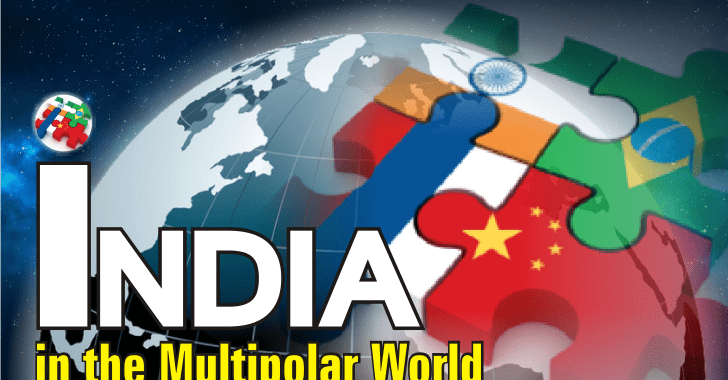
Indian theories of multipolarity also deserve attentive study. The Indian political scientist Suryanarayana believes that multipolarity is conceivable as a stable principle of international relations only between states that have developed organically as “power houses.” Implicit in this notion is a criticism of colonialism, neocolonialism as well as the chimerical political culture vividly exemplified in the US which, with its strategic notion of the “Frontier” and historical statehood, cannot represent such an organic power house.

By engaging in economic reform,” it is assumed, “India will have the opportunity to develop and exploit its large population and economic opportunity to become a global power in an increasingly multi-polar system, thereby allowing for an ambitious foreign policy permitting India to protect its interests in South Asia and act as the preeminent power in the region.” It has also been noted that India has earned “high political credibility in most parts of the world on top of its growing economic stature, it seems reluctant to capitalize on this. Unwilling to break with the creeds that have guided its foreign policy since independence but, rather, trying to conserve them by adapting them to the emerging new multipolar order.” Upon attaining a new economic level, moreover, India will inevitably strengthen its military and political presence in the Indian Ocean.

University of Colorado Professor Peter Harris believes that multipolarity will be directly linked to a shift in the balance of forces in the Indian Ocean. Harris writes:

Today, centuries of relative unipolarity are giving way to noticeable multipolarity. India’s announcement of a base in the Seychelles is another important step in this direction—a sign that New Delhi is doubling down on its blue water navy and attendant power-projection capabilities.  From the Seychellois island of Assumption, which is already equipped with an airstrip, the Indian military—even if it is limited by geography to maintaining only a tiny military presence—will boast a central position in the Western Indian Ocean, close to the East African coastline and astride the important maritime trade route that runs from the Mozambique Channel to the Arabian Sea.

It is not just India that is beefing up its presence in the region, of course. Late last year, China announced the creation of its first permanent overseas base in Djibouti at the mouth of the Red Sea, and Beijing continues to expand its naval capabilities (most recently by announcing the construction of its first Chinese-made aircraft carrier). With the United States also present in Djibouti—as well as Bahrain, Diego Garcia and elsewhere—this means that at least three of the great powers are demonstrably seeking to expand their military reach in the Indian Ocean.  And middle powers such as Britain and France also boast considerable military assets in the wider region…

International Relations theory helps to delineate three scenarios that might play out. First, the great powers could cooperate to combat piracy, maintain geopolitical stability, and keep sea lanes open. This is the hope of liberal academicians, who see few conflicts of interest between the various powers in terms of their vision for the ocean’s future; on the contrary, a common stake in policing the commons should provide great impetus to maintaining regional stability. Second, however, the Indian Ocean could become the focus of great power competition and even outright conflict, as distrust and divergent interests push states to shun collaboration. This is the pessimistic prediction of most realist scholars.

But third, the Indian Ocean could become the scene of a new sort of world order—or, to put it more accurately, world orders—as rival great powers go about organizing their own spheres of influence that exist discretely and distinctly with one another’s. Such a world was outlined by Charles Kupchan in his book, No One’s World, in which the author argued that the coming international system will be characterized by decentralization, pluralism, and co-existence…

Whatever the form of international governance that emerges in the Indian Ocean, then, it will have to accommodate the reality that several great powers have vital interests in the region. Come conflict or cooperation, political order in the Indian Ocean will have to be multipolar in character — if, indeed, it is not already. The prospects for peace and harmonious cooperation under such circumstances are not altogether bleak, but they are not endlessly auspicious either.  In many ways, twenty-first century geopolitics begins here.

In their joint article, “The multipolar Asian century: Contestation or competition?”, Samir Saran, a senior research fellow and vice president of the Observer Research Foundation (India) and Ashok Malik, a senior research fellow at the Australian Lowy Institute for International Policy, also assign India an important place in the future world order and focus on the Asia-Pacific region as a possible source for the formation of a multipolar world. Saran and Malik suggest three possible scenarios:

Should the US choose to bequeath the liberal, international order to Asian forces, India will be the heir-apparent. India would not, under this circumstance, play the role of a great power — because Asia is too fractious and politically vibrant to be managed by one entity — but simply that of a ‘bridge power’. India is in a unique and catalytic position, with its ability to singularly span the geographic and ideological length of the continent. But two variables will need to be determined. Can the US find it within itself to incubate an order that may not afford it the pride of place like the trans-Atlantic system? And, can India get its act together and be alive to the opportunity it has to become the inheritor of a liberal Asia?

The second possibility for an Asian order is that it resembles the 19th century Concert of Europe, an unstable but necessary political coalition of major powers on the continent. The ‘big eight’ in Asia (China, India Japan, Saudi Arabia, Iran, Australia, Russia and America) would all be locked in a marriage of convenience, bringing their disparate interests to heel for the greater cause of shared governance. Difficult as it would be to predict the contours of this system, it would likely be focused on preventing shocks to ‘core’ governance functions in Asia, such as the preservation of the financial system, territorial and political sovereignties and inter-dependent security arrangements. Given that each major player in this system would see this as an ad hoc mechanism, its chances of devolving into a debilitating bilateral or multi-front conflict for superiority would be high — very much like the Concert that gave way to the First World War.

A third possibility could see the emergence of an Asian political architecture that does not involve the US. This system — or more precisely, a universe of subsystems — would see the regional economic and security alliances take a prominent role in managing their areas of interest. As a consequence, institutions like ASEAN, the Shanghai Cooperation Organisation, the AIIB, the Gulf Cooperation Council and the South Asian Association of Regional Cooperation will become the ‘hubs’ of governance. The US would remain distantly engaged with these sub-systems, but would be neither invested in their continuity, or affiliated to its membership.

There also exists the point of view that India will represent the third pole of a multipolar world (besides the US and China) by 2050. Given that the author of this model is Hindu, such a theory is of a clearly prejudiced character. On the other hand, a tripolar system a priori cannot be multipolar. What’s more, India’s leadership considers Russia to be one pole of the multipolar world, as was stated by Indian Prime Minister Narendra Modi during his visit to Moscow in December 2015, who said that he sees in Russia a “significant partner in the economic transformation of India and the creation of a balanced, stable, inclusive, multipolar world.”

However, the Indian view of multipolarity implicitly harbors negative perceptions of China due to territorial disputes and, in a broader context, due to the civilizational competition between these two countries. Russia is also an often subject of criticism. For example, the retired Indian diplomat M. Bhadrakumar has remarked: “Russia and China give lip-service to their shared interests with developing countries and they profess ardor for a polycentric world order, ultimately they remain self-centered, comfortable in the knowledge of their assured veto power in the UN and their sequestered place within the discriminatory nuclear Non-Proliferation Treaty (NPT) regime. Unsurprisingly, they are paramountly focused on perpetuating their privileged position as arbiters of regional problems.”

Nevertheless, the understanding that the window of opportunities could expand considerably under none other than multipolarity continues to push India in this direction. As Amee Patel has pointed out in the context of India-China dialogue: “While improved relations could alleviate each nation’s challenges, a further motivation is given by India’s shared resentment toward the international system.”


Deconstructing the “Contemporal Moment”: New Horizons in the History of Philosophy

Author: Alexander Dugin

Translator: Jafe Arnold

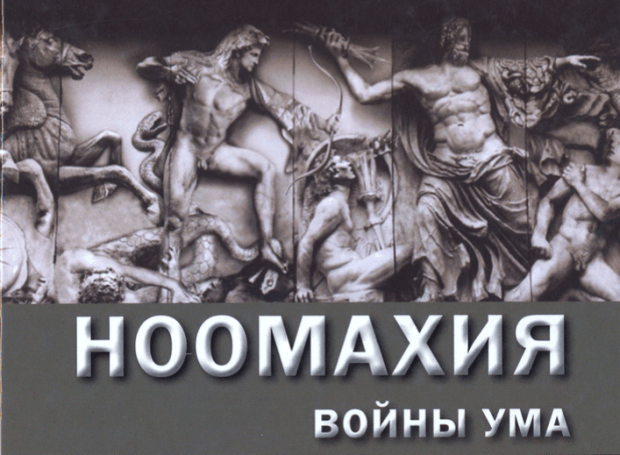
Chapter 1 of Noomakhia: Voiny Uma – Tri Logosa: Apollon, Dionis, Kibela (Noomakhia: Wars of the Mind – Three Logoi: Apollo, Dionysus, Cybele) (Moscow: Akademicheskii Proekt, 2014).


The contemporal moment: destruction/deconstruction

It is obvious that the history of philosophy must be studied by determining a starting point beforehand. It seems a matter of course that we would automatically take such to be the contemporal moment. The contemporal moment means the “here and now”, hic et nunc. This moment acts as our starting position, as our “observatory point” from which we can survey philosophy as the history of philosophy. The history of philosophy thus unfolds in our direction, towards us. This concerns both time and place: philosophy is historically situated between its “sources” (for example, the pre-Socratics) and the situation in the 21st century (in its philosophical self-reflection). As a rule, this temporal vector is more or less reflexive, hence why the main (axial) discipline in all sectors of philosophy is the history of philosophy. By virtue of fixating on this historico-philosophical vector, we acquire the possibility to be involved in this process, to consolidate our own position as that of a “philosopher” in a historico-philosophical structure. This is the nunc, the “now”, the temporal sector in which our thinking is placed, if it wants to be “philosophical.”

Hence follows the rather important conclusion that was fully drawn between Heidegger and his call for “phenomenological destruction” in Sein und Zeit [1], and Jacques Derrida who developed this thesis into the methodology of “deconstruction” [2]. The history of philosophy, according to Heidegger, is tethered in his case to ontology, to the question of being, and, thereby being an onto-history, Seynsgeshichtliche, is a continuity of stages at each of which the question of being is treated uniquely. As follows, the history of philosophy is a logical structure or a series of logical structures which can be more or less described in ontological terms which in turn determine the place and significance of a philosophy or philosophical school in the overall historico-philosophical process. Determining a philosopher or school’s place in this continuity, which has strict temporal and cultural frameworks (from the pre-Socratics to Nietzsche to Heidegger himself), is equivalent to correctly understanding their philosophy and, accordingly, allows for the meaning of such to be revealed. This is ontological destruction – the placement of a philosopher or philosophical tendency through the revelation of the fundamental paradigm of their ontological positions (often hidden, veiled, or implicit) in a strictly notional sequence: 

The First Beginning (pre-Socratics) -> The End of the First Beginning (Plato and Aristotle) -> the middle – the Middle Ages (Thomas Aquinas, Duns Scotus, etc.) -> The Beginning of the End – New Time (modernity – Descartes, Leibniz, and up to Kant) -> The End of the End (Hegel and Nietzsche).

Destruction is the placement of a philosopher into this sequence in order to reveal his place in the history of philosophy, and thus the meaning of his philosophizing.

For Jacques Derrida, the history of philosophy is a text, the structure of which is determined by the intersections of semantic lines. This is a view which more or less repeats, albeit in nuanced and detailed form, Heidegger’s axial construction. Thus, for both Heidegger and Derrida, it is important to place a philosopher in the context in which the semantics of his constructs are found to represent quotations, polemics, or the overturning or reproduction of the discourses that are at disposal before and around him in the “grammatological fabric.” In this case, deconstruction is the attentive inspection of this fabric’s patterns, in which any “authorship” is conceived as no more than a locus of quotations compiled in an ordered manner. Philosophy, thus, is one field of connotation, and its history comprises changes in the predominant connotative matrices and interpretive algorithms. Between Heidegger and Derrida, we can place Michel Foucault and his epistemology.

Of course, such hermeneutical models of the history of philosophy distinctly crystallized around the end of the 20th century. In the 19th century, and earlier, the “contemporal moment” was described in other terms. For Kant, it was paired with the revelation of the structures of “transcendental reason”, for Hegel such was the “end of history” and the “objective spirit.” For Nietzsche, there was the maximization of the will to power in the figure of the Übermensch. In Marx, there was the horizon of the world proletarian revolution. In all cases, philosophy has been conceived exclusively as a teleological process – whether by those who have tried to give this teleology fixed forms, or those who, on the contrary, have understood history as the accumulation of a “quantity” of individual freedom (Stirner, Bergson or von Hayek/Popper).

For all of these teleologies – both the naive ones of the 19th century and those 20th century theories based on critical reflection, structuralism, and phenomenological corrections (as well as the philosophy of language and psychoanalysis) – the “contemporal moment” serves as an “observatory point”, and he who stands at this observatory point and has considered the content of the moment itself and its structures (no matter who this “someone” might be – the subject, Dasein, a rhizome, a deciphering system, a “body without organs”, a hermeneutic) is the key to the history of philosophy capable of interpreting it in relation to themselves. This is very important, since in such a perspective any preceding “contemporal moment” is conceived as a “preliminary”, “unfinished”, “incomplete” one compared to the current contemporal moment and, as follows, the nunc cannot be adequately described prius, as it does not convert into the past the “contemporality” of the present. In a certain sense, this is history as such, and the history of philosophy is the philosophical conceptualization of its structure.

The French philosopher Henry Corbin used the neologism historial in order to translate the meaning of Heidegger’s expression Seynsgeshichtliche (“onto-historical”) into French. The historial is the structure of the “contemporal moment” which predetermines its content as a teleological vector whose tip points to the nunc and presumes its beginning in the embryonic formation of the Logos.

In one way or another, any attempt to conceptualize the moments in the history of philosophy (of individual philosophers or their schools) beyond the historial, i.e., without deconstruction taking into account such explicit and convincing reflections (phenomenology, Heidegger, Post-Modernity), will look not simply naive, but ludicrous. In the context of the historial, any attempt to read Plato or Hegel outside of their notional sequence, which was in one way or another noted by philosophers in the last quarter of the 20th century, would mean falling into the self-deceit of unreflexive and unstructured quoting with a guaranteed loss of semantic links. If a reading of this or that philosopher does not flow in the context of this historico-philosophical grille de la lecture, i.e., without a thorough review of this observatory point where it is situated – or, in other words, on the other end of destruction/deconstruction operations – then nonsense is guaranteed. Not a single expression, not a single review, not a single intellectual procedure stands a chance at being correctly conceptualized, and instead of philosophy and the history of philosophy, we are left with the “white noise” of gloomy cognition, a simulacrum of thinking.

This is first and foremost the case with the nunc, the historial, or the temporal aspect of philosophy. The matter stands somewhat differently with the spatial aspect, the hic.

The topos of the present: the West as a spatial telos

The contemporal moment is situated not only in a temporal sequence, but also in space, on a scale of synchronic territory. If modern philosophy has devoted enormous, if not all of its attention to the first aspect of the contemporal moment, then spatiality has been left outside of the sphere of interests. Western philosophy is wholly and completely “tempo-centric.” Consequently, in it Sein is bound to Zeit, and this bondage is absolute, as a result of which Raum, or space, is studied merely as a residual principle, as an accident. Kant placed space closer to the object; Descartes altogether identified the object with “extense” (res extensa) in contrast to the subject (res cogens). In new European philosophy, thought is the property of the subject; consequently, time is the basis of philosophy and its context. Hence the historial as a measure.

It is telling that even critiques of the structuralists’ historico-philosophical understanding have by almost no means whatsoever addressed the fate of space in philosophy and philosophical self-reflection. The principle of “spatiality” has been integrated in the form of a synchronic topology intended to serve as a semantic scale for interpreting the content of time. In other words, structuralist topology only serves the historial in the spirit of the Heideggerian sequence or Derrida’s grammatological field.

But if we upset the habitual frameworks of new European philosophy and nevertheless pose the question of “where?” with regards to the observatory point, and if we fix the hic in the famous expression hic et nunc, then we have a specific civilizational concept of the West. The West in this case strictly fulfills the same teleological function as the “now.” The contemporal moment is situated in the West, and is the point towards which all the rays of possible thinking converge, thus achieving their epiphany in none other than the West. The West is the birthplace of the Logos; the Logos is itself in the “evening land”, Hesper, Abendland. This was more or less obvious for the cultural ethnocentrism of the Greeks. It was the core of the Romans’ legal and political self-consciousness, and it became the axis of ecumenism. Then it was incarnated in the concept of universal progress in modernity. It remains the main driving force of the processes of globalization.

Husserl spoke of “European humanity” as a philosophical quintessence of the human as such. Heidegger directly and explicitly equated philosophy with Europe.

The West is the telos of earthly space just as the present is the telos of the past. Thus, “modern” philosophy can only be Western philosophy, and just as the present is the essence of the past, so is the Western the essence of the non-Western. Between nunc and hic there is thus present a direct analogy: time (the historial, or Karl Jaspers’ axial time) convenes in the “now” and space in the “here”, interpreted as “here in the West.” And in precisely the same way that the past is conceived as the not-yet-present, so is the non-Western (for example, the eastern) thought of as the not-yet-Western.

This Western European, spatio-teleological character of the contemporal moment is conceptualized much less distinctly than the historial and the structures of the history of philosophy. Unlike the paramount discipline that is philosophy which deals with the deconstruction of time, spatial correctives and schematizations are the prerogative of the applied, secondary, and even barely institutionalized sciences with weakly developed philosophical apparatuses, such as geopolitics or international relations. On a more serious level, only the first attempts have been made at relativizing the Eurocentrism of modern philosophy as such, as with Edward Said’s introduction of the notion of “orientalism” or the more foundational but not so generalized studies of cultural, social, and structural anthropology.

It is none other than the West for which the absolutization of time and radical tempo-centrism are characteristic. In reducing the historial to a structure, something constructed, and departing from the present, we automatically produce a concentric model of civilizational space in which the West is situated in the center and all the rest of humanity is in the periphery.

Just as attempting to read this or that philosopher in isolation from the historial (without deconstruction and, consequently, beyond the contemporal grille de la lecture) is today philosophical nonsense, the same status is held by all those attempts at substantiating the relevance of non-Western forms of philosophy  – in the best cases, they can be examined as extravaganza, and in the worst as obtrusive attempts by ignoramuses to force themselves upon a scientific problem on equal terms with the opinion of a scholar. What can a not-yet-Logos tell a Logos that the Logos itself does not know?

Thus we have ascertained the structure of the contemporal moment as analyzed from a temporal and spatial point of view.

Post-Modernity and distance

In the structure of post-modern philosophy, the historial is subject to steadfast analysis, and at times this attention is so detailed that the spatial aspect and characteristic Eurocentrism of Western philosophy also come into view. Combined with an anthropological approach, this yields definite preconditions for not only recognizing the structure of the observatory point as such, but also establishing a certain distance from it. The intensive reflections of post-Heideggerian (post-modern) philosophy on the nature of time, and the first glimpses into conceptualizing the spatial situation of contemporality bring us to an entirely new horizon and radically deeper level of philosophical self-reflection. What if the very observatory point from which we survey the history of philosophy, and from departing which we engage in deconstruction, is in turn nothing more than a “philosophical construct?” In other words, to what extent is the very idea of the teleology of the present moment qualified, and as follows, is tempo-centrism justified? Is the historial that serves us as a reliable tool for interpreting philosophy in turn an ephemeral and non-historical paradigm projected into the present which is not cumulative-teleological (regarding content), but arbitrary or arranged in accordance with a mechanism different from the vector of “axial time?” Finally, is the West the “only place” of the Logos, the zone towards which converge the rays of consciousness, or is this only one of many spatial receptacles of thinking alongside others? Does this mean that Eurocentrism is justified at its heart, and does it not follow that we should look for other, uniquely fully-fledged and complete dialects of the Logos?

These suspicions, of course, are left in the periphery of the philosophy of Post-Modernity, in the shadow of more habitual, inertial trends which, although are enriched, detailed, and introspective procedures, perpetuate the “dogmatic” vector of classical Western rationalism. Post-Modernity usually justifies and substantiates itself with routine practices of the contemporal moment, but the post-modern attitude nevertheless makes such suspicions and conjectures wholly natural. This inspires among those most of all worried about the possibility of breaking with the traditions of Western Modernity rather natural concerns: will Post-Modernity not altogether lead to the liquidation of the fulcra of the Western European Logos as such? If distance from the contemporal moment itself might be, even if only theoretically, justifiable, then all the claims of Western European humanity to universality immediately crumble, and this means no more nor less than the collapse of the Logos. Heidegger clearly recognized this prospect and posited that, nonetheless, the West’s teleology and contemporal moment, exposed to nihilistic catastrophe, should and could be overcome only through this moment and only in the West. This proposal consisted not in retreating from the observatory point, but in deepening the bottomless of its fall in order to, in this dramatic collapse, discover the mystery of its meaning and soar up to thrust forth Another Beginning for philosophy. Heidegger deliberately interpreted the shadow unleashed by Post-Modernity as a refusal of the burden of the “difficult knowledge of nihilism.” The decline of Europe, according to Heidegger, is the decline of being itself, and it should be experienced as such.

In post-Heideggerian philosophy, Heidegger’s tragism and heroism were rather quickly adapted into the routine of the new methodology; the anti-technological call to recognize the bottomless nothingness of such in turn became a technology. But postmodernism, albeit vapid and dubious, perhaps even by virtue of its refusal to sink deeper into the dizzying passivity of desperate Heideggerian nihilism, and at the same time not being in any position to turn Dasein’s mode of existence into authenticity (denying the Decision, Entscheidung), nevertheless slightly opened up the possibility for a step in this direction. If the Logos of the West, as far as one can tell, did not accept the Heideggerian invitation to implode, to explode in its own night, then in the very least it dissipated into bits of postmodern miasma and prepared for the last figure of dissolution. The fixation of distance with regards to the moment of contemporality and the clear and intelligible understanding of its “arbitrariness” (in spatial and temporal senses) is already the fait accompli end of the West, its philosophical end. For those for whom the telos of the historial was the only permissible “lifeworld”, this meant the “end of everything.” But here is where the most significant aspect manifests itself: what if the historial, with its fundamental tempo-centrism and concomitant Eurocentrism, with the structure of its Logos and grating deconstruction/ontological destruction, is but one among numerous and equivalent possibilities for reasonably organizing the world? If this is so, then the finale experienced by Western philosophy is no more than an episode in a more complex and multipolar philosophical picture where there might be multiple observatory points and multiple understandings of time, space, and Logos.

Post-Modernity as a whole, of course, does not gravitate in this direction, remaining as it has under the wonted hypnosis of its Eurocentric contemporality, but the distance in question here becomes an open possibility with the dissipation of the European Logos. In Post-Modernity, the structures of this Logos become so blurred and scattered, so unintelligible and weak, that breaking with their suggestiveness turns out to be an extremely easy endeavor. That the strength of this Logos’ inertia is such that the clutch of its impact on the people of the West themselves does not let up even when the nature of rationality itself withers and dissipates in front of their very eyes – that is another matter altogether. The ends no longer come together and liberation from dogma leads to liberation from the process of liberation by virtue of which the subject itself evaporates – after all, Post-Modernity recognizes not only God, but man himself as an “apparatus of suppression”, a “repressive machine”, and thus the freedom of man transforms into freedom from man. This is the logical result. It is a paradox, but today higher humanism means dehumanization or transhumanization. Tragedy thus imperceptibly slips into farce.

Simply stepping away from the observatory point becomes a simple endeavor only for those capable of digressing from the residual hypnosis of the historial, which means that it is by no means simple. Nonetheless, the philosophical space for this has been prepared, and if the distance which we have been discussing is taken as the object of our heightened attention, then we can rather easily differentiate a spectrum of philosophical procedures with which we can feel out a different fulcrum or even a whole constellation of such fulcra in order to, departing from it/them, observe and subject the contemporal moment to deconstruction, thus demolishing the ponderability of temporal and spatial teleology, i.e., the Western Logos’ claims to exclusivity.

Hence the proposal to move in the direction of this new distance and new fulcra, and let the dead bury their dead.

The phenomenology of philosophy as a method

How can this distance be embodied in philosophical practice? Theoretically, the most principled manner is to escape the hypnosis of the contemporal moment, to calmly and with complete self-control refuse the pressure posed by both the historial (the trajectory of the history of philosophy towards the point at which we find ourselves on the scale of historical temporality) and Eurocentrism. To this end, philosophy can be seized through several strategies:

  • the phenomenological
  • the anthropological
  • the Traditionalist

Surely there are other ways by which to resolve this issue, but for now we limit ourselves to these three trajectories. Let us begin with phenomenology. The phenomenologist philosophers, setting before themselves the goal of clarifying the structure of the processes of logical thinking at the first stage, that preceding the engagement of properly logical (in the spirit of Aristotle) procedures of reasoning, transitioned from revealing the nature of intentionality (Brentano) to the concepts of noesis or noema and the “lifeworld” (Husserl). This line was picked up and developed in a particularly original manner by early Heidegger, as a result of which he arrived at Dasein. Phenomenology proposes that we focus our attention on studying the structures of thinking in their pre-logical phases, when consciousness “naively” and “uncritically” operates with its own “representations” (Vorstellungen), by substituting the objects themselves theoretically outside of the subject with the corresponding noema inhabiting consciousness. This logic is constructed upon ascertaining the obvious (evidential) ostensibility of the object, thus as a matter of course accomplishing the step of transcendentalizing. At the heart of this process lies phenomenality itself, on which consciousness usually does not fixate as it instantly flies above this level. However, in phenomenologists’ opinion, it is none other than this phenomenality which is the most authentic and evidential state, and all other procedures of consciousness, including rational logic, are built on top of such with a greater or lesser degree of self-reflection. Thus, in order to achieve a precise and scientifically credible tracing of the basic processes of gnosiology on which thinking, logic, philosophy and science are built, it is necessary to intentionally study the phenomenal level which affects all other stages, hiding under their complexity and thereby dimming clear representations of nature and basic trajectories of thought.

The phenomenological method has been borrowed by the most diverse humanitarian disciplines from sociology to anthropology and psychology. Everywhere where it has been employed, the point has been explaining the arrangement and mechanisms of those structures on a level lesser and more primordial than that of logical thinking. Heidegger constructed his existential analytics on this basis.

In the field of the history of religions, the phenomenological method was actively used by Henry Corbin, who argued that religious doctrines cannot be understood on the grounds of purely, rationally formulated theological dogma and doctrines or by ignoring the inner experience of religious life. It is precisely studying this experience, which may very well contradict our ideas about the structure of the real, possible, and actual, that only can and should construe more complex religious systems. If we ignore this “lifeworld” of the religious person, then our understanding of religious doctrine will be superficial and completely incorrect. After all, we would miss the main and most essential foundation, that upon which such doctrine is built and whose structures it produces (whether revealing or, on the contrary, veiling them). Therefore, Corbin, who studied Islamic mysticism and Iranian Shi’ism in particular, emphasized that in order to understand religion, one must learn to live it from within. Hence why, in some passages, Corbin, himself a Protestant, wrote “we, Shiites” and believed that without such methodological identification with the sphere under study, without such immersion into the phenomenology of religious experience, no reliable judgement concerning the religion under study is possible.

Franz Boas’ cultural anthropology and Claude Lévi-Strauss’ structural anthropology call for studying archaic societies in a similar manner. Archaic man lives in a phenomenal world qualitatively different from the one in which the man of European Modernity lives. They differ not only on the level of development of logical thinking (as the sociologist and ethnologist Lucien Lévy-Bruhl tried to demonstrate), but in the profoundly different organization of the world of phenomena, including taxonomies, the allocation of basic entities, symmetries, and classifications. Lévi-Strauss argued that in archaic tribes and non-literate cultures we are dealing not with a pre-logical type of thinking, but with a different kind of logic that is no less developed than that of European people in Modernity, but is structured around different algorithms and thereby yields different results and gnosiological/ontological systems.

In sociology, an analogous method was employed by Husserl’s student, Alfred Schütz, who proposed to study society by abstracting oneself from the sum of our a priori knowledge of such and any notions of the purported “objectivity” of existing (non-existing) objects of the outside world and their autonomous significance. Different societies, in Schütz’s understanding, operate with different “lifeworld” structures; as follows, they construct different phenomenological systems which at the next stage determine their views of reality, whether internal, external, subjective, objective, etc. Analogous methods were applied by Harold Garfinkel, the founder of “ethnomethodology” who, like Schütz, focused his attention on the “horizons of everyday life” and “practices of everyday life.”

But here is what is interesting: phenomenology as such originally took shape as a philosophical current and was only later applied to other sciences – the phenomenological method was not applied to philosophy itself. Phenomenologist philosophers themselves based their theories on the contemporal moment and, moreover, considered phenomenology to be a more precise and reflective expression of contemporality itself. In its historical movement along the path of scientific process and with its increasing refinement of the methodology of its logical thinking, at one point “European humanity” (Husserl) began developing the sphere of philosophy not in breadth (extensively), but in depth (intensively). This was largely because the expansion of reason had reached its natural borders. This deeper plunge into reason itself is not a step back on the path of singular process in raising the general level of rationality, but a step forward allowing to make those spheres which had previously evaded the arranging and authority of logical procedures into objects of rational attention. Albeit with significant corrections, Heidegger’s philosophy was built in this vein. Philosophical phenomenology, thus, is not only not equivalent to the phenomenology of philosophy, but altogether does not imply the possibility of the latter.

Nevertheless, by making a reverse circle and moving through phenomenological sociology, anthropology, ethnology, and the phenomenology of religion, we can try to apply the phenomenological method to philosophy itself by employing a method opposite to that of deconstruction that reveals the structure of the historial. This is an invitation to perceive this or that philosophical system outside of the context of the history of philosophy, outside of the context of our knowledge about the structure of time, history, reality, the subject and object, and outside of ontology, which we have erected on the basis of the contemporal moment (whether consciously or by inertia). In other words, the phenomenology of philosophy offers the possibility of authentically experiencing the phenomenological basis at the heart of a concrete philosophical Logos, which is taken as a reliable contemporal moment only at a distance from the contemporal moment which constitutes the structure of our philosophical “I.” Thus, an anthropologist immerses himself in the life of an archaic tribe in order to understand its language, its senses, and beliefs from within this life itself, from the experience of being within the tribe, and not from the grounds of superficial comparison with terms, things, practices, meanings, and beliefs which he knows from his personal experience of belonging to modern Western civilization. Since Boas, and especially under the influence of Lévi-Strauss, only field studies grounded in the method of “participant observation”, empathy, and immersion in the phenomenology of the lifeworld of an archaic tribe are considered anthropologically credible. The phenomenology of philosophy should be constructed in a similar way: in order to understand how this or that philosopher thought, it is necessary to trace his thought from the lifeworld to the logical formulation of thought on the high level of logical expression. But this is possible only at a distance from the contemporal moment and its fundamental content, i.e., through the procedure of removing the philosophical identity of the phenomenologist of philosophy. In Heidegger we can see attempts at such a reading of the Greek philosophers and participative immersion into their lifeworld. But the historial in Heidegger supersedes this initiative in full measure, since assigning the pre-Socratics to the First Beginning, and Plato and Aristotle to the end of the First Beginning, forces one to place other relevant doctrines in consciously specified semantic contexts. Heidegger sees the “Greek” and “first beginning” elements in the pre-Socratics on the basis of his reconstruction of the history of philosophy, that is, through performing ontological destruction. Therefore, he also anxiously discarded everything among the Greeks that seemed to him to be “non-Greek” (eastern or oriental – which is clearly evident in his Greece travel journal). In the exact same way, he takes that which does not fall under the “first beginning” among the pre-Socratics (for example, some expressions from Anaximander’s fragments in the likes of the pair of terms γένεσις and φτορά) and attributes such to later contaminations [3]. Furthermore, everything in Platonism which does not fall under his understanding of “finiteness in the First Beginning” – which encompasses no more nor less than the whole scope of “open Platonism”, such as apophatism, the super-essence of the Good in the Republic and the One in Parmenides [4] – is subject to the same censuring. In any case, the level of Heidegger’s self-reflection was so high and transparent that his understanding of the contemporal moment is unprecedented in the profundity of his generalizations of the structure of this moment, which were the most penetrating and convincing (even if their formulation involved his resorting to a certain hermeneutical censorship), and his attempts to immerse himself in Ancient Greek thought were the most successful and authentic among all analogous initiatives.

The phenomenology of philosophy (unlike phenomenological philosophy) proposes that we completely opt out of hermeneutic procedures which presume some starting position (even as a basis for comparison). In clearly accounting for ourselves in the structure of the contemporal moment, in its modernist/postmodernist historial and its Eurocentrism, and in approaching a philosopher or philosophical school separated by time or space from this observatory point, we must effect a radical change in our phenomenological position; we must completely relocate ourselves to a new observatory point where the lifeworld of the person we are studying is situated and from which his ideas and contemplation came. If a philosopher says something about “eternity”, “heaven”, “immortality”, “God”, or “angels”, it follows that such should be understood not in terms of what we know about “time”, the “atmosphere”, the “vacuum”, the “death of God”, or the “naive ridiculousness of faith in angels”, but on the grounds of how this philosopher himself understood, lived, and perceived that of which he speaks. Any discourse on eternity from a human who credibly and absolutely knows (the contemporal moment) that there is no nor can there be any “eternity”, will be perceived either as an allegory, a hyper-exaggerated image, a metaphor, or as a sign without meaning, an empty set. In such a case, one lifeworld (the contemporal) is acting as a judge, prosecutor, and accuser (this is the original meaning of the Greek word διάβολος) of another lifeworld by denying it the right to defend its phenomenological grounds that are completely usurped by contemporaility. If we are capable of logically assessing the arbitrariness of such a loaded approach (explainable through the Nietzschean will to power or Heideggerian Gestell), then the distance from the contemporal moment will take shape on its own, and this means that we are breaking from it and acquiring the ability to embark on a genuine philosophical journey from one observatory point to another observatory point.

The anthropology of philosophy

The case of the anthropology of philosophy is almost the same as that of anthropology. The school of philosophical anthropology of Max Scheler, Arnold Gehlen, etc., took its roots from Kant’s remarks on the anthropological essence of thinking – which can be considered a new formulation of the sophist Protagoras’ maxim that “man is the measure of all things” – a standpoint which was embedded in the language of modernity. However, philosophical anthropology, as a typical product of the contemporal moment, has nothing in common with the anthropology of philosophy. The anthropology of philosophy proceeds from the plurality of human societies and the diversity of their structures as meaningful outside of any hierarchies or subordinations. Man is a plural phenomenon, anthropology (or at least new anthropology) argues, and the societies built by him reflect this essential plurality which can be studied by comparing them, but they cannot be categorically defined on a quantitative scale of primitive/superior, developed/underdeveloped, rational/irrational, savage/civilized, childishly naive/adultly serious and rigorous. A human belonging to a “primitive” (archaic) society and a human formed in a modern, highly-differentiated society (again, the contemporal moment) are both people in a full sense, and their differences are not amenable to hierarchization into greater/lesser, higher/lower, better/worse. It cannot be said that red is “better” than yellow or that savory is “tastier” than sweet, just as it is impossible to argue that larks are “more perfect” than foxes or whales “more perfect” than sharks. Anthropology draws attention to man as a matrix of the society he creates. Once the structure of a human is different, then societies will reflect these differences and repeatedly refract them in the play of reflections, shadows, and flares.

By applying this principle to philosophy – something which anthropologists and even philosophical anthropologists virtually never do – we acquire a myriad of contemporal moments containing historico-geographical (historico-cultural) positions proper to different philosophers, each of which moments should be studied in their internal logic, harmony, symmetry, and by placing the position of the scholar (and his contemporal moment) in brackets. This approach is the qualification of the anthropologist who studies different (archaic) societies and is obliged for the sake of such to operate with a maximally possible pure experience of understanding culture. At the same time, he must obviously, consciously forbid himself from permitting any projections of his own culture and any hierarchizations or hastily drawn systems of correspondences. But anthropologists deal mainly with cultures that are non-literate and have poorly developed systems of rational self-reflection (Lévy-Bruhl’s principle of “mystical complicity”). Myth, ritual, symbol, sacred rite, and initiation by definition deny transparent rationalization. Hence, the open (emphatic) position of anthropologists is considered here to be at once applicable and justified by the difficulty (or impossibility) of establishing precise correspondences between a rational set and set of para-rational (which does not mean “irrational” or “sub-rational” as were so convinced the 19th century evolutionist anthropologists before Boas and Lévy-Strauss). This principle has not been applied to philosophy insofar as it has been believed that transitioning to a rational system means leaving the sphere of the “para-rational” and the implicit (the mythological, symbolic, and mystical) and entering the sphere of universal self-reflection, where such anthropological operations become irrelevant. Thus, from an anthropological point of view, we are affirming a “measure of things” not simply of man, but of modern Western man, and we are assigning the philosophy which has guided this modern Western man the status of a universal algorithm allowing for the interpretation of all other philosophical systems, both non-modern and non-Western. In the study of archaic cultures, such anthropological suprematism (=cultural racism) was categorically rejected for humanistic, ethical, and scientific reasons. But in the sphere of philosophy, it has been implicitly preserved intact and not subjected to any critical reflection. The modern Western philosopher measures all philosophy (ancient and non-Western as well as modern Western) proceeding from the criteria of the absolute superiority of modern Western philosophy as the cumulative telos for all other systems. At the heart of this lies a mono-polar anthropology based in implicit racism.

At first glance, the impression might be had that applying anthropological methodology to philosophy takes us back to a state of naivety and contradicts the methodology of destruction/deconstruction. This is not so. Deconstruction might very well be an excellent propaedeutic for the anthropology of philosophy since it studies in detail the structure of the context in which this or that philosophical system was created or this or that philosopher thought. If we ignore deconstruction, we miss the most important point of language and the semantic structures of the grammatical field in which a particular philosophy is situated. But by including deconstruction as a method, we must simultaneously subject the contemporal moment itself to deconstruction, i.e., deconstruct that which produces deconstruction, which means once again standing at a distance from the observatory point. Deconstruction forbids naively reading a philosopher without indicating his context and semantic ties. This is the force and significance of deconstruction. But in establishing such context and such links, he who engages in deconstruction is in turn operating with the algorithm of the teleological historial which only allows one to order the field of a text. The historial itself is necessary for deconstruction, and the clearer it is realized, the more reliable the result of a deconstruction. But two positions are permissible to take with regards to the historial: one can be under its suggestive, interpretive influence, i.e., be under it, or one can take a certain distance in relation to it, and apply deconstructive reflection and a particular apperception to it. The second case is an invitation to stand above the historial or outside of it. By not curtailing deconstruction in favor of “new naivety”, and by in parallel with this deconstructing the one engaged in deconstructing, we reach the field of the anthropological method in philosophy. In exploring the philosophy of any philosopher and placing it in a well defined context (deconstruction), we should simultaneously perceive such as something open, excluding from our methodology everything that we know with regards to the future and the past vis-a-vis the observatory point in which the philosopher under study is situated. By knowing in advance the end of the play, we unwittingly apply this knowledge to its first acts. It is this which prevents us from genuinely enjoying the action and turns us from participants in the action into the audience or, in the best case, actors ourselves. What truly delights us is the acting of the actors who force us to forget about how the performance will end and who immerse us in the tension of the dramatic moment. Only in this moment, when we seriously begin to believe that the events in the spectacle might actually go quite differently from what we might know from having repeatedly read the script or seen the production, can we talk about any full effect accomplished. The theater becomes what it originally was – an action, a mystery, a transformative act. This is an open theater, a play whose outcome is known neither by the director, the actors, nor, of course, the viewers.

Applying this metaphor to philosophy, he who carries out deconstruction without deconstructing himself and his actions, can be likened to a person who knows the script well and, over the course of the spectacle, obsessively narrates to his neighbor what is happening and how it will end. Sometimes the skeptical and all-knowing expressions of the audience are enough to simply break the spell of theatrical magic. Such annoying companions are capable of nullifying all the drama of the production. Thus, the principle of the “open theater”, in which the content of the drama at its peak breaks away from the rigid frameworks of the script, can be applied to the open history of philosophy based on the anthropological method. If we knowingly rule out that a philosopher whom we are studying might mean something other than what we know of him in identifying his place in the paradigm of the historial, we render ourselves unfit for a real meeting with him. Yet for some reason we dare to describe this weakness of our own spirit as indicating superiority, greater universality of our position, or in accordance with the rules of ethnocentrism and cultural racism. In behaving so, we forbid ourselves from being surprised, and this means we make ourselves completely unfit for philosophy.

Conversely, in applying the anthropological principle to philosophy, we immediately find ourselves in a complex, saturated, and unpredictable world where surprise can seize us at every turn. This is the open philosophy of history, which a priori recognizes the anthropological dignity of all thinkers, none of whom are considered below us, our contemporal moment, or our observatory point regardless of whether it is modern and Western or non-modern and non-Western. The most consistent representatives of postmodern philosophy are moving in this direction as long as they do not stray from this path towards particularities, towards fascination with minor and obsessive details of liberation strategies which in one way or another retain an inertial connection to the arterial tendency of Modernity’s historial, that tendency which has exerted its teleological (anthropologically racist) influence on Post-Modernity in proposing liberation from the details, but remaining in slavery to the overall picture.

Untergang

Before moving on to Traditionalism as the third strategy for attaining distance from the contemporal moment, it is worth dwelling on how Martin Heidegger, the key figure in the clarification of the historial, understood the vector of time in its Seynsgeschichtliche dimension. Heidegger can be seen as a transitional element between those who recognized the indispensability of the contemporal moment in the spirit of Western European philosophy, and the Traditionalists who, on the contrary, as we will see a little later, offered their version of finding the desired distance. The fact is that Heidegger, recognizing the fatality of time confronting the present and the centrality of the West as the birthplace and place of development of the Logos, deciphered the trajectory of time as “descent”, Untergang, “decline”, “flight of the gods”, and as the “abandonment of being” (Seinsverlassenheit). Herein lies the fundamental difference between Heidegger and the majority of philosophers of Modernity and Post-Modernity who, on the contrary and as a rule, treated history as ascent, accumulation, discovery, and movement forwards and upwards. For Heidegger, the contemporal moment is the point of Midnight towards which we are heading from the evening. He decoded the history of philosophy as a process of descent, decline, concealment, immersion, and oblivion. Thus, his philosophy is profoundly tragic, and its eschatology is paradoxical, for at the moment of maximal darkness, Dasein is supposed to remember its Seyn-Being and decipher the pain of its absence as Gottesnacht, “the night of the gods”, as a call to realize Ereignis, “the Event.” Heidegger saw the telos in the moment of Midnight, in the very center of which the sacrament of Dasein switching its mode of existing from the inauthentic to the authentic must be accomplished.

Such a dualistic attitude towards the contemporal moment as a lower threshold, intended as the point from which begins (or should begin) the return, is, however, problematic, as such is not guaranteed. The return might not begin and, at any rate, such presupposes a perspective opposite to that of the historial which inspired Heidegger’s love for Greek thought and his striving to live and think it along with the very creators of the First Beginning of philosophy. Imagining himself as the one completing Seynsgeschichte, Heidegger felt a deep yearning for those who began such. Thus, distance from the contemporal moment was conquered in parallel to phenomenological destruction, without cancelling or replacing it.

The case of Heidegger is unique in many respects, but what interests us in this situation is that the Beginning of philosophy (from the first to the last phase with Plato and Aristotle) in his specific model of the historial is conceived as a philosophical chord followed by descent, Untergang, which leads to the present, and not vice versa as a “childish” and “long-overcome” phase of philosophy. In this regard, the Ancient Greeks and in particular the pre-Socratics are exalted to unattainable heights. As follows, comprehending them is possible only by degree of radically distancing ourselves from the present through the elevation, the “return”, the επιστροφή of the Neoplatonists.

Heidegger distinguishes the Untergang from those who realize themselves in it and see it for what it truly is – the Untergang. One can be simply fascinated by the flow of history, and one can clearly and penetratingly realize that the movement of the historial is a fall into the abyss. Those who recognize time as falling, Heidegger calls “the descending”, the Untergehende. They, unlike all others, descend consciously, clearly perceiving their endeavor without illusions or fears, although not without horror. For them, the Untergang is the Untergang; they see descent as descent, while all others, not being the “descending”, the Untergehenden, can feed themselves with illusions and methodically rise to the luring and guaranteed horizon of “progress.”

Such an interpretation of the historial as Untergang converges Heidegger with the Traditionalists, whose methods we will now examine.

Traditionalism

The philosophy of Traditionalism [5], otherwise termed Philosophia Perennis or “perennialism”, is of colossal significance to our topic. First established and formulated by René Guénon, this philosophy, as correctly noted by René Alleau, can be considered alongside Marxism the “most revolutionary trend in modern philosophy” [6]. If we approach Traditionalism with due scrutiny, we will soon realize that this comparison with Marxism, albeit paradoxical at first glance, is absolutely justified. The Traditionalists’ appraisal of values is, in a whole number of parameters, far more radical, revolutionary, and uncompromising than the ideas of Marx (as well as those of the other “philosophers of suspicion” among whom Nietzsche and Freud are usually numbered).

Of importance to us at the present moment is how Traditionalism helps establish distance with regards to the contemporal moment and, accordingly, why we have distinguished it as an independent strategy. The very structure of Traditionalist philosophy is in many respects close to that of Heidegger’s, insofar as historical time is understood as a downward movement, degradation, a path to the bottom. The Traditionalists extracted this from religious doctrines and myths (including even from the monotheistic religions), as well as from their analysis of the ontological transformations and changes in the state of the cosmos. However, unlike Heidegger, in Traditionalism the scale of degradation takes on a much more extensive scope and goes far beyond European philosophy. If for Heidegger history is the thread of the Logos stretched between the pre-Socratics and himself as an heir and eschatological figure of German classical philosophy, then for the Traditionalists this period is thought of as only one fragment of descent, of the Untergang, amidst more general and fundamental processes.

For Traditionalists, time itself is a fall, or more precisely, a downward spiral. It has ensnared not only the historical European societies known to us, but the entire destiny of mankind, including the societies of the East and those “mythical” epochs from which only the most hazy legends have remained with us (for example, the legends of Hyperborea and Atlantis). Thus, the contemporal moment is conceived by Traditionalists not as a peak or telos, but as a zone of extreme degradation, a lie, oblivion, and delusion. It is the end of the road to the abyss, the moment of reaching the bottom. Accordingly, the observatory point at which modern humanity (in the era of Modernity and Post-Modernity) stands is not the top of a mountain, but the bottom of the world pit from which nothing can be seen besides dark phantoms and unwieldy fantasies. We live in a world of philosophical hallucinations in which the worse we see, the more we flaunt our foresight. Guénon called this the “reign of quantity” and interpreted it as the critical low of spirit.

Accordingly, Traditionalism completely overturns all the proportions assimilated by default by the contemporal moment:

  1. The time in which we live is an era of total poverty and ignorance. If we base ourselves on its “credibility” and “evidences”, it is impossible to correctly decipher the present, let alone the past which was related to more perfect and authentic periods of history.
  2. The West is the cultural field of accelerated degeneration and decline which surpasses other (non-Western) cultures only in the speed of its fall into the abyss.

The distance in relation to the contemporal moment here is maximal: the West and Modernity are thought of as the worst, the sterile, useless, and false which cannot be taken as any kind of reference point for comprehending anything at all. Thus, modern Western philosophy and its axioms are the worst possible philosophy based on ignorance, a wrong decision in its very basic intellectual operations, and completely delusional with regards to nature, the structure of time, space, man, the world, the primordial, the logic of history, the structure of matter, etc. Modern philosophy is arrogant and lofty nonsense. The only way to break through to philosophy lies in absolutely transgressing the foundational paradigms of Modernity and completely overthrowing the dogmas of modern Western culture, science, values, and political and social systems. All of the West and Modernity’s claims to superiority over the past and non-Western societies are completely groundless and unfounded. The modern West is incapable of understanding even its own relatively recent history (the Middle Ages), not to mention Antiquity or the profound, genuine, authentic, and competent philosophies and systems of the East.

In this operation, the observatory point of modern “Western humanity” flies away, and something directly opposite to such is taken as the starting point: Antiquity and the East, which are genuine observatory points and not simulacra. We are proposed henceforth to think against the present and against the West. Thus unfolds a completely different philosophical map on which the vector of authenticity leads not to the contemporal moment, but away from it as if from a black hole, gathering all the more meaningful and enlightening rays the further it is removed from the “center of hell.” The less Western and modern, the more genuine and authentic, the Traditionalists argue. Insofar as degradation is not limited to the West, but has much larger scale boundaries, the distance from the “black point” of reference must be constantly increased. Everything that remotely resembles “modernity” and the West, even in distant periods of history or outside of the European context, must immediately be treated with suspicion. And if we encounter anything similar in philosophy, culture, politics, society, art, etc., then we should be especially careful, for we are likely dealing with things whose trajectory is sharp and rapid fall into the abyss. The West and modernity are the essence of evil, lies, a dead-end, darkness, madness, violence, suffering, and death. And everything that resembles this, even remotely, by virtue of this very fact is dubious, suspicious, and most likely dangerous.

If modernity denies eternity and invests being in the historial of becoming, this means that only eternity is and represents a reliable basis for understanding the nature of time. There is no vice versa. If modernity insists on space being isotropic, i.e., quantitative, then it is obvious that the truth should be the exact opposite, and the anisotropy and “natural places” of Aristotle determine the structures of “sacred geography” and the laws of climate and the elements. If modernity calls reason and corporeality the unquestionably and prime properties of man, then this is in itself sufficient reason to be sure that the body is insignificant and unbinding, nothing more than “leather garments”, and that reason is nothing more than an empty shadow that has accidentally fallen on the temporary surface from the rays of the true, divine, heavenly mind. If modernity proposes to correlate knowledge with experience, then experience as a measure of the authenticity of science should generally be excluded from consideration, for knowledge is realized through contemplation and based on intellectual intuition which grasps the eidetic essence of things rather than their dead shells and “husks.” And so on and so forth.

In other words, in Traditionalism we acquire an operational and fundamental weapon for realizing the most radical postmodernist strategy. No philosophy is capable of so fundamentally relativizing the contemporal moment and exploding the arrogant claims of Modernity and the West to universalism and the teleologicalness of their philosophy. For Traditionalists, the modern Western philosopher is a guaranteed ignoramus or senseless jester, if not a nihilist possessed by infracorporeal entities.

On the other hand, René Guénon’s follower, the Italian Traditionalist Julius Evola, upon developing this line in his book Ride the Tiger [7], came to a very interesting point: if we take eternity seriously, that is, as it was understood and experienced by the philosophers and thinkers of traditional society, then all the content of history should also, in some sense, exist forever and simultaneously. As follows in Evola’s development of this thought, “modernity” as we know it today, what we call the “contemporal moment”, i.e., “the West + Modernity”, should have been present at previous stages as well. In other words, the modern world and Tradition can be considered not in diachronic order, in which Modernity replaces Tradition over the course of degradation and descent, but synchronically, where they coexist with one another simultaneously, even in space. Thus, the forms of Tradition, the philosophy of Tradition, and the Logos of Tradition represent Heaven, and the forms of modernity the worlds of hell, the underworld, Hades, and Tartarus.

Man, as the cosmic mediator, is situated on the border between both worlds, between Tradition (above) and modernity (below). He is always straddling this border, eternally, in both the era of Tradition’s predominance, and in the periods in which modernity temporarily wins. In his eidetic, eternal dimension, man himself is this border, and the movement of his spirit, his thought, his ways and methods of philosophizing, outline the content of that which lies on either side. Through his choice of orientation, spiritual or corporeal, man constitutes the time, the epoch, the age in which he lives.

Thus, residing in the “dark age”, the Kali-Yuga, is neither a fatality, a punishment, nor something arbitrary, but the Night’s testing of the grain of eternity, of the divine center that comprises the essence of man. In other words, no matter how far away the Golden Age might be, a kernel of it remains within man as hope, as opportunity, as a fulcrum, which can always be found in refusing to unconditionally and fatalistically (or unconsciously) accept the conditions of the Iron Age. Time is an illusion. The historial is no more than a sign, a metaphor that can be deciphered in different ways and appealed to freely. We ourselves choose the time in which we live. And if man is born in the modern world and in the West’s zone of influence, this means that he is included in the profound plans of eternity, and this reflects his mission and fate. Modernity is in Tradition, and Tradition is in modernity. But in different sections of the vertical world, their proportions adjust to being polar: in Heaven (Tradition) there is only a drop of hell (the Biblical serpent that first appeared in paradise), and in hell there is a drop of Heaven. But this is enough to stretch a semantic thread of sacred history, or hiérohistoire (in Henry Corbin’s formulation) between these drops.

Thus, Traditionalism offers such a radical revolution in relation to the contemporal moment, which opens up not only the possibility of establishing the desired distance in one direction, but makes available a whole world of mountain peaks consisting of possible observatory points to be sought in Antiquity and in the East, in traditional society and in religious teachings, everywhere and among all, except the modern West and its philosophers. It bears admission that such an open and substantial philosophical perspective cannot but inspire. It proposes to discover what we ourselves have closed, to dive without skepticism and distrust of religion into ancient philosophy, mythology, traditions and beliefs, both those close (European) and distant (Asian). It is tantamount to a proposal to tear off the blindfold covering our eyes which, contrary to the assurances of false doctors, are fully capable of seeing the light and contemplating a world imbued with eidetic, sagacious rays.

We have thus prepared the basis for our further study into the structures and versions of the Logos. We have outlined what in our vision is the field upon which the main strategies of Noomachy, the wars of the mind, should take place. We have relativized the contemporal moment while leaving the possibility for periodically referencing it with the aim of clarifying its ontological content, its place in the overall construct of the different Logos worlds which we will explore along different axes – both vertical and horizontal, moving freely through times (eons) and spaces (layers of being).

In accord with Tradition, the primordial source, the quintessence, the center of all that is the Mind, the νοὖς of the Neoplatonists, the boddhi of the Buddhists, the Mind is eternal and contains everything at once. This means that it also contains us who think of it, and the world that has unfolded before It (before us) in the process of thinking about it. The world exists to the extent that it is conceived by the Mind. But the Mind, containing everything in itself, also encompasses contradictions, conflicts, falls, and descent. It contains modernity as well. Therefore, upon having rejected and undermined modernity at the very outset of our study, we must also find the latter’s rightful place in it. Truth can truly judge not only truth, but also lies, as well as that which lies between truth and lie: the opinion (δὸξα). Thus, the roots of war, tragedy, catastrophe, and problems must be sought within the Mind. In the Mind must be sought the meaning of the night of the gods and the secret of their flight that comprises the essence of modernity. But it is impossible to participate in the Mind and not be involved in the wars which It wages, which are waged within it. We cannot move towards the Logos and remain indifferent to its internal tensions, its splits and its amalgamations.

Philosophy is a mobilization to the front of the spirit. Resolute and irrevocable. We will devote ourselves and one another to such over the course of the unfolding of our book’s subject matter.

Footnotes:

[1] See paragraph six, “Die Aufgabe einer Destruktion der Geschichte der Ontologie”, in Martin Heidegger, Sein und Zeit (Tübingen: Max Niemeyer Verlag, 2006), p. 19.

[2] Jacques Derrida, De la grammatologie (Paris: Les Éditions de Minuit, 1967).

[3] Martin Heidegger, Holzwege (Frankfurt a. M.: Vittorio Klostermann, 1972), p. 296.

[4] See Aleksandr Dugin, V poiskakh temnogo Logosa (Moscow: Akademicheskii Proekt, 2013).

[5] See Aleksandr Dugin, Filosofiia traditsionalizma (Moscow: Arktogeya-tsentr, 2002).

[6] René Alleau, De Marx a Guénon: d’une critique «radicale» à une critique «principielle» de sociétés modernes in Les Dossiers H. René Guénon (Paris: L’Âge d’Homme), p. 193. 

[7] Julius Evola, Cavalcare la tigre: Orientamenti esistenziali per un’epoca di dissoluzione (Rome: Edizioni Mediterranee, 2008).

Screen Shot 2018-04-11 at 12.05.59

Introduction: The Aims and Tasks of Noomakhia

Author: Alexander Dugin

Translator: Jafe Arnold 

Introduction to Alexander Dugin, Noomakhia – Wars of the Mind – The Three Logoi: Apollo, Dionysus, and Cybele (Moscow: Academic Project, 2014). 

***

The Open Triadic Method

The Noomakhia series consists of five books written methodically and following an initial plan. This first book, The Three Logoi: Apollo, Dionysus, and Cybele, represents the philosophical part which establishes and describes the methodology that lies at the heart of all of Noomakhia. A number of preliminary remarks should be expressed regarding this first book.

First of all, we consider Noomakhia, especially this first book, The Three Logoi: Apollo, Dionysus, and Cybele, to be the continuation of another book: In Search of the Dark Logos [1]. We believe that this search was initiated, but has been left unfinished, and, who knows, perhaps it can never be finished. But it is important that we recognize the persistent need to continue it. As follows, the topics, plots, and trajectories designated in In Search of the Dark Logos will be further developed here in different directions, and perhaps with unexpected consequences. We propose to let the fundamental intuition which lies at the heart of this book unfold of its own will and freely, and we take upon ourselves the conscious risk of such leading to horizons and topoi which justifiably evoke fear and even horror. In this sense is this exposition conceived as open, as reflecting the landscapes grasped by the intellect over the course of active and free contemplation. We are moving forward in the “search for the dark logos.” And this is the goal. 

Secondly, we are presented with the vitally important question of retrieving Plato, Platonism, and Neoplatonism. We see in Plato not only a philosopher or founder of an individual school, i.e., a phenomenon to be considered alongside other philosophers and other schools, but rather we are convinced that Plato represents the focus of philosophy as such. He yields the very paradigm of philosophy which all other philosophers are left with comprehending or interpreting. But in order to fully recognize this approach, it is necessary to consciously embrace the standpoint of Platonism or some other philosophico-religious doctrine based on the ontology of eternity. The philosophy of New Time (Modernity) dismantled eternity as a “dubious hypothesis”, as a “myth”, as a remnant of the “not-yet-scientific”, as an “archaic” style of thinking. It was replaced with the ontology of time – history, process, development, evolution, etc. In this case, Plato and Platonism came to be associated with a temporal point or moment, and all of Platonism’s theses were interpreted on the basis of the knowledge attained later over the course of the further shaping of philosophy. Therein, with the onset of New Time, Plato came to be treated like the discourse of children or teenagers – albeit genius, limited. But everything is completely different if we treat Plato like his contemporaries or he himself did. If he spoke of eternity, god, and ideas, then we should live through and experience these ourselves – as eternity, gods, and ideas – without the smallest tint of conditionality or comedy. Is this possible? We will learn if this is possible only once we try to perceive Plato and Platonism directly, and if we become Platonists in the fullest sense of the word. Whether we will succeed in importing the dimension of eternity into the epochs of Modernity and Post-Modernity, which are explicitly and implicitly founded on the rejection of such, is an open question. In order to undertake such an attempt, it is necessary to accomplish a fundamental revolution in consciousness – a Platonist revolution. We can only approach Platonism, even purely theoretically, if we perceive such as absolute truth demanding our adaptation to it, and not its adaptation to our understanding. This is what we began in In Search of the Dark Logos, in the section “Open Platonism”, and we will continue this in the present work.

Thirdly, studying Platonism (by means of deep philosophical empathy, immersion into Platonism itself, and the assimilation of its elements) implores us to describe the structures of the light logos, the intellectual worlds of Apollo. This is necessary in order to more clearly understand the structures of the “dark logos” and their differences with those of the light logos. Along with this, as shown in our book In Search of the Dark Logos, we will encounter a number of philosophical plots, topics, and methods which allow us to advance the hypothesis that there exists an even more hidden “black logos”, the Logos of the Great Mother (Cybele), or “black philosophy.” The dark logos of Dionysus thus contrasts not only with the light logos of Apollo, but also with the black logos of Cybele. Thus, our goal is to further study this black logos, this “third logos” which least of all resembles the Logos itself, but rather “matter”, “space”, “autonomous corporeality”, the “insurgent void”, or even “madness.” Here we arrive at a very disturbing zone of ontology and gnosiology which, nonetheless, is up for decisive mastery and conceptualization within the framework of our overall philosophical program. This is the question of Dionysus and Cybele, their correspondences, differences, contrasts, and relations.

In the following four books of Noomakhia (The Logos of Europe: Mediterranean Civilization in Time and SpaceBorder CivilizationsBeyond the West: Part I – The Indo-European Civilizations of Iran and India, and Beyond the West: Part II – China, Japan, Africa, and Oceania) we will shift the focus of our study to transition to the subject of the horizontal multiplicity of Logoi (whereas in this first part we focus on studying their vertical multiplicity). Over the course of our study, the following tasks will be accomplished. We must decipher the correlation between the existential category of Dasein (a la Heidegger) and the multiplicity of cultures and their Logoi. This requires constructing an existential structure for each concrete Dasein, clarifying the identity of each society we examine and the correspondences between this deep identity and the layers presented by each civilization’s Logos – their ontological, or even better (if there is such), “fundamental-ontological” levels [2].

We will illustrate several examples of how existential structures are shaped into the cultural complexes of philosophy, myths, metaphysics, rites, etc., whether in the context of large spaces with developed or, conversely, implicit self-reflection (on the basis of the large-scale reconstructions of ancient cultures accomplished in the works of Leo Frobenius, Oswald Spengler, George Dumézil, Mircea Eliade, Károly Kerényi, René Guénon, Julius Evola, and other theoreticians of the civilizational approach who offer broad, generalizing models), or in the context of more narrow (spatial and historical) borders [3]. The aim is to demonstrate how the concrete historical Logoi of this or that culture are built on the foundations of different existential structures and reflect distinct, original combinations of the elements of the three vertical Logoi. At the same time, we will not restrict our aims to necessarily reducing the Logoi of different civilizations to our hitherto proposed triadic system of Apollo, Dionysus, and Cybele. We are ready to, upon meeting different cultures, religions, and peoples, encounter the most unexpected combinations and variations which might confirm or deny our initial model of three Logoi, correct it, or even, perhaps, refute it. We least of all wish to project a dry, deductive model onto the living and dynamic wealth of diverse cultures. We are ready to reconsider our method if it turns out inapplicable in one or another situation. And in such a case, we shall agree to restricting our reconstruction of this or that society, ethnos, or community’s civilizational (horizontal) Logos, and present it such as is (tel quel) without distorting our starting points. In this consists the openness of Noomakhia as a project. Setting off with our triadic approach, based in Platonism (albeit freely interpreted and substantially re-conceptualized, especially with regards the problem of χώρα, “matter” and the feminine element in metaphysics, ontology and cosmology), we will attempt to construct a noological model for all the civilizations we examine. If this is successful, we will consolidate our original position; if this method requires revision and refinement, then we are ready to carry out such; if it turns out to be altogether inapplicable, then we are even ready to desist and proceed to search for a new one on the basis of contemplating the nature and structure of the difficulties and obstacles which we might encounter.

On the “Father of All”

The title of Noomakhia, which literally means “War of the Mind” or “War of the Intellect” (“Noomachy”, “War of the Nous) [4] – and which can also be conceived as “war within the mind”, “war of the minds”, or even “war against the mind” – is intended to emphasize the conflictual nature of Logological structures as well as the multiplicity of noetic fields, in each of which surprises, conflicts, aporias, struggles, contradictions, and oppositions lie in wait for us. The field of thinking is a field of warfare [5]: thoughts wage ceaseless wars not only against phenomenality, matter, and their own reorganization into elements (whether existing or not is an open question), natural law, dispersion, non-structurality escaping the “control” of multiplicity, etc., but also against other types of thoughts, other thoughts, and the complex diversity of vertical and horizontal, noetic and noeric chains which permeate the reality of the world on different planes and along different geometries. Wars between people, including even the most cruel and bloody, are but pale comparisons to the wars of the gods, the titans, giants, elements, demons, and angels. And these, in turn, are but figures illustrating even more formidable and profound wars unfolding in the Mind, in the sphere of the Nous and its limits in which the Mind itself borders the zone of Madness. Thus, everything is Noomakhia, even that which is greater and came first of all – ϋπερπαντα. War, according to Heraclitus, is the father of all (πολεμος πατηρ παντων). Indeed, it is about this, the “father of all”, that Noomakhia is written.

***

Footnotes:

[1] A.G. Dugin, In Search of the Dark Logos: Philosophico-Theological Outlines (Academic Project/Department of the Sociology of International Relations, Faculty of Sociology, Moscow State University: 2013).

[2] The meaning of the Heideggerian term “fundamental-ontology” and its differences with the classical ontologies of Western European philosophy are described in our first book on Heidegger. See Dugin, Martin Heidegger: Filosofia Drugovo Nachala (Moscow: Akademicheskii Proekt, 2010), translated into English as Martin Heidegger: The Philosophy of Another Beginning (Arlington: Radix/Washington Summit, 2014).

[3] Particularly applied to Russian culture, we already began such work in our second book on Heidegger, Martin Heidegger: Vozmozhnost’ russkoi filosofii (Moscow: Akademicheskii Proekt, 2011). This will be continued here in the third book, Border Civilizations, which is partly devoted to the Russian logos and particularly the sophiology and culture of the Silver Age.

[4] From the Greek words νοῦς (mind, spirit, intellect, cognition, thinking) and μαχία (war, battle, fight, struggle).

[5] The French poet Arthur Rimbaud justifiably wrote about this in his work Une Saison en Enfer  (“A Season in Hell”): Le combat spirituel est aussi brutal que la bataille d’hommes [“Spiritual combat is just as brutal as the battle of men”].


Screen Shot 2018-04-03 at 14.58.26
NOOMAKHIA: Wars of the Mind

The Logos of Europe: Catastrophe and the Horizons of Another Beginning

Author: Alexander Dugin

Translator: Jafe Arnold

From the journal Katehon, no. 2 (2016), pp. 13-27. 


Europe à la Dumézil

Modern European civilization is the historical continuation of Mediterranean civilization. The Indo-European element is predominant in this continuity, as the Indo-European tradition makes up Europe’s main linguistic and cultural matrix. If we recall Dumézil’s reconstruction of the trifunctional system here, then we immediately obtain a sociological map of Europe, the social structure of which is dominated by a constantly reproduced principle of three prevailing castes: priests, warriors, and producers. Indeed, we encounter none other than this stratification of European societies at the most different historical stages and under different names and titles.

The classic expression of this order was the ancient epoch of Mediterranean societies beginning with the Achaean conquests and Homeric Greece. Such a system was characteristic of Ancient Greece and Rome with the exception of periods of decline distinguished by a strengthening of the political positions of “urban dwellers”, who represented a mixture of higher castes with uprooted peasants that gave birth to a new type of merchant hitherto alien to classical Indo-European societies. This type of merchant could have taken shape through the degradation and materialization of the warrior caste (which Plato describes in his Republic as the phenomenon of timocracy), or from below through a specific deviation from social type on the part of former peasants or urban artisans. It cannot be ruled out that this was the result of influences that were altogether foreign to the Indo-European cultural circle, such as Phoenician or, more broadly, Semitic cultures, for whom trade was a widespread social occupation. In the city-states of Greece, “urban dwellers” and “citizens”, i.e., “townspeople”, formed a specific social milieu in which the three classical functions of Indo-European society found parodical manifestation. In the very least, this is what Aristotle presented in his Politics. The authority of king-priests (the sacred monarchy) transformed into tyranny. The domination of the warrior aristocracy gave way to domination by a financial oligarchy. The organic self-government of ethnically homogeneous and solidary communities (polity) became “democracy”, or the power of the sporadic and disparate crowd unified only by territory of urban residence.

Over the course of its rise, Rome restored the proportions of the Indo-European trifunctional hierarchy. However, periods of decline in the Roman Empire were characterized by similar phenomena of the rise of an undifferentiated urban majority. The spread of Christianity, which in and of itself is not a typically Indo-European cultural phenomenon, but rather bears essential features of the Semitic tradition, nevertheless spurred the rebirth of the Indo-European societies of the Greco-Roman world, the culmination of which became the European Middle Ages.

By the end of the Middle Ages, “civil society” once again raised its head, the role of the “trading caste” grew, and in the end the bourgeois Europe of England, Holland, and France finally set the normative democratic and social model. It is important that the main figure of this Europe of modernity is the bourgeois (the trader, entrepreneur, or businessman), who in classical Indo-European societies was either on the periphery or altogether absent. Detailed sociological analyses of the role and function of the bourgeois have been presented in the programmatic works of the famous European sociologists Max Weber [1] (in an apologetic spirit), and Werner Sombart [2] (from a critical standpoint).

Thus, according to Dumézil, modern Western-European civilization is Indo-European in its nature and initial structure, which means that it harbors at its core the trifunctional model. But modernity introduced into this structure and gradually established at its heart an element that is altogether genetically alien to Indo-European civilization and which conceptually conflicts with its classical matrix.

The decline of Europe à la Spengler, Danilevsky, and Sorokin

If Dumézil’s trifunctional analysis shows the divergence of the Europe of modernity from its Indo-European paradigm, then other authors practicing a civilizational approach – Spengler, Danilevsky, and Sorokin, etc. – are of the opinion that the cycle of European civilization has entered its stage of decline. The Romano-Germanic world, according to Danilevsky, is experiencing its old age, losing its vitality and energy, and is disintegrating into materiality and sensuality. Spengler, meanwhile, constructed his whole theory in order to substantiate the notion that the West’s Faustian spirit has led it to spiritual catastrophe, with the life of its culture fading away and being replaced by a purely technological and alienated civilization. Pitirim Sorokin, for his part, argued that Europe in modernity has reached the end of its sensual stage in the development of its sociocultural system and is on the edge of the abyss.

All of these testimonies suggest that the contemporary moment of European civilization (whatever the scope of such might be for different authors) is its terminal phase, an era of decrepitude, decline, degradation, and agony. This means that the European Logos is in the final third of its cyclical manifestation, on the opposite end from Europe’s childhood in Greco-Roman Antiquity and maturation in the European Middle Ages.

The desacralization of Europe (à la Guénon and Evola)

An even more brutal diagnosis of Europe of modernity was offered by the Traditionalists. According to Guénon, European Modernity has become an anti-civilization, an embodiment of all that is contrary to the spirit, Tradition, and sacrality. Secularization, humanism, naturalism, mechanism, and rationalism, in Guénon’s view, are the essential manifestations of the spirit of perversion which affects all societies, but which only in modern Europe acquired such absolute and complete embodiment and was elevated to the level of a norm and principle. Traditional societies also knew periods of degradation, but modern Europe has built an anti-society in the fullest sense of the word, in which all normal proportions are inverted: the divine, transcendental dimension has been rejected; religion has been pushed to the social periphery, and matter, quantity, ephemerality, sensuality, individualism, and egoism have been elevated as the highest values.

Guénon argues that everything still related to Tradition in Europe is not actually European, and can in more pure and full form be found among the peoples of the East. What is genuinely European is the fragmentation of Tradition, its distortion and perversion, and its reduction to a lower, human, and rational level. Guénon treats the West literally, as the land where the sun of spirituality disappears and where onsets the “night of the gods.” Nearly the same assessment of modern Europe is present in Evola, who nonetheless believed that the European tradition that existed in Antiquity and the Middle Ages with its roots in the heroic era can still be restored, and that the West can be saved from the abyss into which it has been plunged by modernity.

The restoration of this heroic spirit of the West was Evola’s lifelong pursuit. But with regards to the Europe of modernity, Evola professed the most brutal and negative interpretations, believing that in this period we are dealing with an Anti-Europe with its ultimate degeneration and self-parody. Evola considered the bourgeoisie to be a decadent class, and democracy, rationalism, scientism, and humanism to be forms of a spiritual and socio-political disease.

Guénon and Evola both saw a completely and deeply desacralized Europe, but Evola hoped for the opportunity of resacralization, whereas Guénon thought such unlikely, thus predicting for Europe an imminent and inevitable death.

The gender index of modern Europe

Different authors diverge profoundly when it comes to determining the “gender index” of modern European civilization. On the one hand, according to Bachofen and Wirth’s logic, Europe is founded on patriarchy and patriarchal tendencies (Appolonianism, the domination of masculine rationality) which only increase in relation to gravitating away from ancient matriarchy. Modernity, in the form of rationalistic philosophy and science, at first glance confirms this assessment. Indeed, many philosophers of life have proceeded from this analysis (from Friedrich Nietzsche to Henri Bergson, Ludwig Klages, Max Scheler, Georg Simmel, Theobald Ziegler, Hermann Keyserlingi, etc.), thus calling for liberation from “paternal domination” in European culture. On the other hand, Julius Evola and some other thinkers, such as Otto Weininger, have pointed out that modernity elevated to the position of priority precisely such materialistic, sensual, and empirical values which are rather typical of the feminine cosmos. Evola therefore insisted on his thesis that we live in the age of the Kali-Yuga, in which the principles of “black womanhood”, chaos, confusion, and death, which correspond to the most negative aspects of the feminine element, are celebrated.

In this sense, Europe is the focal point of “black gynecocracy”, the kingdom of the goddess Kali where there is no place for the truly masculine and heroic element. If the origins of the European tradition lay, according to Evola, in the heroic masculine type, then European modernity is the direct antipode of this type. On this matter, however, theorists of civilization have expressed the most contradictory opinions.

Euro-optimism

All of these points of view are typical of those authors who tend to consider European civilization as one among multiple civilizations. Even those who define themselves as supporters of modern Europe (such as Toynbee or Huntington) posited that modernity is not simply the antithesis of the classical foundations of European culture, but one of the scenarios of its development. Therefore, they proposed to strengthen and defend Europe and its values in the spirit of moderate Western conservatism.

The vast majority of Europeans understand modernity completely differently, convinced as they are that Europe was the first to go the furthest along the only possible universal path of historical development, that European values are the best and universal, and therefore obligatory, that there is only one civilization – European – and that all the rest are the essence of half-baked-civilization, i.e., veiled barbarism or savagery, and that modernity promises a level of culture, philosophy, knowledge, technology, morality, law, economics, and socio-political development which fundamentally surpasses not only all the historical stages of non-European societies, but also everything that Europe was before. They treat the origins of European civilization itself positively only insofar as they have led to “blessed modernity”, whereas otherwise such are, compared to modernity, something imperfect, naive, or useless long since overcome by modernity, which features all the best and has rejected and overcome all the worse.

For this official worldview of the modern West, appealing to European antiquity or non-European societies makes no sense, insofar as the truth is contained in the present moment of Western (American-European) history that has developed in the vanguard of all of humanity. This truth must necessarily tomorrow become more perfect and complete than it is today. This theory of progress – even though it has been discarded to a considerable extent by the intellectual, philosophical, and humanitarian elite of the West over the past century – remains the dominant myth of Western politics, Western mass culture, Western economics, Western education, and the ordinary worldview of Western man.

The initial structure of the Mediterranean Logos: The radical victory of Apollo

Now let us relate these models of evaluating modern Western-European civilization to the structure of the three Logoi of Noomachy. But first we should consider one important fact. Mediterranean civilization, which modern Western civilization is and believes itself to be the continuation of, had not only a Greco-Roman and not only an Indo-European (if we consider the barbaric tribes of medieval Western Europe) character. Even the Greek Logos initially comprised Semitic-Phoenician influences, and the ethnocultural origin of the Middle Eastern cults of the Great Mother remains an open question. We have seen that Herman Wirth traced matriarchy back to proto-Indo-European roots with their center in the North Atlantic. According to Frobenius, this (thalasso-oceanic) cultural circle, with an emphasis on the number four, the symbolism of space, and matriarchy, represents the antithesis of the Indo-European civilizational style which considers the sun feminine and the month masculine. Spengler (and Frobenius) traced the Indo-European cultural code back to patriarchic Turan, while Evola saw patriarchal heroism as at the origin of European classics. In any case, Semitic influence and matriarchal motives can (contrary to Herman Wirth’s view) be considered a factor foreign to the normative European cultural code. This is indirectly confirmed by the teachings of the Gnostics who identified the “evil demiurge” as the Jewish God of the Old Testament. The followers of the Gnostic Basilides, who called for overcoming the demiurgical prison, said of themselves: “We are not Jews anymore, bot not yet Hellenes.”[3]

The spread of Christianity throughout the Roman Empire, with the incorporation of the Old Testament as the most important theological component of the new religion, undoubtedly increased the impact of Semitic culture on the European context, although the scope and depth of this Semitic element’s influence can be evaluated variously. In the very least, at an early stage in the Christianization of the Roman Empire and in the Middle Ages, this element did not manifest itself so actively and vividly, as the foundation of Christian society came to be formed by Hellenic philosophy and Roman legal culture, which continued the main line of Indo-European civilization.

Overall, we can envision the cycle of the Western Logos as running from the beginning of the second millennium B.C. (the Achaean invasion of the Mediterranean) to the 2000’s A.D., i.e., to our time, which makes up approximately 4,000 years. It is only natural that over this enormous historical period, the Logos of Mediterranean civilization, even in its Indo-European dimension, changed many times. Nonetheless, some parameters have been preserved unchanged, or transformed along the trajectories peculiar to this civilization – Indo-European and Mediterranean on one end, and modern Western (Western-European) on the other.

We can say that here we are dealing with two polar sections of Noomachy: beginning and end. The same can be said about other civilizations, with which we will deal one by one. Here we are interested in Europe from its origins to the present moment.

There is no doubt that the harbingers of the primordial (Achaean) culture and their related Indo-European tribes in the West (Italy) and East (Anatolia) of the Mediterranean were vivid representatives of the trifunctional ideology, the civilization of the heroic type and masculine, patriarchal, sacred, and warrior-like society. It can be said that their Logos was primarily the light Logos, and Apollo (or his prototypes) and Zeus acted as its main personification in myth. This was heavenly Uranic philosophy dominated by the vertical, a series of male symbols, and diaeretic diurnal regime (according to Gilbert Durand). Therefore, we should presume an Apollonian element to be in the foundations and starting accord of Mediterranean civilization. This was not a result of evolution or the product of external influence. The ancestors of the Ancient Greeks who arrived in this area were (according to Guénon and Evola) bearers of the solar Hyperborean cultural circle. At the very least, this solar Logos was the axis of the political and caste elite of Mediterranean civilization, i.e., its two higher castes – priests and warriors. The domination of the light Logos also affected those of the third function who, with Hellenization, absorbed the structures of Olympic-Uranic ideology.

But the Achaeans did not arrive in an empty place. This zone was once inhabited by peoples with a different culture and ideology (the Pelasgians, Minoans, etc.). This culture was most likely arranged in accordance with a matriarchal cultural code, the manifestations of which we meet in the Logos of Cybele and later epochs.

Bachofen, Wirth, and Frobenius’ studies clearly showed that the very same Mediterranean area was once a cultural field dominated by the structures of the Great Mother. Therefore, the Indo-European, Achaean, Apollonian, and patriarchal Logos asserted its dominance in a space with a hitherto matriarchal-structured culture. The resulting collision between these two Logoi – the Logos of the Apollonian newcomers and the Logos of the matriarchal indigenous ones – i.e., this specific episode of Noomachy, concluded with the full and unreserved triumph of the Logos of Apollo. Mediterranean culture, as a matrix of European culture, was first and foremost, in an external sense, originally and fundamentally a culture of the light Logos. It can be said that Pythagoreanism and Platonism were moments of a conservative revolution, when the intellectual elite of the Hellenic world realized the need to systematize, classify, and “encyclopedicize” its fundamental code. But this Apollonian/Platonic cultural code was dominant and prevalent long before Pythagoras and Plato, being as it was the fundamental constant of this whole civilization as such, from the beginning to the end (that is, to its present state).

Mediterranean civilization was thus founded as the institution of the irreversible Olympic victory of the gods over the titans, of Apollo and Zeus over the creatures of the Great Mother, the light Logos over the black Logos, the world of ideas over a tract of space (χώρα).

In this situation, it is crucial to locate the intermediate Logos – the dark Logos of Dionysus. In the radical victory of Apollo over Rhea-Cybele, Apollo over Python, Olympus over Ortiz, and the gods over the titans, Dionysus was comprehended as a figure who stood on the side of the gods. Through him is channeled the communication between the ontological, teleological, cosmological, and gnoseological top and the ontological, teleological, cosmological, and gnoseological bottom – but on the conditions of the top. Apollo’s domination in Mediterranean civilization determined the fate of Dionysus as well. He was conceptualized as a ray of heaven pointing towards earth and hell, as the beloved son of Olympian Zeus, as the sun descending into night. Hence the very choice of this god’s gender. While androgynous by virtue of his intermediate position, he is thought of as a male god, as a Groom and Savior. His trajectory is from there to here; he is the witness of the gods and a god among gods.

The Logos of Dionysus is the matrix of warriors and peasants. Hence his Indian campaign and accompanying vegetable cults. But his war and his agrarian cults are connected not to material efforts and workdays, but with game and holiday. He is the god of the mysteries which serve to raise the earthly, bring it up to the heavenly, and open up for the mortal the path to eternity. Apollo embodies the divine order that does not know chaos. He is the god of kings and priests, a god who does not tolerate impurity or compromise. He is the god of the upper horizon. He does not bring things to order, he is order.

Dionysus descends to chaos, ready to deal with what is imperfect, but he translates chaos into order, perfects the imperfect. His role in the Mediterranean civilization of the light Logos is also bright, although qualitatively darker than Apollo.

Dionysus acts as the guide for the second and even more so for the third caste of Indo-European society, as well as women who find themselves on the periphery of the patriarchal system, but who through the cult of Dionysus are integrated into the entire civilizational fabric.

Such is the initial and fundamental structure of Noomachy for the Mediterranean region (in its Hellenistic, and then Greco-Roman and Western European version). Such is the primary component of the Logos of Mediterranean civilization – it is dominated by Apollo; Cybele is completely subordinate to and suppressed by it; and Dionysus, fulfilling communication between the top and bottom of the noetic and cosmological topography, transmits mostly eidetic rays from heaven to the masses of the earth and the creatures inhabiting it.

Three views on the fate of the West

The starting accord of Mediterranean civilization predetermined the basic proportions of its historical being up to the present time. Therefore, when we speak of the “decline of Europe”, or the crisis of Western civilization, we consciously or unconsciously have in mind the crisis of the light Logos, the tragedy of Apollo. This is altogether explicitly discussed by Julius Evola, but something analogous was undoubtedly had in mind by all those other authors who have given Western civilization such a fatal diagnosis. Whether freely or instinctively, in speaking about the crisis of the West we mean the crisis of the Apollonian West, the West which we know from Antiquity and the Middle Ages. This is Apollo being mourned by those recording the catastrophe of modern Western culture.

If this is so, then the final episode of the historical cycle of Mediterranean civilization should be considered the “departure of Apollo”, his “withdrawal”, “disappearance”, or “flight.” In this case, the starting point of Mediterranean civilization is the radical moment of Apollo’s victory over Cybele, and the final point is the one in which we find ourselves now with the weakening of Apollo, the fall of Apollo, the end of his reign. The enigmatic myths about the impending end of Zeus’ reign, which are related in particular to the tales of his swallowing of the female titan Metis and the birth of Athena, might be directly related to this. The end of Western civilization is the end of the rule of the light Logos of Apollo.

Thus, from the standpoint of the Logos of Apollo itself, this history is one of downward movement with higher and lower points. The high point is the beginning of Mediterranean culture, and the lowest is the current state of Western civilization. If we imagine this scheme more naturalistically, then in the first phase (the second millennium B.C.) we have an earlier stage, that of the childhood of Apollo, from the middle of the first millennium B.C. to the Middle Ages of Europe, where we have the maturity of Apollo (coinciding with the peak of Platonism), and the enfeeblement and degeneration of the light Logos in the rationalism of modernity up to the irrational agony of Postmodernity.

But if we now follow the same trajectory from the standpoint of the black Logos of Cybele, the picture turns out to be entirely different. The starting point is the subordination of the feminine to the masculine, so for the Logos of Cybele this Apollonian start is not really its own. The Logos of Cybele dates back to the distant pre-Indo-European past or to non-Indo-European, adjacent fields, such as the Egyptian or Semitic ones (if we restrict ourselves to the Mediterranean). Therefore, Cybele sees Apollo’s invasion as an episode that is quite recent in comparison to the deep, underground time of the Great Mother. She admits defeat in Titanomachy and Gigantomachy and mourns her children who fell at the hands of the Olympians. As Apollo’s power weakens, she is gradually liberated, the titans’ wounds are healed, and they slowly begin to make their way up to the Earth’s surface.

The first of the titans to rise to Olympus is Prometheus. This titan seeks to imitate the gods, to share his chthonic wisdom with them, and borrow their sacred skills of rule. For the Great Mother, time is progress, and this is wholly justified insofar as the titans’ strength grows in relation to the weakening of the gods. Modernity (“New Time”) is their time. By “progress” can be understood only the progress of chthonic and hypochthonic forces, the liberation of the ancient powers imprisoned in Tartarus. This is the revanche on Mount Othrys, the counterattack of the giants on the Phlegraean fields. This is the humanism of Modernity. The end of Western civilization, and the drift towards this end is, for chthonic forces, true development, becoming, progress, and the nearing of long-awaited triumph.

On the other hand, the finale of such progress might be the “kingdom of the woman.”[4] This coincides with the Hindu tradition’s definition of the present time as the Kali-Yuga, the kingdom of the black goddess Kali. The Sibylline Books [5] contain a prophecy which specifically relates to Western civilization:

And thereupon [6] 

Shall the whole world be governed by the hands

Of a woman

and obedient everywhere.

Then when a widow shall o’er all the world

Gain the rule, and cast in the mighty sea

Both gold and silver, also brass and iron [7]

Of short lived men into the deep shall cast,

Then all the elements shall be bereft

Of order, when the God who dwells on high

Shall roll the heaven, even as a scroll is rolled;

100 And to the mighty earth and sea shall fall

The entire multiform sky; and there shall flow

A tireless cataract of raging fire,

And it shall burn the land, and burn the sea,

And heavenly sky, and night, and day, and melt

Creation itself together and pick out

What is pure. No more laughing spheres of light,

Nor night, nor dawn, nor many days of care,

Nor spring, nor winter, nor the summer-time,

Nor autumn. And then of the mighty God

The judgment midway in a mighty age

Shall come, when all these things shall come to pass. [8] 

Those for whom Western civilization is not in crisis simply do not belong to it by and large. They are not the voice of Western civilization, but the voice of the black Logos. Today only a non-European can be a Euro-optimist.

Now as for Dionysus. How does he see the fate of the West today? Everything is more complicated here. The zone of Dionysus, his kingdom, is located between the light Logos of Dionysus [sic – Apollo? – J.A.] and the black Logos of Cybele. He is identical to himself both in heaven and on earth – he is close to both natures: divine and human. Dionysus understands the logic of both patriarchy and matriarchy. But in Mediterranean culture, as we have seen, Dionysus turns out to be integrated into the model of Apollonian order and is the distributor of this order to the chthonic levels of being. Dionysus is the Savior, the Initiator. His place is in the army of gods. He has his own scores to settle with the titans, who tear him apart. The fate of Dionysus in the West is inseparable from that of Apollo. Therefore, in following this line, he also perceives modernity as “dark times”, and shares the fate of all the other Olympian gods. In this sense, we can speak of a “flight of Dionysus” (this god’s escape appears repeatedly in, for example, the story of Lycurgus, when he plunges into the sea).

However, Dionysus is not so rigidly bound to Apollo. In the Apollonian kingdom, he acts as the Son of the Father, but if we look at him from the other position, then he can be seen as the Son of the Mother. His link to Cybele, who is recovering from madness, opens from the other side. Here we are approaching a very complex and obviously even dangerous topic that can be formulated as “Dionysus and his double.” [9] The dark Logos which brings light to all those areas of the world which Apollo’s sun does not penetrate, can at “twilight” acquire disturbing traits. In these “twilights” (Wagner’s “twilight of the gods”, Nietzsche’s “twilight of the idols”, or Evola’s “twilight of the heroes”), he can be perceived as a “titan.” After all, Heraclitus said in fragment 15: “Hades is the same as Dionysus.”[10] The meaning of the Logos of Dionysus is that it is “not the same.” But the similarity remains…This is related to the “shadows of Dionysus” [11] and the ambiguity of certain decadent “Dionysian” themes which Gilbert Durand distinguishes in Postmodernity as characteristic attributes [12]. Hence Julius Evola’s apprehension regarding the figure of Dionysus and his endowment of Dionysian civilization with decadent traits that lead to the iron age (the Kali-Yuga). Here we can also recall Guénon’s idea of the “great parody” and “opening of the egg of the world from below”, as well as his warnings against the particular danger posed by certain sacred traditions which emphasize the intermediate cosmic level and are capable of discovering their destructive potential in the critical era of the end of the cycle.[13] 

In this sense is important what we have said concerning the field of Dionysus in Mediterranean civilization and his fate. In the Great Mother’s view, this field is up for questioning, as in the case of the “male” half of the female androgynous Agdistis. Or it can change altogether, and instead of Dionysus the Savior can arise the image of the “Savioress” [14]. This is “another Dionysus”, a non-European one, not the one whom we know from the classical era of history. This is an “other Dionysus”, “proto-Dionysus”, or “post-Dionysus.”

If for solar Dionysus the decline of Europe is this civilization’s midnight followed by a new dawn – the “return of Dionysus” – then for his chthonic double it is the attainment of a secret goal, the center of hell, and the aim is to fix time in its infernal climax, thus making hell eternal and everlasting.

In this case, unlike the straightforward and catastrophic view of the light Logos and the progressive titanism of the black Logos, the relationship of the dark Logos of Dionysus to modern Western (Western-European) culture becomes highly ambiguous, as it is based on the complex operation of the “differentiation of Dionysii.”


Footnotes:

[1] Weber, M. Protestanskaiia etika i dukh kapitalizma. Izbrannye proizvedeniia. Moscow: Progress, 1991. 

[2] Sombart, W. Burzhua. Moscow: Nauka, 1994. 

[3] Dugin, A. V poiskakh temnogo Logosa. Moscow: Akademicheskii Proekt, 2013. 

[4] The Christian apocalypse describes this with the symbol of the Babylonian harlot, the  “purple woman.”

[5] Knigi Sivill (Sobranie pesen-prorochestv, napisannykh neizvestnymi avtorami II v. do n.e.-IV v.n.e. Moscow: Engima, 1996.

[6] After the coming of the titan Beliar. 

[7] This is a clear allusion to the four ages of gold, silver, bronze, and iron, which end with the “kingdom of the woman.”

[8] Dugin produces his own translation and reproduces (in this footnote) for comparison the translation by M. Vitkovskaya and V. Vitkovsky found in Knigi Sivill, op. cit., pp. 50.  The English translation provided here is from “The Sybilline Oracles” translated by Milton S. Terry in 1899 and published by sacred-texts.com in December 2001, lines 90-111. 

[9] Dugin, A. Radikalnyi subekt i ego dubl. Moscow: Evraziiskoe Dvizhenie, 2009. 

[10] English Heraclitus translation from heraclitusfragments.com 

[11] Maffessoli, M. L’Ombre de Dionysos, contribution à une sociologie de l’orgie. Paris: Méridiens-Klincksieck, 1985. 

[12] Durand, G., Figures mythiques et visages de l’œuvre . De la mythocritique à la mythanalyse. Paris: Berg International, 1979. 

[13] It is in this sense that Guénon describes the degradation of the Egyptian tradition, some of the currents of which he calls “perverted Hermetism.”

[14] The theory of a “female messiah” can be found in the Jewish sect of Jacob Frank, who influenced a whole number of mystical organizations in Europe in the 18-20th centuries. See Novak, Ch. Jacob Frank: Le faux Messie. Paris: l’Harmattan, 2012. 


© Jafe Arnold – All Rights Reserved. No reproduction without expressed permission. 

Multipolarity and Polycentricity

Author: Leonid Savin

Translator: Jafe Arnold 

The following is an excerpt from a forthcoming book…

The very term “multipolarity” is of American (Anglo-Saxon) origin, and in the third chapter we examined similar concepts that have been developed in other countries. As various scholars have indicated, varying interpretations of multipolarity have provoked certain conceptual dilemmas. For instance, a report on long-term global trends prepared by the Zurich Center for Security Studies in 2012 noted that:

The advantage of ‘multipolarity’ is that it accounts for the ongoing diffusion of power that extends beyond uni-, bi-, or- tripolarity. But the problem with the term is that it suggests a degree of autonomy and separateness of each ‘pole’ that fails to do justice to the interconnections and complexities of a globalised world. The term also conceals that rising powers are still willing to work within the Westernshaped world economic system, at least to some extent. This is why the current state of play may be better described as ‘polycentric’. Unlike ‘multipolarity’, the notion of ‘polycentricism’ says nothing about how the different centres of power relate to each other. Just as importantly, it does not elicit connotations with the famous but ill-fated multipolar system in Europe prior to 1914 that initially provided for regular great power consultation, but eventually ended in all-out war. The prospects for stable order and effective global governance are not good today. Yet, military confrontation between the great powers is not a likely scenario either, as the emerging polycentric system is tied together in ways that render a degree of international cooperation all but indispensable.

The Swiss scholars involved in this summation approached the issue from the standpoint of reviewing security issues in a globalized world and tried to find an adequate expression for contemporary trends. However, there also exist purely technical approaches and ideological theories which employ the term “polycentric”.

The concept of “polycentricity” had been used before to describe the functioning of complex economic subjects. Accordingly, if management theories are springboards for geopolitical practice, then this model’s basic elaborations already exist. In a literal sense, the term “polycentric” suggests some kind of spatial unit with several centers. However, the term does not specify what kind of centers are in question, hence the obvious need to review various concepts and starting points before discussing polycentrism.

Four levels of this concept can be discussed in the context of political-administrative approaches. The analytical-descriptive level is needed for describing, measuring, and characterizing the current state of a spatial object by means of precisely determining how long a country or capital can be “polycentric.” Secondly, this concept can be understood in a normative sense which might help, for example, in reorganizing the spatial configuration of an object, i.e., either to promote/create polycentrism or support/utilize an existing polycentric structure. Thirdly, when it comes to spatial entities, it is necessary to specify their spatial scale, i.e., at the city level, city-region, mega-regional level, or even on the national or transnational levels. Upon closer examination, the concept of polycentrism thus challenges our understanding of centers in urban areas, since such can concern either their roles and functional ties (relations) or their concrete morphological forms (the structure of urban fabric). This differentiation between the functional and morphological understandings of polycentrism constitutes the fourth dimension.

In the contemporary situation which features the presence of city-states and megalopoli that can easily compete with some states in the classical understanding in the most varied criteria (number of residents and their ethnic identity, length of external borders, domestic GDP, taxes, industry, transport hubs, etc.), such an approach seems wholly appropriate for more articulated geopolitical analysis. Moreover, in the framework of federal models of state governance, polycentrism serves as a marker of complex relations between all administrative centers. Regional cooperation also fits into this model since it allows subjects to “escape” mandatory compliance with a single regulator, such as in the face of a political capital, and cooperate with other subjects (including foreign ones) within a certain space.

To some extent, the idea of polycentrism is reflected in offshore zones as well. While offshores can act as “black holes” for the economies of sovereign states, on the other hand, they  can also be free economic zones removing various trade barriers clearly within the framework of the operator’s economic sovereignty.

It should also be noted that the theory of polycentrism is also well known in the form of the ideological contribution of the Italian community Palmiro Togliatti as an understanding of the relative characteristics of the working conditions facing communist parties in different countries following the de-Stalinization process in the Soviet Union in 1956. What if one were to apply such an analysis to other parties and movements? For example, in comparing Eurosceptics in the EU and the conglomerate of movements in African and Asian countries associated with Islam? Another fruitful endeavor from this perspective could be evaluating illiberal democracies and populist regimes in various parties of the world as well as monarchical regimes, a great variety of which still exist ranging from the United Kingdom’s constitutional monarchy to the hereditary autocracy of Saudi Arabia which appeared relatively recently compared to other dynastic forms of rule. Let us also note that since Togliatti the term “polycentrism” has become popular in political science, urban planning, logistics, sociology, and as an expression for unity in diversity.

In 1969, international relations and globalization expert Howard V. Perlmutter proposed the conceptual model of EPG, or Ethnocentrism-Polycentrism-Geocentrism, which he subsequently expanded with his colleague David A Heenan to include Regionalism. This model, famously known by the acronym EPRG, remains essential in international management and human resources. This theory posits that polycentrism, unlike ethnocentrism, regionalism, and geocentrism, is based on political orientation, albeit through the prism of controlling commodity-monetary flows, human resources, and labor. In this case, polycentrism can be defined as a host country’s orientation reflecting goals and objectives in relation to various management strategies and planning procedures in international operations. In this approach, polycentrism is in one way or another connected to issues of management and control.

However, insofar as forms of political control can differ, this inevitably leads to the understanding of a multiplicity of political systems and automatically rejects the monopoly of liberal parliamentarism imposed by the West as the only acceptable political system. Extending this approach, we can see that the notion of polycentrism, in addition to connoting management, is contiguous to theories of law, state governance, and administration. Canada for instance has included polycentricity in its administrative law and specifically refers to a “polycentric issue” as “one which involves a large number of interlocking and interacting interests and considerations.” For example, one of Canada’s official documents reads: “While judicial procedure is premised on a bipolar opposition of parties, interests, and factual discovery, some problems require the consideration of numerous interests simultaneously, and the promulgation of solutions which concurrently balance benefits and costs for many different parties.  Where an administrative structure more closely resembles this model, courts will exercise restraint.”

Polycentric law became world-famous thanks to Professor Tom Bell who, as a student at the University of Chicago’s law faculty, wrote a book entitled Polycentric Law in which he noted that other authors use phrases such as “de-monopolized law” to describe polycentric alternatives.

Bell outlined traditional customary law (also known as consolamentum law) before the establishment of states and in accordance with the works of Friedrich A. Hayek, Bruce L. Benson, and David D. Friedman. Bell mentioned the customary law of the Anglo-Saxons, ecclesiastical law, guild law, and trade law as examples of polycentric law. On this note, he suggests that customary and statutory law have co-existed throughout history, an example being Roman law being applied to Romans throughout the Roman Empire at the same time as indigenous peoples’ legal systems remained permitted for non-Romans.

Polycentric theory has also attracted the interest of market researchers, especially public economists. Rather paradoxically, it is from none other than ideas of a polycentric market that a number of Western scholars came to the conclusion that “Polycentricity can be utilized as a conceptual framework for drawing inspiration not only from the market but also from democracy or any other complex system incorporating the simultaneous functioning of multiple centers of governance and decision making with different interests, perspectives, and values.” In our opinion, it is very important that namely these three categories – interests, perspectives, and values – were distinguished. “Interests” as a concept is related to the realist school and paradigm in international relations, while “perspectives” suggests some kind of teleology, i.e., a goal-setting actor, and “values” are associated with the core of strategic culture or what has commonly been called the “national idea,” “cultural-historical traditions”, or irrational motives in the collective behavior of a people. For a complex society inhabited by several ethnic groups and where citizens identify with several religious confessions, or where social class differences have been preserved (to some extent they continue to exist in all types of societies, including in both the US and North Korea, but are often portrayed as between professional specialization or peculiarities of local stratification), a polycentric system appears to be a natural necessity for genuinely democratic procedures. In this context, the ability of groups to resolve their own problems on the basis of options institutionally included in the mode of self-government is fundamental to the notion of polycentrism.

Only relatively recently has polycentrism come to be used as an anti-liberal or anti-capitalist platform. In 2006, following the summit of the World Social Forum in Caracas, Michael Blanding from The Nation illustrated a confrontation between “unicentrism” characterized by imperial, neo-liberal, and neo-conservative economic and political theories and institutions, and people searching for an alternative, or adherents of “polycentrism.” As a point of interest, the World Social Forum itself was held in a genuinely polycentric format as it was held not only in Venezuela, but in parallel also in Mali and Pakistan. Although the forum mainly involved left socialists, including a large Trotskyist lobby (which is characteristic of the anti-globalist movement as a whole), the overall critique of neoliberalism and transnational corporations voiced at the forum also relied on rhetoric on the rights of peoples, social responsibility, and the search for a political alternative. At the time, this was manifested in Latin America in the Bolivarian Revolution with its emphasis on indigenism, solidarity, and anti-Americanism.

It should be noted that Russia’s political establishment also not uncommonly uses the word “polycentricity” – sometimes as a synonym for multipolarity, but also as a special, more “peace-loving” trend in global politics insofar as “polarity presumes the confrontation of poles and their binary opposition.” Meanwhile, Russian scholars recognize that comparing the emerging polycentric world order to historical examples of polycentricity is difficult. Besides the aspect of deep interdependence, the polycentricity of the early 21st century possesses a number of different, important peculiarities. These differences include global asymmetry insofar as the US still boasts overwhelming superiority in a number of fields, and a multi-level character in which there exist: (1) a military-diplomatic dimension of global politics with the evolution of quickly developing giant states; (2) an economic dimension with the growing role of transnational actors; (3) global demographic shifts; (4) a specific space representing a domain of symbols, ideals, and cultural codes and their deconstructions; and (5) a geopolitical and geo-economic level.

Here it is necessary to note that the very term “polycentricity” in itself harbors some interesting connotations. Despite being translated to mean “many”, the first part (“poly-“) etymologically refers to both “pole” and “polis” (all three words are of Ancient Greek origin), and the second part presupposes the existence of centers in the context of international politics, i.e., states or a group of states which can influence the dynamic of international relations.

In his Parmenides, Martin Heidegger contributed an interesting remark in regards to the Greek term “polis”, which once again confirms the importance and necessity of serious etymological analysis. By virtue of its profundity, we shall reproduce this quote in full:

Πόλις is the πόλоς, the pole, the place around which everything appearing to the Greeks as a being turns in a peculiar way. The pole is the place around which all beings turn and precisely in such a way that in the domain of this place beings show their turning and their conditions. The pole, as this place, lets beings appear in their Being and show the totality of their condition. The pole does not produce and does not create beings in their Being, but as pole it is the abode of the unconsciousness of beings as a whole. The πόλις is the essence of the place [Ort], or, as we say, it is the settlement (Ort-schaft) of the historical dwelling of Greek humanity. Because the πόλις lets the totality of beings come in this or that way into the unconcealedness of its condition, the πόλις is therefore essentially related to the Being of beings. Between πόλις and “Being” there is a primordial relation.

Heidegger thus concludes that “polis” is not a city, state, nor a combination of the two, but the place of the history of the Greeks, the focus of their essence, and that there is a direct link between πόλις and ἀλήθεια (this Greek word is usually translated into Russian as “truth”) Thus, in order to capture polycentricity, one needs to search for the foci and distribution areas of the essence of the numerous peoples of our planet. Here we can once again mention strategic cultures and their cores.

Proclaiming Traditionalism

Author: Alexander Dugin

Translator: Jafe Arnold 

The preface to the second edition of Puti Absoliuta [The Ways of the Absolute] published in Absoliutnaia Rodina [Absolute Homeland] (Moscow: Arktogeia, 1999/2000). 


The Ways of the Absolute was written in 1989. Its main task was presenting the foundations of Traditionalism, exhibiting how Tradition understands the most important metaphysical problems, and on what philosophical principles the sacred worldview is built. We considered the present work to be a kind of introduction to Traditionalism, as transmitting into the Russian context the main lines of such eminent modern Traditionalists as René Guénon (the founding father of this tendency), Julius Evola, etc. We pursued an altogether definite purpose, and it predetermined the topics selected, the methods of presentation, and the emphases. It was extremely important for us to at once put Traditionalist through in its proper context, and show its radical non-conformism, its rigid alternity to academic, “humanitarian” and profane philosophical trends in modern culture. Traditionalism is not a history of religions, not a philosophy, not a structural sociological analysis. It is more of an ideology or meta-ideology that is totalitarian to a considerable extent and places rather harsh demands before those who accept and profess it. Either man breaks with the totality of the worldview cliches of modernity diffused throughout his environment, completely revises his views and positions, investigates the profane genesis and then rejects them all at once in order to accept the norms of Tradition with perfect confidence and strict conviction, or he will remain essentially outside of it, outside the sacred fence, in the Eleusinian swamps of the modern world in which there is no fundamental difference between highbrow professors, philosophers, and the obedient, absolutely unreflective mass of laymen, including even those intellectuals who for “academic” reasons are interested in various “extravagant” subjects, such as theology, rituals, symbolism, traditional societies, etc.

The ambition to emphasize this aspect of Traditionalism with maximal clarity determined the structure of The Ways of the Absolute.

In the preface to the first edition of The Ways of the Absolute, we wrote the following on this matter: “‘Total Traditionalism’ arose in 20th century Europe as a special ideology standing for a complete and uncompromising return to the values of traditional, sacred civilization whose absolute negation is the modern materialist and secularized civilization – the “modern world” as such. Unlike those people who naturally belong to Tradition, the Traditionalists of the West found themselves surrounded by anti-tradition, and in order to affirm their position, they had to first and foremost reveal the elements and principles of Tradition, and declare them openly – something which would be superfluous in sacred societies and impossible in totalitarian, atheistic societies (such as communist ones, for example).”

Russian readers’ first acquaintance with the ideas of Traditionalism has, in our opinion, been quite adequate. We have succeeded in anticipating the opportunity to usurp this topic from irresponsible profane and neo-spiritualist circles.

Since the first edition of The Ways of the Absolute, the first Russian translations of the classics of Traditionalism have appeared and this trend will clearly continue. Readers can gradually, sufficiently familiarize themselves with the wholeness of the Traditionalist worldview, and then arises the new task of adequate applying such to our own tradition, to explaining what aspects of it are applicable to our reality to a full extent, and which aspects are subject to certain adjustment.

Ten years ago, the preface said: “The ideas of Guénon, whose works have hitherto been completely unknown to Russian readers, compose the foundations of this book. We have deemed it possible to avoid direct quotations of his works and chosen to freely present how we have grasped his ideas and how we have subsequently applied them in the sphere of traditional metaphysical doctrines and symbols. The present work contains a presentation of Guénon’s basic principles and concepts, whereas a detailed account of the divergences between such and our views on certain points of metaphysics would make sense only after the publication of Guénon’s main works in Russian. No matter what, it is Guénon who was and remains our spiritual guide and teacher.”

Today it can be said that this indeed happened, and in parallel to Russians’ fuller acquaintance with Guénon’s work, those aspects which were lost in the overall context of presenting the foundations of Traditionalism in The Ways of the Absolute have come to stand out. In our opinion, the gap that separates orthodox “Guenonism”, or literal adherence to Guénon’s thought in all major and minor issues, from the slightly different version of understanding metaphysical questions to which we ourselves adhere, is evermore clear. Before Guenon’s worldview became known to us in its general contours, it was premature to insist on the quality and essence of this gap, and by and large meaningless insofar as such would resemble a comparison between two unknown values. With the development of one of these values, the more prominent became the second, closely related to the first.

In The Ways of the Absolute, we based ourselves on a particular metaphysical tradition whose main lines were developed in a very closed and discrete intellectual milieu associated with such thinkers at Geydar Dzhemal, Yuri Mamleev, and Evgeniy Golovin. Having inherited from them a taste for paradoxical pivot in metaphysical intuition, we tried to combine this with orthodox Traditionalism, subjecting the latter to corrections arising out of the spirit of the above-mentioned school. The result was this book.

Intensive development of certain ideas has led the author to a whole series of new metaphysical conclusions which have been expressed in our other works, first and foremost in The Metaphysics of the Gospel.

We have decided to introduce some minor edits (mostly in the citations) in the text of this second edition of The Ways of the Absolute, since some suspicions have gradually been reborn as convictions, and certain arguments in orthodox Guénonist terms are so inadequate that we have resolved to withdraw them from the text or, in the very least, substantially correct them. Nevertheless, it is extremely important to consider the chronology of the writing and first edition of this book, as such was the first step in what was in its own right a “Traditionalist proclamation.” 


© Jafe Arnold – All Rights Reserved. No reproduction without expressed permission. 

Hegel and the Platonic Leap Down

Author: Alexander Dugin

Translator: Jafe Arnold 

Geopolitica.ru 


On November 14th, 1831 the greatest romantic philosopher in the world history of thought, Georg Wilhelm Friedrich Hegel (1770-1831), died. Heidegger, along with Nietzsche, believed Hegel to be the one who completed the history of the philosophy of the Western Logos and the pinnacle of the history of philosophy and philosophy in general. If Plato was the philosopher of the beginning, then Hegel and Nietzsche were the philosophers of the end. In this sense, Hegel was the summative philosopher.

Everything is the otherness of the Other

Hegel’s political philosophy is very complex. It is based on his overall philosophical picture. As we have seen, every philosophy always has the possibility of eliciting a political dimension. Like Plato, Hegel in his philosophy of right makes this gesture, takes his whole philosophy and applies it to politics, i.e., he explicitly locates the place of political philosophy in the context of his philosophy as a whole. Through philosophy, he explains political philosophy, simultaneously clarifying politics through its metaphysical dimension.

In this respect, Hegel is a classical philosopher who implicitly includes political philosophy. In this sense, Heidegger was absolutely right when he said that if we understood The Phenomenology of the Spirit, then we could deduce everything else from it. As for reading, two fundamental works of Hegel’s are habitually suggested: The Phenomenology of the Spirit and Philosophy of Right.

Hegel’s basic idea is that there exists the primordial Subjective Spirit, the “spirit for itself” (German: der subjektive Geist). This point coincides with the theological thesis on God’s existence – the Subjective Spirit is God for Himself. In order to employ itself for the Other, this Subjective Spirit projects itself in the Objective Spirit (German: der objektive Geist) in which it becomes nature and matter, i.e., the subject projects itself in the object.

Note the fundamental difference here with the Cartesian topology which predetermined the structure of modernity. For Descartes, there is a dualism between subject and object, whereas Hegel tries to remove this dualism and overcome Kant’s epistemological pessimism through distinguishing matter or the object from the Spirit. In fact, this is nothing more than a development of the Kantian model of the absolute “I am,” but taken in a dynamic, dialectical model. If Fichte was a reaction to Kant, then Hegel is a reaction to Fichte, but in constant dialogue with Kant and Cartesianism.

Thus, Hegel argues that there exists the Subjective Spirit which reveals itself through the Objective Spirit via dialectical alienation. The Thesis is the Subjective Spirit and the Antithesis is the Objective Spirit, or nature. Therefore, nature is not nature since, according to Hegel, nothing is identical to itself, but everything is an otherness of the Other, hence the term “dialectic.”

The cycle of departure and return: the Absolute Spirit

In other words, there is the Subjective Spirit as such which projects itself as the Antithesis. And thus begins history. For Hegel, the philosophy of history is of fundamental significance because history is nothing other than the process of unfolding of the Objective Spirit which acquires at the new stage its spiritual component lying at its essence. But the first act of the Objective Spirit is to hide its spiritual character, to impersonate matter or nature, and then throughout history this otherness of the Subjective Spirit returns, by man and human history, to its essence.

But then this is a new essence; this is no longer the Subjective Spirit (the “spirit for itself”) nor a “spirit for another”, but a “spirit in itself.” In other words, the spirit returns to itself through its own alienation. Thus arises the cycle of departure and return, the latter of which was more important for Hegel than the departure. The latter creates the preconditions for the return, and the return, passing the entire cycle, returns to the Subjective Spirit itself, becoming the third spirit – the Absolute Spirit (German: der absolute Geist). That is, first there is the Subjective Spirit, then the Objective Spirit, and then the Absolute Spirit.

The Absolute Spirit, according to Hegel, unfolds over the course of human history and draws towards the end of history. The meaning of history is the Spirit’s realization of itself through matter. First the Spirit has itself, but is not self-aware, then it begins to realize itself, but does not have itself. Nature in and of itself harbors the preconditions of history because it is an element of history. Hence the history of religion, the history of societies, and as a result of the Spirit’s unfolding through history, it reaches its climax in the end of history, when the Spirit is fully conscious of and has itself. Thesis, Antithesis, Synthesis. Thus, history is finished.

This is a general picture of Hegel’s philosophy, which has many nuances and complexities. Thus, according to Hegel, history moves positively, but this is a different positivism than that in the philosophy of the Great Mother. The titanic beginning implies that in the beginning there was lesser and then greater. In his reading of Hegel, Marx removed the Subjective Spirit and said that there is self-perfecting nature. Thus, he restored the philosophy of the Great Mother according to which everything grows out of matter and nature.

But Hegel is not Marx. In Hegel, this growth, this process, this movement from the bottom upwards is based on the fact that in the beginning there was a leap downwards.  First the Spirit leaps and falls into nature, and therefore nature begins to grow, and nature is not so much other as it is the otherness of the Spirit. The Antithesis to the Spirit is not simply its opposite – for it itself is also such in removed form. The concept of “removal” in Hegel is very important, as the Antithesis does not destroy the Thesis, but removes it, absorbs it, and then demonstrates through the Synthesis.

Therefore, the Thesis is not absolute, and the Antithesis is not absolute. All of them are dialectically dependent. Only their Synthesis is absolute through which occurs the removal of the Thesis and the Antithesis. In this sense, the Hegelian understanding of history as the unfolding of the Spirit happens through phases: there is the (prehistoric) Subjective Spirit, the Objective Spirit, which manifests itself through history, and finally the Absolute Spirit, which manifests itself through the higher tension of history, through the creation of some kind of cultural and socio-political peak, the pyramid of the Spirit, which finally became the Absolute.

Hegel and the idea of the German state

Where does political philosophy figure here? Clearly, in some sense history becomes political. Hence why in Hegel there is the concept of the evolution of political systems, models, and regimes as moments of becoming of the Absolute Spirit. Politics is the crystallization of the Synthesis. Political history is the movement of the Spirit to becoming Absolute. Politics is the history of the absolutization of the Spirit.

Hegel establishes a hierarchy between different political forms. On the one hand, this is an evolutionary hierarchy since each regime is better than the previous. But, unlike Marx’s ideas, this evolution is at the same time not only a reflection of the Antithesis, and it is not the development of matter or nature. This is the distinguishing of the Spirit which was originally inherent in matter and nature. As follows, there is no materialism here. We are dealing with a complex scheme which combines the Platonic option (in the beginning there was Spirit, not matter) and the evolutionary model (in which we begin to consider history from the Antithesis, which is reminiscent of the idea of the Great Mother). Marx amputated the Platonic part, hence his reinterpretation of Hegel in an exclusively materialist sense.  But Hegel is more complex.

Another important point in Hegel is how he defines the political end of history, the peak of the becoming of political history and the expression of the Absolute Spirit. Here Hegel says something interesting about Prussia and the German state. The Germans did not have a state, so historically there was no such expression. Thus, the Germans absorb the logic of world movement, and the Prussian-German state is the expression of the Absolute Spirit. All of history is thus a prelude to the formation of Germany in the 19th century. Hegel said that great peoples are those who have either a great state or great philosophy. He said that the Russians have a great state, while in the 19th century the Germans had no state whatsoever. As follows, the Germans must have great philosophy – and then a great state.

The most striking is that Hegel formulated the philosophy of a great German state before Germany appeared. He forged this theory while he himself lived in a fragmented Germany of principalities that was anything but a powerful and strong state. Hegel assembled Germany, endowed it with an intellectual mission, and created, along with Fichte and Schelling, the idealist, romantic concept of German statehood as an expression of the Spirit becoming Absolute. The peak and the end of history, according to Hegel, is therefore the German state.

Moreover, Hegel thought that the most optimal political system is an enlightened monarchy  dominated by political Hegelian philosophers, the bearers of the Synthesis of the whole world Spirit who recognize the logic of world history. Hegel considered himself to be a prophet of philosophy, humanity, and Germany, and in some sense he was a mystic. Methodologically, Hegel’s philosophy was absolutely rational, but it was irrational in its premises. He substantiated the idea that civil society, the French Revolution, and the Enlightenment epoch were another, dialectical moment in the formation of enlightened monarchy. Civil society is that out of which monarchy grows, and which monarchy abolishes. Thus, Hegel was a mystical monarchist who considered the logic of history to be the path of different political forms towards Russian monarchy.

It is no surprise that this idea was taken by the Italian fascists, especially in the theory of the Italian state of Giovanni Gentile, who was a Hegelian. Paradoxically, neither fascism not Nazism can be seen as representative of classical nationalism. In these two worldviews, there were certain elements that do not lend themselves to being considered as classical or even radical forms of European bourgeois nationalism, because in this case the addition of the Hegelian instance in the form of the Subjective Spirit, and all of the metaphysics of history which Gentile laid in the foundations of the theory of Italian fascism were simply Hegelianism applied to Italy.

Despite the fact that he is considered a classic of political philosophy, Hegel is a rather complex, compound case. His political philosophy does not mirror the ideology of the Third Way, and Marxist theory was built on metaphysically truncated Hegelianism. In other words, “left” Hegelianism became the basis of the Second Political Theory, and “right” Hegelianism influenced some of the peculiarities of the Third Political Theory. Moreover, the Hegelian idea of the end of history was taken up and applied to the liberal model by his student, Alexandre Kojève [1], his follower Francis Fukuyama, and other philosophers. Marx applied the “end of history” to communism, Gentile to the state, and some Hegelian philosophers to the triumph of liberal world order. Therefore, the latter said, civil society is not a prolegomena to monarchy (as Hegel himself believed), but the peak of the development of human civilization.

This ideas was taken as a premise by Francis Fukuyama, who employed the term “end of history.” This term was of fundamental importance to Hegel insofar as it marked the final moment of the Spirit’s achievement of its absolute phase through history, the dialectical moment of the Spirit’s return to itself, in itself, and for itself – the Synthesis.

Thus, we can find in Hegelianism all three of the classical ideologies of modernity, but this does not mean that Hegelianism can be qualified from the point of view of any one of them. Hegel is broader than all the political theories of modernity, and therefore does not lapse into them. As follows, in Hegelianism there is that which was pilfered in fragments by the three political ideologies of modernity, as well as that which was not taken, such as the idea of the primordial Subjective Spirit which precedes any downward movement. This element of the primordial Platonic leap, Neoplatonism, which then transitions into more or less progressive-evolutionary topologies, allows us to refrain from classifying Hegel as one of the philosophers or political philosophers of modernity, because, as we have seen, the paradigm of modernity does not presume any prior matter component.

A non-liberal, non-Marxist, and non-fascist reading of Hegel allows us to reveal his components for an alternative to modernity and integrate him into the Fourth Political Theory. Through this operation, we move Hegel from the epoch of modernity in which he lived and thought into another context. This is another Hegel, another political philosophy of Hegel in which the focus is on the Platonic leap downwards. This part of his philosophy did not, and indeed could not receive political embodiment in the framework of the paradigm of modernity. Nevertheless, it can find expression in the context of the Fourth Political Theory.


Footnotes:

[1] The Russian philosopher Aleksandr Kozhevnikov changed his name to Alexandre Kojève after emigrating. 


© Jafe Arnold – All Rights Reserved. No reproduction without expressed permission. 

We and the Millennium

Author: Alexander Dugin

Translator: Jafe Arnold

The introduction to Russkaiia Veshch [“Russian Thing”] Vol. I (Moscow: Arktogeia, 2001). 


Along the roads of lies

We have been very cruelly deceived for a very long time. We are deceived in everything. We have been cheated big time. And this did not just start yesterday…

The world, the reality, the country, and the humanity which scholarly, cultural, and political authorities describe did not and does not exist. All things in our apocalyptic world have been tampered with, as if we look at everything though a hypnotic haze arranged by malicious conspirators and skillfully hypnotic rascals in service of the Prince of this World.

We have just crossed the threshold of the millennium, but we think about toothpaste and phone bills. It is rather sad that we, through the fog of indifference, feel that the Homeland, Russia, is somewhere near, that the thick broth of our national surrounding is poured around us…but what Homeland? Where is the Homeland? Where is she from and where is she going? In what time does she live? We don’t even think about this. Indeed, we cannot even think properly. After all, all the systems of coordinates have been shot down, the structures of contemplating the world have been twisted, and croaking pinko priests spoil the endeavor with the scraps of narcissistic maxims and completely spoiled morals.

Russia is not only losing its place in history. She is also losing consciousness of history. Russia is not only lost in space. It is losing awareness of space.

In the face of the millennium, we are naked with gaping mouths, glazed-over eyes, and a stupid purse in our hands. The soul of Russians is in a cast…

The Black and Golden Millennium

The unidirectional time which irreversibly flows from the past to the future that we were taught for so many years by the preachers of “progress” cannot be found in nature. Time has a special quality associated in complex ways with eternity and it can flow in both directions. This is a basic religious fact: the prophets see what there is, what was, and what will be. All three modalities of sacred history coexist and are present in being. For ordinary people, they open sequentially and unfold in a certain order. But exceptional personalities can have quite different relations with the mysterious elements of time. These exceptional people perceive eternity as a fact, as a reality of experience. The rest must believe in eternity, believe in the eternal essence of being that which was, is, and will be. Those who claim that what exists is only an ephemeral instance, only a fleeting moment “here and now”, and that the rest is just the imagination – these people are puppets of the Antichrist. Their place is in the brutal fires of hell.

In what chapter of sacred time does Russia breathe today? In what historical period are we living?

The answer is disappointing. (Or is everything more subtle?). We live totally close to the end.

We are approaching the end following the natural roads of degradation. Progress doesn’t exist. Only regress exists. We have moved further away from the primordial, deified world. Technological prostheses struggle to make up for the lost spiritual essence, but they cannot. Rather, they only exacerbate the fall and bring nearer the final catastrophe. Technological development is evil and the external expression of active spiritual decline.

The resources of the Golden Age were exhausted long ago. The silver age is far behind us. The bronze age of heroes ended. And even the iron age of dark industry is closed. The millennium is painted black. Finis Mundi. Black Millennium.

This is a general diagnosis of humanity, but it concerns us first and foremost. Why?

Because we were the last chosen ones, and our gold, salvational world mission ended only yesterday…Or maybe it hasn’t even ended…

The sacred civilizations of the ancient world gradually went down the path of global degradation from the Golden Age to Babylonian dust and the sands of oblivion measured by threads of thousands of years. At the edge of the abyss, peering into the abyss of hell, ancient humanity was supported by the gracious sacrifice of the Son. Before the final chord, when the spiral of regression approached the final line, the Son of God revealed the true path to the last children of the last century.

Orthodoxy appeared as a New History in an incredible, salvational perspective which reflected all the preceding epochs. In two thousands Christian years, we relived at an accelerated pace the endless centuries of past epochs stretching back many thousands of years, plus blissful eons when no one considered years or centuries…and once again from the golden age to the iron age. The golden age of Constantine and the Ecumenical Councils. The Silver age of Byzantium. The bronze age of Moscow the Third Rome. And the iron age of modern, total apostasy. The last point was the Russian schism. Then the darkness enveloped everything. Babylon is here.

Russia lived through the silver age of Orthodoxy on the periphery, although sunnily and with dignity, promising with Metropolitan Hilarion a great future. In the bronze age of Orthodoxy, Moscow became the central subject. Muscovite Rus, the country, and its people, that is, we (or “not only us?” or “only not us”?) had been destined to this end for centuries. Outside of Rus, there was no salvation, the spiritual energy of ages was drawn to us, and the rays of eternity shined upon the Homeland. And eternity, just as with the ancients, the prophets, the patriarchs, and the saints, sowed us into the god-bearing people. Russians entered the holiest of times, the heart of which, where there is simply no time.

But Muscovite Rus fell and the iron Antichrist came for real and to stay, now already everywhere.

We slowly slipped (in the Romanov way with Frenchmen at the head) into historical nothing. The place of the amputated dimension ached. The Old Believers, Russian sects, and charming strangers of all kinds howled out of insane, bronze pain. The soul of Russians ached as voluntary bodies crackle in fire, and the citizens of Secret Russia, full of and frantic with the highest hope and with the passports of the celestial chancellery, fell into a maelstrom. The iron age was agony – this was the last Russian testament from Habakkuk to Stalin. 

In October, great suffering came from under the bushel and drowned our vast lands in blood. The Reds. It was much worse and much better at the same time. The deep spirit was unleashed. How it rushed about and swung its poisonous tail – morally judging this is not up to us. Those who know the essence of the point of such prefer not to open their mouths. There are things which are so deep that they are beyond moral evaluation. If you dip your finger into it, you will never be the same.

The Reds attempted to construct an optimistic fortress out of emptiness and longing and transform the pain and misery of the iron age into the triumph of sunny creation. In their own way, they interpreted the mystery of the cross of Nika.

Perhaps we will never truly understand the Soviet stage in the sacred history of mankind. On the one hand, its scribes spread nonsense about progress, reductionism, banality, atheism, the myth of apes, amoebae, bacteria, and plans, nonsense about the equality of people, contempt for the past, historicist ephemerality, etc. But through the grimaces of Soviet idiocy amazing features of another thought stood out and expressed themselves, let themselves be known, haunted from underneath the layers of frozen silence and constantly shaking, sliding, and flowing into a stupor.

This was the difficult, daunting thought of the End. But also of the Beginning. The thought of pain and sorrow, the impossible joy and inevitable anguish.

The Reds wanted to shoot and hug at the same time. They strove to be external just as much as they were internal. They were just as childish as they wanted to appear wise and old.

The Soviet eon was the last chord of the iron age.

Here is the subtlety: we were the last subjects of the bronze stage in the sacred history of Christianity. In a certain and often paradoxical sense, we remained true to this mission in the next, iron age. Our iron age was exemplary. We opposed the vulgarities of liberal degeneracy with the bloody drama of Bolshevism. The Twelve poem. We opposed the rest of humanity’s quiet slip out of reality with the paradoxes of merciful genocide and the machine-gun rattle of the solar Chevengur.

But now this is in the past. Although it all still exists here and now. These are our bodies born from the loins of the natural born killers of October, the bright paladins of pain. These are our streets, our missiles, our hair, the trajectory of our thoughts and carnal inclinations. The holiness of bronze Muscovite Rus and the rebellion of the red dragon out from underneath the lower boundaries of banality soaked the seed from which we, the Russian people of the millennium, hatched. There is no escape!

But now? Let them tell us what is now! Is it really just the end? Oblivion? Are we to be led into the leaded, empty labyrinths of the world market and planetary management?

Not. Not only. We have just misunderstood the End.

The end, the Eschaton, is total restoration. For us Orthodox, there is even something more, much, much more than total restoration. It is Marriage – Marriage beyond. Promised, continually delayed, exhausted, wounded, worn out and bruised by others, we are tired of waiting. Our Marriage. A wedding without measure. The groom is Fire. “Fire, reload.”

Now it will be resolved – which virgins are to sleep, and which are to stay vigil. Some will light a candle, others will snore in slumber.

The five maidens of Rus. Five, regenerated, inner feelings. Five organs of our national perception sharpened by extreme pain, suffering, and compassion, burn marks, shopping fairs, and the NKVD.

On the verge of the Great Midnight. On the edge of the millennium. Rus. Half asleep, half awake. (Where will you find yourself?)

So that it will finally happen! So that it will finally burst! So that the guts of the heavens will be ripped out! So that the winepress of wrath will be clamped on the bastard generation X of the apocalypse! So that we and they will be devoured! Everyone! Some will emerge from the other side. Some will drown. It doesn’t matter! Burning! Burning! Like Elijah – some will have a chariot, some a brake…Burn, sure, clearly burn [Gori, yasno, yasno gori]…

The terrible angels are so close, so close. Their group has already arrived, now they’re getting out of black, chrome cars…

Forward – the End, but what can be sweeter and more bitter than this meeting…

“Wann endet die Zeit? Gott weiss es. Gott alein weiss es” (“When will time end? God knows. God alone knows”).

The North-East

Now about space. Where does the Homeland lie? Where is Russia’s place?

Each point in space is different from another. Their order, their content, their meaning were predefined ages ago. In being, nothing is equal to itself or something else. Reality is open to the rays of the spirit which is present everywhere and fills everything. And this light dimension gives each point a sacred quality. Tout se tient. There is nothing coincidental. 

Space lives by its pulse. Each point of space has its own laws and regulations, constants and processes. Modern physics is a dead science. It just doesn’t know this. Physics is from the iron age, physics is of the spiritual Antichrist. It (like the rest of purely modern science) deals with the dead, quantitative world which doesn’t exist. It aids the murder of living, sacred being, asserting sinister, primitive fables about its nature. Not man, but space descended from the apes. People are from Light. Oh, what kind of ape can that be?!

The Russian space comes from the bear, the boar, and the apple. This is how the lands of the North-East of Eurasia were called in sacred geography. The land of the boar, and later of the bear. Varahi. Or the “apple country” – Jambudvipa. Paradise exists in the East among some people, in the North for others. The Nordic, Eurasian paradise. Hence the magic apples of Hesperides, the Tree of Knowledge or the rejuvenating apples of the Scandinavian myths. Hence the special, piercing metaphysical taste of the Russian Antonovka. In lost Russian fables, the apple in magical regions of the North aids good lads and beautiful maiden.

World history, in its spacial-symbolic sense, proceeded from North to South and from East to West. It departed from its origins. It went “from”, but not “to”. It squandered eternity, extending along the plane of time. The life-giving, heavenly quality was squandered as dark mechanisms of quantity were appealed to, until quality finally disappeared among the rippling mass of capital. Is it a coincidence that the current hegemonic rulers and financial and material bosses are huddled together in the West? Did they entrench themselves there?

No. This is the law of space. Capital wins where the sun dies. These reptiles even have the Sochi climate at our attitude, while in our country, beaches are covered in snow. Our space is not valuable in a touristic sense and is not attractive for capital simply because this is the space of paradise, and someone drove them so out long ago, that even their memory has been erased. They built the city on the hill, exterminated the the red-skinned savages, opened saloons and taverns, began to trade, imported black living goods, multiplied, and leased out and respected human rights.

Rus, albeit iron and falling, albeit Babylon, is a thousand times closer to heaven than non-Rus – even today with its scorched face, ink-smeared cheeks, tattered strands, insolent, unkept look and breasts seized by criminals.

We know “the place of the skull, where Adam was ” [byst mesto lobnoe]…We are being brought to sacrificial slaughter as a burnt offering to the “new world order,” but this is redemptive suffering.

Fighting the West, we are battling against our own death.

We are the heavenly hail of Eurasia, the witness to the apocalypse, the one denouncing the fortress of apostasy infatuated with its impunity of the humanitarian Antichrist.

On the threshold of the millennium, Russia stretches out over the coordinates of the lost paradise. It is closed to us, but there are cracks through which the Russian heart’s fire scorches and flashes.

The heavenly Jerusalem – this is our Russia. It merges with the bear-shaped contours of our expanses as the fabric of history is being thinned down to cigarette paper. And the towers of twelve edges coincide with the distant outposts of our border guards abandoned at the last frontiers, staring into the night of unintelligible and aggressive peoples scattering around and harboring a sheep’s hatred.

The government of the New Jerusalem. The parliament of the righteous shining forth like a sun. The Ministry of Internal Affairs of punishing angelic hordes. The Archangel Michael on a stallion in apples.

By staying in place, we end up ahead of all…

Being true to the earth, being true to our land. There is none other like it.

On the threshold of the Millennium, on the brink of death and resurrection, death and rebirth. On the verge of the eternal question of eternity, being, and oblivion.

Senseless and merciless.


© Jafe Arnold – All Rights Reserved. No reproduction without expressed permission. 

Christian Metaphysics: The Essence of the Problem

Author: Alexander Dugin

Translator: Jafe Arnold

Introduction/chapter 1 of Metafizika Blagoi Vesti [The Metaphysics of the Gospel] (1994) in Absoliutnaia Rodina [Absolute Homeland] (Moscow: Arktogeia, 1999). 

Christianity is that tradition whose metaphysical dimension has been studied least of all. This is quite a paradox since one would think that such a deep study of Christianity, the religion of the West, would attract all those interested in metaphysics and who, following Guénon, are trying to make sense of the most profound aspects of Tradition. Nevertheless, the disputes surrounding Christianity in Traditionalist circles are, as a rule, limited to fairly secondary, practical issues regarding the virtual initiation of the sacraments, the absence of an idea of cyclical time, etc. In all of this, one can see a tacit consensus among Traditionalists that Christianity is nothing more than a reduced, incomplete tradition whose esotericism has been practically lost, and whose metaphysical content cannot be detached from the dense veil of exoteric scholastic theology and the hazy subjective intuitions of mystics. All attempts to identify any consistency between the basic principles of Christianity and the conceptual categories of other, more metaphysically developed traditions (primarily Hinduism) have yielded rather poor results and have been based on strained interpretations and biased urges to arrive at any cost at conclusions which match Guénon’s own ideas (this is clearest of all in the book by Abbot Henri Stéphane, Introduction à l’ésotérisme chrétien [1]). 

These circumstances, however, can be explained quite simply. The problem is that the Guénonian approach has spread only in narrow circles of the intellectual elite of the West, where by Christianity is usually understood, in the best case, Catholicism. But the specificity of Catholicism is such that, from the moment that the Western Church fell away from the Eastern Church, Catholicism built its dogmatic and intellectual foundation on a conscious rejection of the metaphysical content of Christianity. All the scholastic constructs were essentially an ambition to develop a slender theological doctrine while completely ignoring the ontological and metaphysical elements which were in fact present in the Christian tradition before the schism and preserved even afterwards. Of course, they survived exclusively in the Eastern Church, i.e., in the bosom of Orthodoxy. But Catholics, and even the most profound among them, seem to be unaware of this.

Orthodoxy, for its part, despite having preserved ontological and metaphysical wholeness, from a certain time onward could no longer assert its metaphysical content (i.e., actual Christian metaphysics) in clear categories. Shortly after the “Palamite disputes” when Orthodox esotericism experienced its last dazzling rise in history, this line was somewhat marginalized and “frozen”, as priority was given to the exoteric sides of the Church. In the late 19th and early 20th centuries, many Russian theologians and even secular philosophers, intuitively surmising the special metaphysical nature of Orthodoxy, attempted to formulate certain principles for reviving the forgotten dimension of this tradition. However, most of these attempts did not yield serious results since none of them were familiar with the works of Guénon. Hence why only now, in our opinion, is it possible to acquire adequate knowledge of the most important proportions of the structure of fully-fledged metaphysics.

It can be said that although Western Traditionalists had the intellectual apparatus developed by Guénon, they did not have an adequate object for applying such, since Catholicism fundamentally prohibits one from going from the exoteric to the esoteric and metaphysical levels and, moreover, places insurmountable obstacles along the way. The Orthodox had and have a fully-fledged object, the Orthodox Christian Church Tradition and a full, irreducible dogma, but they have hitherto lacked an adequate metaphysical apparatus. Thus, for two opposite reasons, both in West and East the most widespread, well known, familiar, and close tradition – Christianity – has remained the most unknown, mysterious, and closed, all the while as Traditionalists rather well mastered Islamic metaphysics, Buddhism, Hinduism, Taoism, and even some archaic cults. The distant and exotic paradoxically became dearer to modern scholars nominally belonging to Christian civilization than “their own,” the familiar and close.

Be that as it may, Russians’ first acquaintance with the ideas of Guénon [2] now allows us to chart our way out of this impasse and to try to compare the overall metaphysical picture with the dogma of Orthodox Christianity. One should not be mistaken as to the simplicity of such a study. The near complete absence of references to Orthodoxy among Traditionalist authorities makes this task extremely difficult and risky. Nevertheless, without claiming final truth on this matter and all the while leaving the way open for alternative pursuits, we will try in this work to understand the metaphysical nature of Orthodoxy and, as follows, arrive at a formulation and recognition of the essence of Christian metaphysics.


Footnotes: 

[1] abbe Henri Stéphane, Introduction à l’ésotérisme chrétien, Paris, 1979.

[2] At the present moment, the following books of R. Guénon have been published in Russian: The Crisis of the Modern World (Moscow, 1992), The King of the World in the journal Voprosy filosofii from 1993; The Reign of Quantity and the Signs of the Times (Moscow, 1994), Fundamental Symbols of the Sacred Science (Moscow, 1996), and articles in the journal Milyi Angel No. 1, in the journals Voprosy filosofii, Literaturnoe obozrenie,  and Volshebnaia Gora (chapters from the books An Introduction to the Study of the Hindu Doctrines, Spiritual Authority and Temporal Power, and The Symbolism of the Cross, etc.)


© Jafe Arnold – All Rights Reserved. No reproduction without expressed permission.

Herman Wirth and the Sacred Proto-Language of Humanity: In Search of the Holy Grail of Meanings – Part 1

Author: Alexander Dugin

Translator: Jafe Arnold 

From “Lecture 4” in Filosofiia traditsionalizma (Moscow, Arktogaia, 2002), originally delivered as a lecture at New University in 1998. 


The existence of a single proto-language derives from the very logic of Tradition – attempts at reconstruction

The existence of a single proto-language of humanity derives from the very logic of Traditionalism. If there is a single Primordial Tradition, then the language of this Tradition must have a particular expression. This is obvious to any conscientious reader of Guénon and his followers. In addition, intuition suggests that the languages which modern humanity speaks harbor some strange commonality. When we engage in strict linguistic analysis, this commonality continues to elude us, but some kind of inner conviction does not allow us to cease searching.

Attempts at reconstructing this most ancient language have been constantly undertaken. There are many models of a proto-language which try to reduce existing linguistic and symbolic systems. There is the theory (developed in the Middle Ages) that Ancient Hebrew was the primordial language, and Kabbalistic schools existed which seriously attempted to deduce all other languages (including sacred and non-sacred ones, i.e., historical languages) out of Ancient Hebrew. We also have the “Egyptian theory” put forth in the 20th century by Schwaller de Lubicz and Les Veilleurs. Similar theses had been expressed before by numerous European mystics, such as Heinrich Khunrath, “Egyptian masonry”, etc. All of them tried to restore the proto-language and proto-symbolism on the basis of the Egyptian tradition. There is the famous book by the abbot Johannes Trithemius, Steganographia, which compiled mystical signs as symbols of an angelic language. Trithemius’ disciple, Heinrich Cornelius Agrippa von Nettesheim, produced a whole series of angelic alphabets in his works. Also available are the reconstructions of circular “Atlantic” signs by Paul Le Cour, who published the journal Atlantis. There are also Guido von List’s runic tables which were also claimed to offer an interpretation of all languages through the Ancient Germanic and modern German languages. Baron von Sebottendorf explored the magic of the Arabic language and wrote an interesting pamphlet on the rituals of old Turkish masonry.  The idea that all languages descend from Ancient Hebrew was also promoted by Fabre d’Olivet. There are also the only recently published commentaries by young Guénon on Saint Yves d’Alveydre’s Archeometry. The latter was an attempt at creating a universal alphabet that could explain the origin of all languages, traditions, and religious models. Saint Yves d’Alveydre spoke of the existence of a first, primordial language of Vattan in the underground country of Agharta.

There also exists the Brahmanic art of Nirukta (a theologized form of folk etymology), and the cabale phonétique was appealed to by Fulcanelli and the mysterious Grace d’Orsay, one of those astonishing authors who necessitates a separate, detailed discussion.

From the point of view of Tradition, everything necessarily converges to a single formula, a single model. If the world ends (and the end of the world, from the standpoint of Traditionalism, arises out of the infiniteness of its Principle), then finite knowledge about this world should exist. This means that it is possible to know everything all together at once (or almost at once) and forever, to know to the point that nothing in manifested reality is left out of sight. In some sense, absolute knowledge is therefore knowledge of absolute language. The search for such a single, absolute model was particularly actively pursued in the Middle Ages when the holistic approach to reality was widespread among mystics despite the creationist dogmas of official religion. People all at once engaged in mineralogy, theology, medicine, treated peoples and animals, and wrote treatises full of practical advice on smallpox, the names of angels, and the structure of grindstones. All of this comprised a search for integral knowledge, a single formula, a unified model.

The Bible also teaches of a common language of humanity, claiming that one language existed up until the Babylonian dispersion. Christianity also knows of the return to the proto-language, as when the Holy Spirit descended upon the apostles and they spoke in all existing languages at once. The Holy Spirit gave them the special blessing of knowing the original proto-language.

The search for the proto-language in modern linguistics

The idea of reconstructing the proto-language has always excited the minds of the most different people. Many have tried to express their specific views on this matter, but few have managed to forge more or less reliable systems. In fact, such quests have been undertaken by profane Western science as well. Besides the classical line of linguistics which is restricted to the study of language in already existing, historical forms, there also exists in modern linguistics another trend (whose founder was the Italian scholar Trombetti) which proceeds from the assumption of the existence of a single proto-language. Trombetti proved this on the level of positivist facts and believed that the proto-language could be restored. For this he was earnestly criticized. Trombetti’s line was continued by Bopp, the Russian scholar Potebnja, the Soviet linguist and academician Marr (who was harshly criticized by another great linguist, Joseph Stalin) and particularly by the outstanding Serbian scholar Illich-Svitych. The latter founded the Nostratic concept which accounted for the criticisms of Trombetti and Bopp’s models. Illich-Svitych therein developed the thesis that languages are reducible to four or six roots. He distinguished the Eurasian group (including Semitic, Hamitic, Indo-European, and Kartvelian languages), the languages of the North American Indians, and the Sino-Tibetan and Paleo-African groups as the four main meta-clusters. Curiously enough, these four groups correspond to the four corners of the world. The far from mystical Illich-Svitych arrived at these conclusions on the basis of an entirely scientific approach, the path of classical, conventional linguistic analysis. This theory was very popular among Soviet linguistics, but remained unknown in the West. This line has since been discontinued, just as science has frozen altogether. This is a pity, as developing this line could have yielded colossal results. It is one of the most promising trends in linguistics.

Individual (unsuccessful) attempts at constructing a proto-language

In the early 1980’s, I myself actively tried to arrive at this language in imitating the (as a rule, unsuccessful) endeavors of predecessors. After all, the necessity of a proto-language’s existence follows from the Guénonian vision of the Primordial Tradition! Admittedly, I made little progress. I know several languages, including several ancient ones (on a rudimentary level). I tried to somehow systematize the roots and phonetic constructs which seemed to me to be similar. In fact, the Russian scholar Potebnja subjected the Russian language to a similar procedure. To this day, I have a mountain of materials devoted to these experiences. There one can find attempts at reconstructing the proto-language through both mystical alphabets and wholly scholarly linguistic theories. All of this was extremely interesting, took up a lot of my time, but the result was, frankly speaking, pathetic. The ends did not meet. One needs to know much more than I did. Some of the models which I tried to use (including those traceable back to Agrippa Nettesheim [2]) did not stand the test of reliable scientific data.

The revelation of Herman Wirth

And then, suddenly everything changed. I encountered the works of a man who is practically unknown – Herman Wirth. No one knows him in our country, nor do the Traditionalists of the West know him. He is the “great unknown”, le grand inconnu. His works were taken from Berlin by the Soviet Army and for years lay in a storage room where they ended up wet and covered with mold. Nobody had touched them since 1945. I tried unsuccessfully to find Wirth’s works in the libraries of several European capitals. Only once, in the Alain de Benoist’s underground library bunker did I see one of Herman Wirth’s books on a shelf. The owner, however, had paid no special attention to it, which is no surprise, as there was such a volume of books that their owner simply had not yet made his way to Wirth.

I spent two years studying Wirth. For two years I was glued to his works, trying to understand at least something. His works are huge volumes including maps. The text is not structured, everything begins in the middle and stops mid-sentence. I think no one really read it. To do so, one would have to be a fanatic. Interestingly enough, Julius Evola, who is extremely popular among European Traditionalists, called Wirth one of his three main teachers (alongside Guénon and Guido de Giorgio) in his autobiographical work, The Path of Cinnabar. But even after the publication of this book, still no one paid attention to Wirth. Such a strange author. As Guénon wrote, “certain things protect themselves.” There are some items that are laying in the middle of the room in plain sight, but we are incapable of finding them. Modern occultists have even evoked the notion of “black holes” existing everywhere. In fact, everything is more complex and subtle. 

As was Herman Wirth. Guénon devoted a very important review to him. Nevertheless, Wirth is unknown, and this despite the fact that even the most insignificant authors mentioned by Guénon or Evola have been devoted in the very least separate studies by Western Traditionalists. But no one in these circles has heard of Wirth. 

“We are in search of the stone with runic or prerunic inscriptions”

What comprises Wirth’s ideas, his message? Wirth deciphered the very proto-language which we have been talking about. He did this in a reliable manner without occultist exaggerations and positivist skepticism. No more nor less. His work is maximally close to this language. No one has done more reliable metaphysical, historical, linguistic, or conceptual (if you will) studies of the language of the Primordial Tradition. In my opinion, Wirth did not know Guénon, and I found no citations of him in his works. He read Bal Gangadhar Tilak, the famous Hindu Traditionalist, and cited him. However, Wirth himself was not a Traditionalist. Rather, he was an idealist, a scrupulous scholar and a German patriot. The fact that he did not share the numerous prejudices of occultists who hurry to discredit serious research, only enhances the significance of his works. Looking at Wirth through the eyes of Guénon, we see all that Guénon did not say, but which undoubtedly follows from what he did. Wirth adds an essential part to Guénon’s Traditionalism [5]. Even Evola did not add anything in particular to Guénon. Evola was original, daring, and active, but this rather aesthetic and existential component brought to Traditionalism in fact contains little substance.

What Wirth brought is a startling revelation – sudden, extremely complex, and demanding tremendous attention. This figure so much changed the picture of modern Traditionalism that ignoring him is simply impossible. It is intriguing that although we live on the outskirts of the Traditionalist world, in the bear corner, we are one of the first to approach such important things. In his time, the mysterious author Otto Rahn wrote a book entitled The Crusade against the Grail [6] and advanced the following hypothesis: perhaps the Grail was not a chalic, but a stone with certain prerunic inscriptions that are a universal key to all religious models, and all knowledge in general. Guénon himself wrote (if I’m not mistaken, in The King of the World [7]) that there indeed exists a view that the Grail is simultaneously a chalice, a book, and a stone. When Guénon studied the Canterbury megaliths, he said that it is possible that the Grail ought to be understood as a concrete object covered in signs, and that these signs probably represent primordial hieroglyphs. In some sense, Herman Wirth’s reconstruction reveals something very similar. In the volumes of research of this German scholar, there is something of a Holy Grail, a Holy Grail of meanings. 

Arctida – the cradle of humanity

As a kind of prelude to studying the primordial language, Herman Wirth presents an historical-geographical reconstruction of the first ages of mankind. As a positivist scholar, he draws out a long table of monkeys with different species of animals and geological shifts, but we can disregard this. The most interesting begins at 20,000 B.C. Here Wirth switches over to serious, correct language. He adheres to the ideas of the geologist Wegener.

The modern contours of continents emerged only recently. Continents are not dormant and are not constant masses. They slide along the shelf, and thus the look of the earth was once completely different. There once existed two continents: a Northern one, Arctogaia (Arctida) and a Southern one, Gondwana.  Wegener’s chronology, which Wirth partially appropriates, is based on the positivist methods of calculating time and transposing modern physical processes onto ancient times, a method which is rather incorrect. Guénon himself has written much [9] about shifts in the cosmic environment in correlation to the unfolding of the cyclical process. But this is not the point.

Wirth argues that Arctida was the cradle of mankind. This is the starting point in Wirth’s model. He claims that man originated at the North Pole, i.e., humanity is essentially a polar phenomenon. Hence Nordism as a method, as a vision of the particularities of the primordial language, primordial knowledge, and primordial religion. This is not the North Pole as an abstract concept (such as the mountain Meru), but a real pole where the continent of Arcotgaia lay and on which lived amazing people – the Hyperboreans. Contemplating the surrounding world, they developed the proto-language which lies at the heart of the complex of ideas which we have now, many thousands of years later.

This model of Wirth’s perfectly corresponds with Guénon’s holistic views on humanity’s polar origins and the primordial Golden Age. Thus, Wirth’s formally positivist research led him to the Nordic theory of man’s origin which is classic for Traditionalism. But if Guénon limits himself to merely asserting this as fact, then Wirth draws conclusions therein of enormous importance. He reasons that we cannot decipher ancient languages and ancient culture, cannot piece together an adequate view of ancient peoples, nor can we find some, so to say, “antediluvian” remnants simply because we do not accept the notion of the northern origin of humanity, do not take into account the fact that the climate in this northern, polar continent was no harsher than the south of modern France. The North Pole was the point from which the rays of civilization spread South.

Affirming this concept, Wirth with ease explains the hang-ups of paleo-anthropology and ancient history. He explains why there are no remains of Nordic man: firstly, because burial forms for Nordic people were different (as was the very quality of their lives), and the lands which they inhabited either shifted or sank. Wirth conducted very interesting research on the shallows of Dogger between Holland and England, where he sought the remains of Arctida which, from his point of view, existed as centers of civilization up to historical times. These explorations yielded colossal results, most of which are, alas, beyond our scope.

The first hieroglyph – the Nordic Year

Now about the primordial language. In Wirth’s view, the main key to understanding this language, and all existing languages and traditions, is the year. The year and man, the year and God, the year and nature, the year and time, the year and space are, in Wirth’s view, synonymous concepts. Man is the embodiment of condensed time. Time in and of itself is a divine manifestation.

The northern, polar cycle is the highest knowledge and, as follows, everything else is to be explained through the calendar. Special attention should be paid to the natural features of the North Pole. We know that a day there lasts not 24 hours, but six months, as does a night. For example, such a notion as the “midnight sun”, which is addressed in many of the Dionysian mysteries and is a generally important element in multiple sacred theories, acquires an entirely natural sense in Arctida – natural-magical meaning. This is the sun that shines at midnight at the North Pole during the summer solstice. Indeed, there is sun, and there is midnight. The memory of this midnight sun, like the memory of the primordial homeland of our ancestors, has been preserved in traditional models and been passed down from generation to generation in the form of legends and stories.

There is a fundamental difference between the daily and yearly cycles. We, living south of the polar latitude (22 degrees North), imagine the year as divided into days. But the man of polar origin saw the year differently. The day of the gods was equal to a year of people, which means that the difference between the divine and human was erased. There was no difference to be distinguished between the created and uncreated; there was no difference between subject and object or divine and natural revelation. Nature was a fact of the Divine, and the Divine was an inner dimension of nature. There existed a kind of “polar-paradisal worldview” in which the spirit was to be found at both the center and the periphery.

Wirth employed the structure of the polar year, or the year as a set of natural phenomenon characteristic of the northern, polar regions, as a universal instrument for interpreting all other elements. The first people were not comical, semi-finished products from classical evolutionary textbooks, and they did not see the world as primitive and flat. This was something completely different. The most diverse concepts, objects, creatures, situations, scenarios, and rituals boil down to a single paradigm. For Wirth, such a method of explaining everything through the paradigm of the year – the polar year – was the starting point of his ambitious studies.

The first calendar model

This is the basic model of the annual polar cycle. It might seem that there is nothing special here. The only particularity is that the South is identified strictly with winter, the East with spring, the North with summer, and fall with the West. In the annual circle, the sun goes in a different direction than in the daily one.

p04
Figure 1: “N – summer, E – spring, S – Winter, W – autumn”;  Figure 2: “N – day, E – morning, S – night, W – evening”

In this, in Wirth’s view, is contained great historical and historic-gnoseological drama.

Ancient humanity, according to Wirth and Tilak, moved south for a number of reasons. For example, in the Bundahishn (the sacred Zoroastrian book), it is said that “the red serpent of Ahriman sent cold to the blessed country of the Aryans and the city of Vara where the primordial white people lived, and they were forced to leave their homes.” So what happened then?

The polar cycles’ yearly phenomenon stop below the 22 degrees northern latitude. Man no longer plainly sees evidence of the primordial calendar-topographical model and does not understand the direct meaning of what was so obvious before. He loses the key to interpreting certain signs and schemes in which movement towards summer and movement upwards mean movement northwards.

Everything is inverted in the ordinary daily cycle, and all the phenomena that lie at the heart of the primordial language and the primordial proto-religion are obscured. Accordingly, mythological elements, and language itself, are now interpreted differently. There is an overlap between at least two cycles. In one – the annual, global, Nordic cycle – movement is counter-clockwise, whereas in the other – the daily one – movement is clockwise. It is by virtue of this that these two sacred paradigms (the daily and yearly) change places and (pay attention to how serious this is!) there is a transition from God to man and from the day of gods to the day of people.

As follows, the symbolic details of the primordial code, the primordial language and paradigm of religious knowledge change places. We lose the key to understanding them. This, according to Herman Wirth, is the Babylonian dispersal of languages. We lost the ciphers of the Nordic worldview, and the miasma of the southern seas begin to penetrate our consciousness. We increasingly become mere people to the point that we reach today’s dismal, critical state. There is probably no lower.

Also important is the hieroglyph of the Celtic cross, the circle with four orientations, which is the first calendar.

p05
Figure 3: “N – summer, E – spring, S – Winter, W – autumn”


The very notion of a calendar is a very sacred thing. A calendar is a visual model which condenses and clearly displays two concepts: time and space. In a calendar, time is displayed synchronously and simultaneously. What man is given in progressive development is given in a calendar, and only in a calendar, as a possibility of simultaneous setting. Thus, contemplating over the Nordic calendar, meditating on it is one of the most direct ways of making contact with Eternity. When man looks at the calendar, he grasps all time together as his internal quality, and the nature of perceiving the most simple objects changes. He sees a circle, how time turns into space, and how space, thanks to time, acquires orientation. This is very important, because space itself has no orientation without such a calendar; it is insufficient. The cross which establishes these orientations can thus be depicted anywhere.

Thanks to this calendric perception of the world, what happens in this space undergoes some kind of relativization. In the first lecture, we spoke of the transition from qualitative (sacred) space to quantitative (non-sacred, profane) space. Sacred space, furnished with qualitatively meaningful orientations, arises out of the most complex Nordic operation of bringing time into space (“spatializing time”, so to speak).

The main compass of these sacred, qualitative orientations is the calendar.

The point of the North is one, the South point is another, the point of East the third, and the point of the West the fourth. Each of these points of space corresponds to a certain, strictly fixed sign. If we impose the circle of time onto this space, then it shows all possible mutations of space as if grasping the eternal movement of the four directions in one fixed picture.

Interestingly enough, the problem of squaring the circle and perpetuum mobile (“perpetual motor”) which recently completely puzzled the best men of science, is in fact a distant echo of this Nordic knowledge expressed in this simple figure.

Today football fans wear the Celtic cross on their scarves without knowing what colossal meaning this symbol has. It is also depicted on targets for shooting. In the 1960’s, the Belgian Jean Thiriart made the Celtic cross the emblem of his Young Europe (his pan-European national movement) which was later adopted by football fans and skinheads, since which he has been constantly present in their symbols.

Take another look at the Celtic cross.

The sequence is built into the cycle. The line becomes the circle. Eternal movement is provided by the representation of all time at once. It cannot end and cannot be stopped. It cannot disappear. It is some kind of absolute paradigm, the essence of being, expressed graphically.

Such was Herman Wirth’s first step towards revealing the structure of the proto-language.

Already at this stage we can arrive at numerous conclusions of incredible value. Can every situation, every event, and every mythological tale or everyday scenario be dissected using this model?

How do we act, how do we live? Under the sign of the North? Or under the sign of the West? Under the sign of the East? Or under the sign of the South? Along the downward arc or the rising one? Towards what are things gravitating? Towards the sky and summer or towards winter and earth?

Upon applying this paradigm to the most complex cults and theological constructions, we will always find whole layers of meanings, the existence of which we knew nothing of before. Even if Wirth had stopped here, this alone would have already been very serious and very much, as we would be given a clue. But he went further…

Part two coming soon…

Footnotes:

[1] R.Guénon, “Le Roi du Monde”, Paris, 1993, “Le Regne de la Quantite et les Signes des Temps”, Paris, 1995, “Formes traditionnelles et cycles cosmiques”, Paris, 1995.

[2] H.C.Agrippa, “La philosophie occulte”, Paris, 1981.

[3] J.Evola, “Il camino del cinabro”, Milano, 1972


© Jafe Arnold – All Rights Reserved. No reproduction without expressed permission.